
An e-MTB pivot material upgrade should be accepted against defined joint requirements and relevant evidence, not a fixed load multiplier or one recommended alloy. Establish the platform configuration, intended use, load basis, interfaces and manufactured condition represented by the proposal. The OEM is deciding whether existing evidence can support the change and what additional evaluation is needed. Prototype validation and production feature inspection answer different questions: one examines behavior under stated conditions, while the other checks specified supplied features. Neither a stronger-sounding material nor a passing dimensional sample declares the complete bicycle safe. Retain the design owner's acceptance basis and identify any configuration or condition the evidence does not cover.
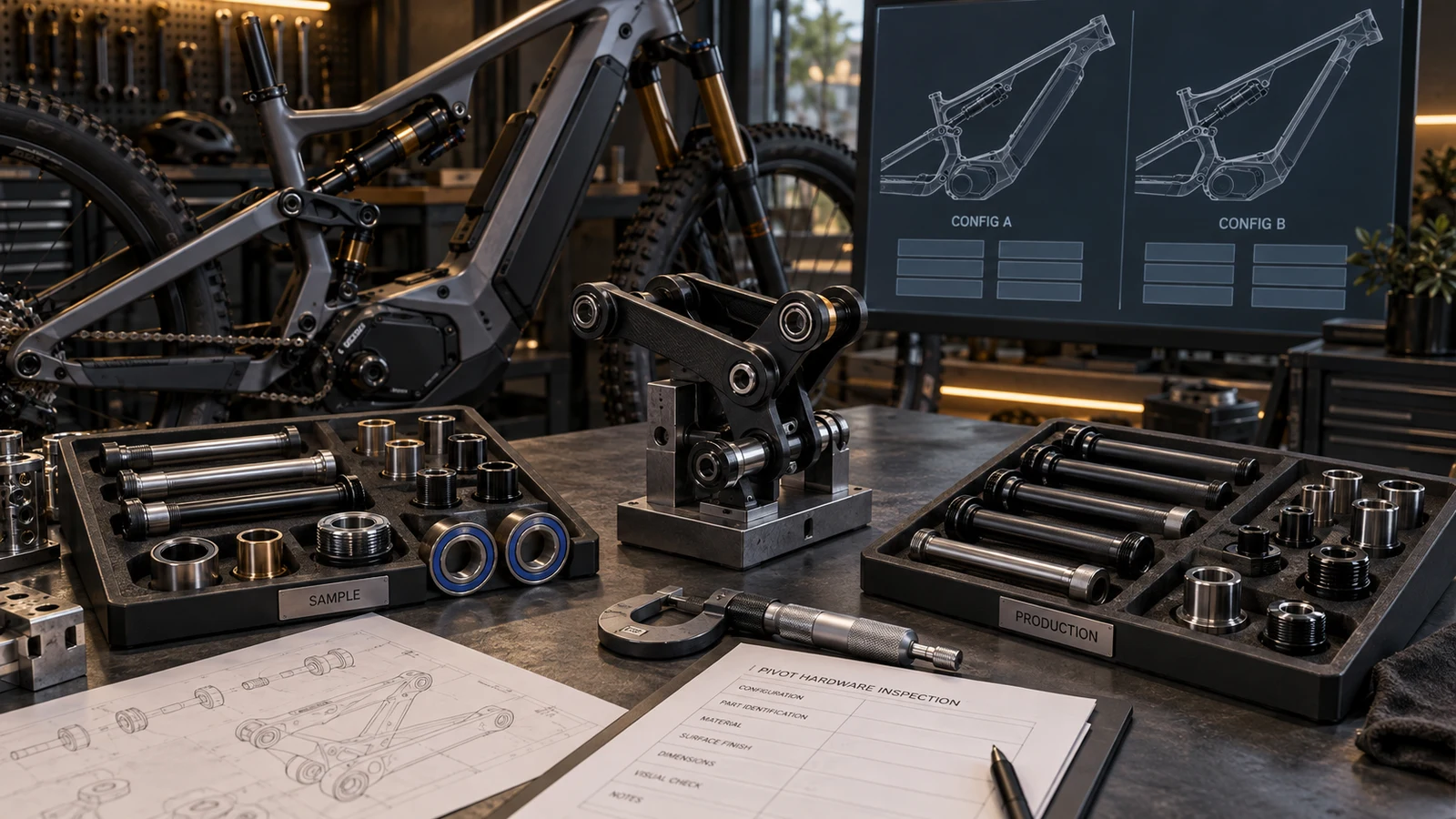
Hero: concept illustration of example hardware and its application. It is not a factory photograph, tested component or approved production geometry.
Define the platform comparison before choosing an upgrade
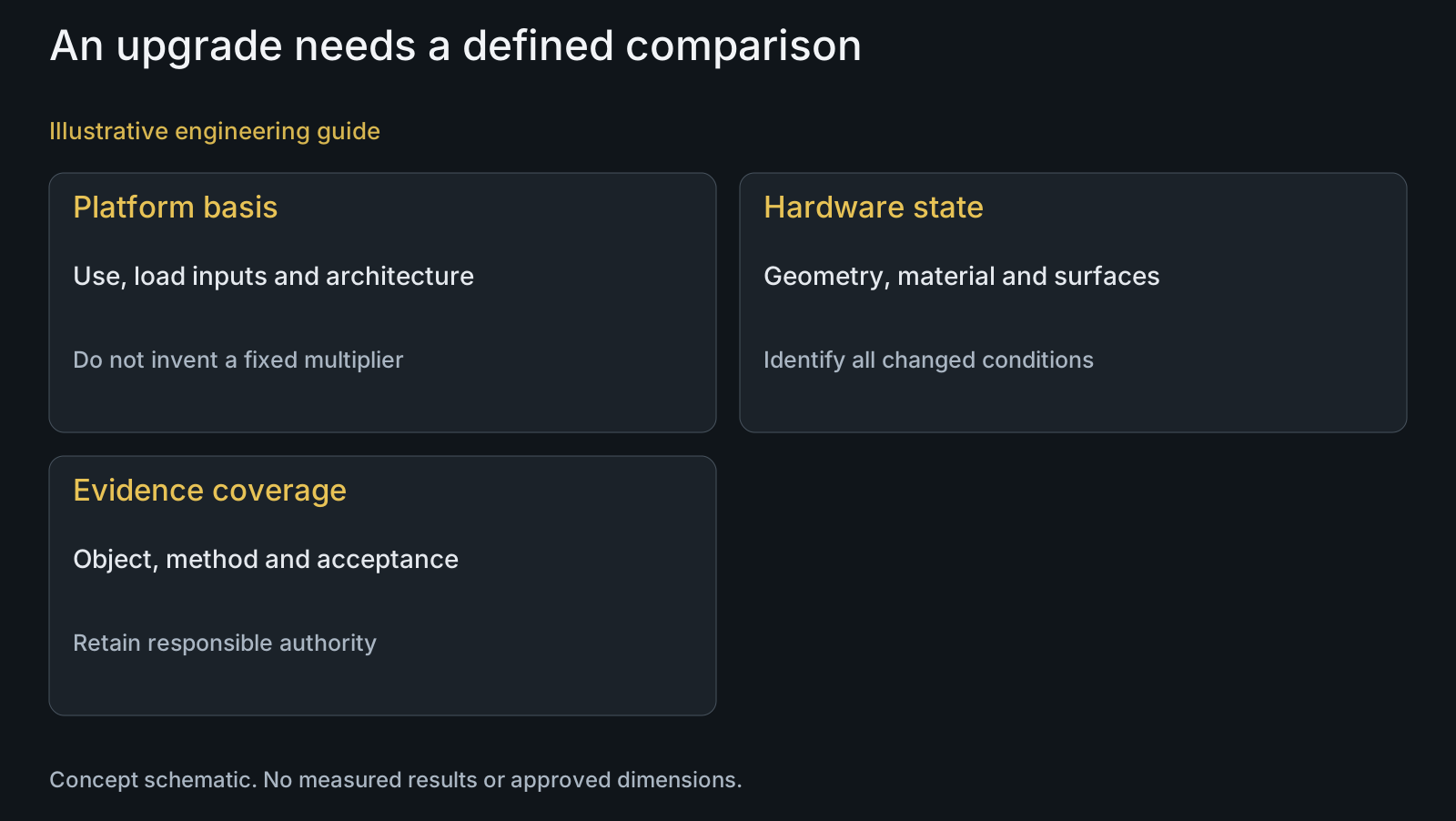
Identify whether the proposal concerns a new assisted platform, a changed use condition or substitution on an existing design. State the previous configuration if its evidence is being reused. Without a baseline, higher loads and improved strength are claims without a defined comparison.
Trek's April 2026 owner's manual distinguishes use conditions and defines total weight using the rider, bicycle and gear or cargo. Use those categories to ask what the proposed platform represents. Its model-specific limits and permissions do not transfer to another OEM's frame.
The e-MTB load-input guide translates vehicle context into location-specific interfaces. This article addresses whether evaluation and manufacturing evidence cover the proposed change. Motor ratings remain vehicle inputs, not measured pivot loads or fastener installation torque.
Compare alternatives under the same load and interface basis
Keep intended load cases, support geometry, mating parts and retention conditions common when comparing a material-only proposal. If geometry or surface changes too, identify those changes separately. Otherwise an apparent material comparison may actually concern several different assemblies.
Specify the alloy and supplied condition, controlled sections, final surfaces and threaded interfaces. A generic stainless or titanium label cannot establish the represented component properties. No universal e-MTB grade, percentage load increase or safety factor is assigned here.
For each alternative, ask which component question changes: strength, stiffness, contact, environment or manufacturing feasibility. A proposal addressing one question may leave another unchanged. Use the suspension load-to-process review to retain the relevant mechanism rather than presenting a process list as validation.
| Evidence or proposal | Question it can address | Boundary to retain | Buyer action |
|---|---|---|---|
| Vehicle/use definition | Which platform duty is intended? | Not a pivot force by itself | Obtain the OEM load basis |
| Material option | Which supplied condition is proposed? | Not complete joint acceptance | Compare geometry and interfaces |
| Prototype seating review | Do named contacts seat in this assembly? | Not fatigue or all-condition validation | Record configuration and conditions |
| Application evaluation | Does represented behavior meet its criteria? | Limited to object and method examined | Review coverage against requirements |
| Historical result | What remains applicable after change? | No automatic platform carryover | Document differences and technical basis |
| Production feature inspection | Are specified delivered features conforming? | Not a repeated complete frame test | Retain accepted definition and method |
Identify what the prototype actually represents
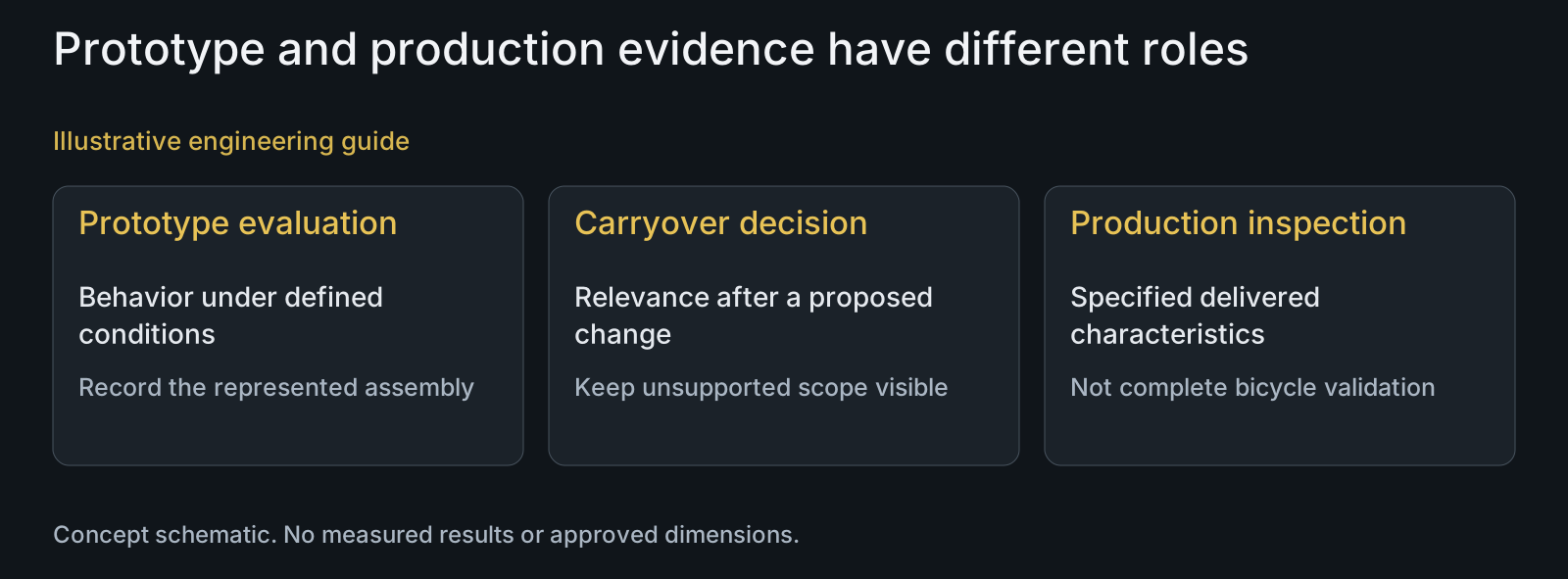
Record the drawing and BOM revisions, actual material condition, process route, treatment and assembly used for the evaluation. A prototype with an unfinished seat or different spacer cannot silently represent the final delivered arrangement. State discrepancies before interpreting the observations.
Choose evaluations around the requirements and conditions they must address. A seating check, retention examination and repeated-load investigation have different objects and boundaries. A good finish or successful insertion cannot be renamed a durability result, and no unperformed evaluation should be implied by the word prototype.
Prototype manufacturing can provide hardware for the agreed review. Required component and whole-frame validation need the responsible parties, represented loading and defined acceptance. PremFixer's manufacture of a sample does not establish those application results.
Make evidence carryover an explicit technical decision
When an older result is proposed for reuse, compare the tested configuration and conditions with the new requirement. Identify changed supports, mating components, materials, surfaces and duty inputs. Also identify important characteristics not represented by the earlier method.
An unchanged axle drawing can preserve the part definition while the platform's required use or loading basis changes. Conversely, a revised finish can change the represented contact even when the external envelope is identical. Neither case establishes equivalence from appearance or part number alone.
Document which earlier results still address the new requirements and where further analysis or evaluation is needed. A configuration-impact review can identify both reusable evidence and uncovered questions. The responsible design and validation authority decides the accepted scope; neither unrestricted carryover nor repeating every historical test follows automatically from the change.
Turn validated requirements into production-controlled features
Production inspection verifies specified supplied characteristics through the agreed method and coverage. It does not automatically repeat a prototype's complete application evaluation. Identify which material, size, geometry, thread and final-surface requirements need to remain controlled for the accepted configuration.
Connect those characteristics to the manufacturing route and inspection state. If the production process differs from the evaluated route, review whether that difference affects the basis being retained. A dimensional pass alone may not answer a material-condition or surface-process question.
Keep the kit item-specific. Main axles, linkage hardware and shock attachments can share a delivery package while retaining different requirements and evidence. A common inspection heading cannot establish identical validation coverage for every item in the BOM.
Illustrative review: unchanged hardware, revised use boundary
Illustrative engineering example: assume a team keeps an existing axle geometry for an assisted-frame variant but proposes a different intended-use boundary and a new material condition. Historical evidence represents the earlier frame and hardware state. No actual load comparison, test or customer platform is supplied.
The review separates two changes: whether the existing evaluation represents the revised platform duty, and whether its hardware state represents the proposed supplied part. A higher material-strength label does not resolve either comparison. The team identifies the relevant loading, contact and manufacturing differences for the design owner's assessment.
Production gauging can later check the retained dimensional requirements, but cannot prove that the old application evidence covers the new duty. The example shows how to avoid unnecessary test duplication while still keeping unsupported carryover visible. No upgrade approval, life prediction or successful bicycle result is claimed.
Questions buyers need to confirm
Does an e-MTB need a fixed percentage stronger pivot bolt?
No fixed increase is established here. Identify the baseline platform, duty inputs, joint supports and requirements. Compare alternatives under that same basis instead of turning the assisted-vehicle label into a universal material or safety-factor rule.
Can an unchanged axle use all earlier frame test results?
Not automatically. Compare the represented platform, intended use, contacts, retention and manufactured condition with the new requirement. An unchanged drawing controls part geometry but does not establish that the earlier loading or assembly evidence covers a changed application.
Does a higher material strength remove the need for validation review?
No. Identify which requirement the property supports and which component conditions remain. Geometry, contact, supplied surfaces and duty can still control the evaluation. A material label is not acceptance of the assembled frame.
Must every proposed change repeat every historical test?
Not automatically. Use a documented impact and relevance review to identify evidence that remains applicable and questions needing further work. The responsible design and validation parties approve the represented scope; this article supplies no blanket test waiver.
Can production dimensional inspection replace prototype validation?
No. It checks the defined supplied features through its stated method and coverage. Prototype or application evaluation examines represented behavior under defined conditions. Connect the controlled features to the accepted configuration without merging those evidence roles.
What should an e-MTB upgrade enquiry include?
Send the current and proposed drawings, location-labelled BOM, platform baseline, intended use, permitted load inputs, material and finish conditions and existing evidence scope. Identify changed features and the open acceptance question so the manufacturing review supports a defined decision.
Technical references and scope
Trek Bicycle Owner's Manual, April 2026. Manufacturer use-condition and total-weight definition, printed pages 24-30. Model-specific values, use permissions and certification labels are not transferred to another platform or custom hardware.
Explore related component, material and sourcing decisions in the customer decision knowledge center. For a drawing review, use the Drawing/BOM RFQ path.
Define the evidence boundary for your e-MTB hardware change
Provide current and proposed drawings or STEP, mating BOM, platform and use definition, material and finish requirements, available load inputs and prototype purpose through the Drawing/BOM RFQ path. PremFixer can discuss hardware manufacture and feature evidence; application validation and evidence carryover remain with the responsible OEM authorities.
Discuss the drawing and BOM