
Hydrogen analysis of a pivot bolt needs a defined material, hydrogen quantity and sampling state before its number can support a buying decision. Inert gas fusion and method-defined hot extraction can address different analytical questions; neither supplies a universal safe limit for every alloy and finished joint. Identify whether the sample represents incoming stock, a later process condition or a returned component, and confirm the method's suitable range. For engineers and SQEs, chemical content is evidence for that specimen, not an independent guarantee against embrittlement. Preserve processing and sample-preparation context, especially when the concern involves later surface treatment or a failure investigation.
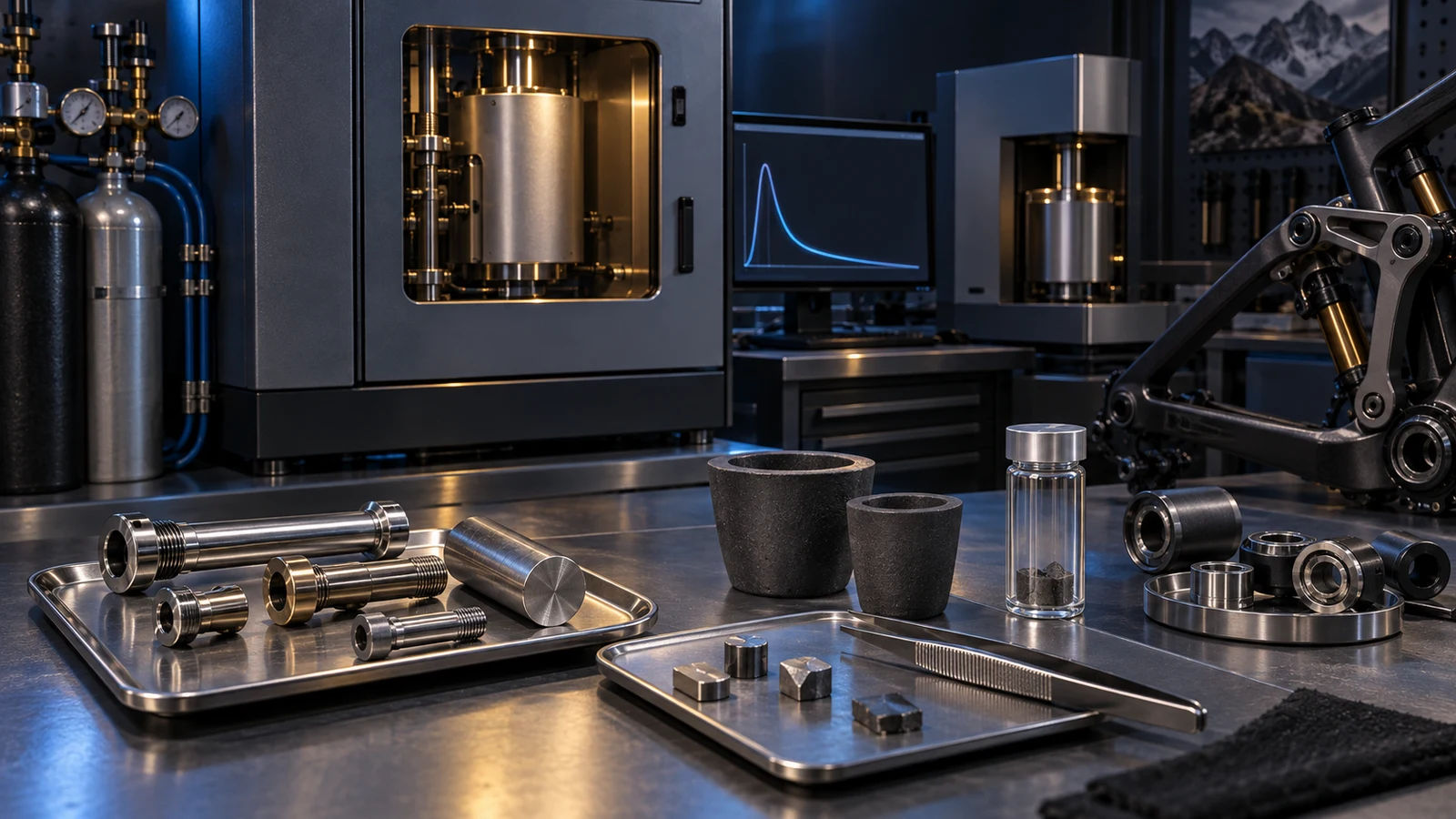
Hero: concept illustration of example hardware and its application. It is not a factory photograph, tested component or approved production geometry.
Define the material and analytical question first
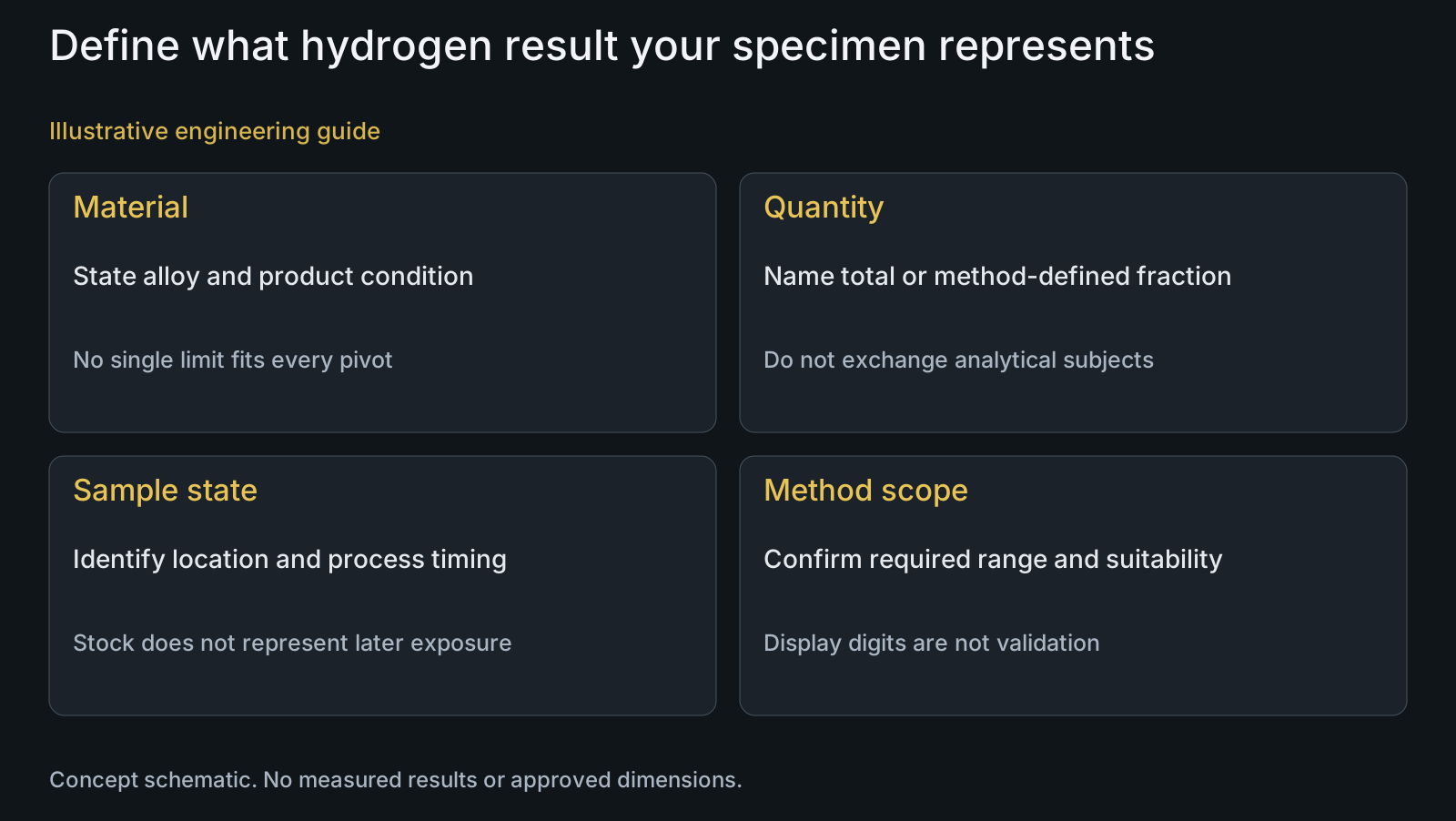
State the alloy designation, product form and relevant material condition. High-strength steel, a specified stainless grade and titanium do not share one automatic analytical acceptance limit. The controlling material or purchasing requirement must define what is accepted and what specimen it applies to.
Ask whether the decision concerns composition of incoming material, a suspected processing change or investigation of a returned part. These questions can require different specimens and interpretations. The generic request test for hydrogen leaves the laboratory unable to determine what result will actually close the customer's concern.
Identify the reported hydrogen quantity explicitly. Total content and an extractable fraction defined by a selected method are not synonyms. Use the material review and available specification to connect the requested quantity to the correct alloy and condition before selecting a laboratory procedure.
Separate inert gas fusion from selected hot-extraction conditions
ELTRA's analytical overview describes inert gas fusion using a melted sample and distinguishes it from hot-extraction hydrogen analysis. These are analytical approaches, not interchangeable evidence merely because both instruments report hydrogen.
Its hot-extraction instrument documentation describes selected conditions for analyzing different hydrogen fractions in suitable metal samples. The responsible laboratory must define the actual method and quantity. A diffusible-hydrogen label cannot be inferred solely from a furnace name or copied from another material's report.
Choose the method against the required material and reporting range, including its validated capability where relevant. Do not prescribe a furnace temperature or preparation recipe from an equipment brochure. Instrument availability at an external provider is also separate from suitability for this specimen and acceptance question.
| Question | Evidence subject | Shortcut risk | Buyer confirmation |
|---|---|---|---|
| Incoming composition | Identified stock specimen | Result extended to later processing | Alloy, lot relationship and sampling stage |
| Finished chemical content | Specified final-condition specimen | Prepared section assumed unchanged whole-part evidence | Location, preparation and method scope |
| Extractable hydrogen fraction | Quantity defined by selected extraction method | Fraction relabeled total content | Material, procedure and reported quantity |
| Very low requested range | Suitable validated analytical basis | More decimals treated as capability | Applicable range and reporting basis |
| Process embrittlement assessment | Appropriate mechanical/process evidence | Chemistry result called process qualification | Method applicability and represented route |
| Returned-part investigation | Available specimen and history | Late result called original failure-state proof | Preservation, exposures and conclusion limits |
Check method applicability before borrowing a standard
ASTM E1447-22 has a public scope for hydrogen determination in reactive metals and alloys, particularly titanium and zirconium. Its stated quantitative range and provisions for validated extensions matter. It is not a universal small-number threshold for high-strength steel pivots.
A requested value outside a method's stated validated scope needs an appropriate analytical basis, not extra displayed digits. Confirm material applicability, required range and reporting capability with the laboratory. A standard designation alone cannot demonstrate that an extension meets the needed data-quality objectives.
The applicable alloy specification supplies a different question: which material condition and acceptance requirement the buyer needs. Do not merge a method's measurable range with a safe-in-service limit. The titanium processing guide addresses process exposure; here the issue is choosing evidence that measures the intended subject.
Keep specimen preparation and timing connected to the result
Record whether the specimen is incoming stock, a cut section, a finished part or a returned item. Identify the sampling location and relevant operations before testing. An incoming bar specimen cannot directly report a chemical condition created by an unrepresented later surface process.
Ask the laboratory how cutting, cleaning, storage and transfer are controlled for the requested quantity. LECO's public steel-analysis overview identifies hydrogen diffusion as a sampling challenge. Its steelmaking context does not provide a universal preservation recipe for a finished pivot, but supports checking sample-history suitability.
For a returned component, preserve available process and service history before deciding on preparation. An altered or poorly identified specimen can narrow the conclusion. Do not assert that a late analysis reconstructs the hydrogen condition at the instant of manufacture or failure; the laboratory and investigation team must explain what the available specimen can support.
Illustrative review: a stock result does not qualify plating
Illustrative engineering example: assume a buyer has a hydrogen result for incoming steel stock and wants to evaluate a finished pivot after a proposed plating route. The offered report identifies only the stock sample and does not define the later specimen or requested hydrogen quantity. No actual value, plating incident or failure is assumed.
The reviewer retains the useful stock evidence but does not extend it to the finished condition. It asks whether the concern is final chemical content, process qualification or mechanical susceptibility under specified conditions. The resulting test request names the appropriate subject rather than using one report to answer all three.
If the chosen analytical method reports a different fraction from the purchasing requirement, the team resolves that mismatch before comparing values. A second number without a matching subject would not resolve the original gap. No safety percentage, hydrogen-free claim or measured improvement follows from this assumed review.
Do not turn chemistry into complete embrittlement approval
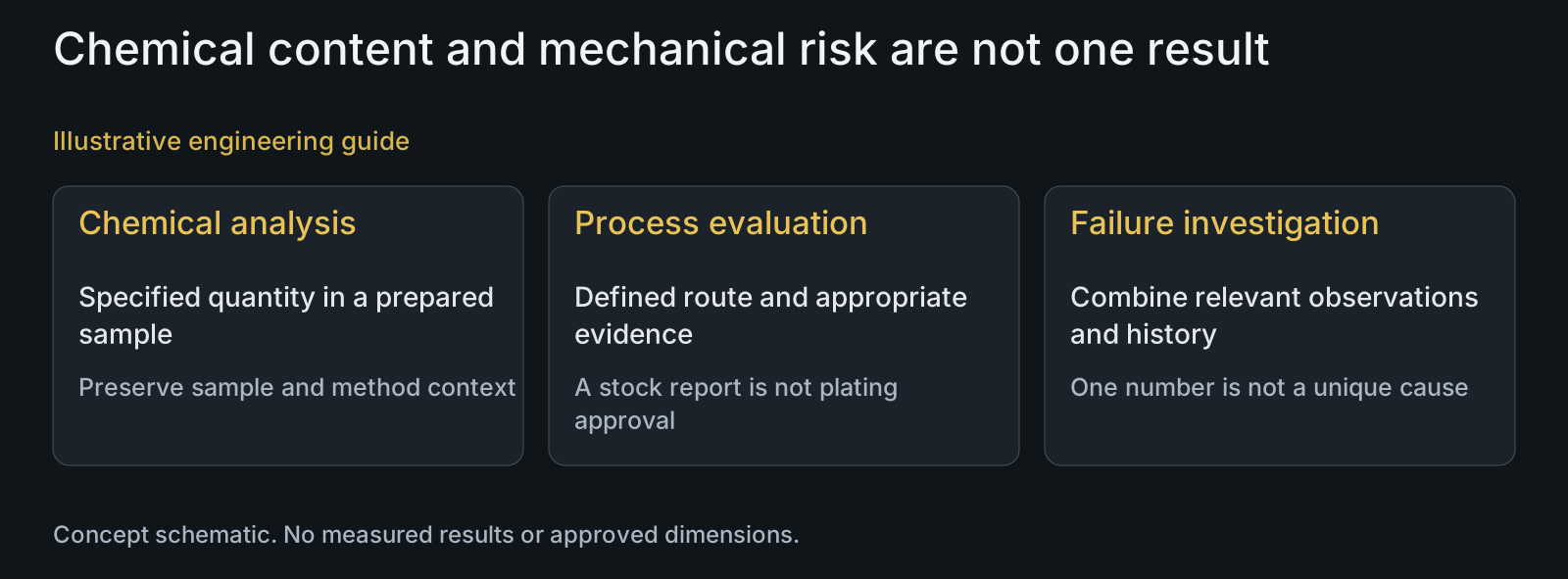
Chemical analysis, mechanical evaluation and process evidence have different roles. ASTM identifies F519 as a mechanical hydrogen-embrittlement evaluation method for plating/coating processes and service environments. Its subject illustrates this distinction; no full procedure or automatic applicability to every custom pivot is prescribed here.
A suspected failure needs a broader investigation of material condition, processing, loading and relevant observations. Hydrogen analysis may contribute without proving a unique cause or ruling out alternatives. Likewise, a process record does not replace the chemical quantity when that quantity is explicitly required.
PremFixer can review the component definition, surface-process sequence and coordinated analytical request with suitable specialists. No owned hydrogen laboratory or routine analysis of every lot is claimed. Keep the final dimensional, mechanical and assembly decisions separate from the chemical evidence.
Questions buyers need to confirm
Can one hydrogen limit apply to steel, stainless and titanium pivots?
No. Identify the alloy, product condition, requested analytical quantity and controlling specification. The method and specimen must suit that requirement. A number copied from another material or process does not establish acceptance for the proposed pivot.
Is total hydrogen the same as diffusible hydrogen?
No. Preserve the reported quantity and selected procedure. Extraction conditions can define a particular analytical fraction. Confirm which quantity the purchasing or investigation question requires before comparing reports or substituting one result for another.
Does inert gas fusion prove freedom from hydrogen embrittlement?
No. It supplies chemical evidence for its represented specimen and method. Mechanical susceptibility, processing and application conditions remain separate questions. Define any required process or mechanical assessment instead of using one chemical result as complete approval.
Can an incoming-stock result cover a later plated pivot?
Not directly for the unrepresented later condition. Identify the proposed sequence and question, then agree the appropriate specimen and evidence relationship. Keep stock composition, finished content and process qualification distinct.
Can ASTM E1447 be used for any alloy and reporting range?
Not by designation alone. Its public scope identifies particular reactive-metal applicability and quantitative range, with validated-extension provisions. Confirm suitability for the actual alloy and required range before claiming that a report meets the selected method.
What should buyers send for a hydrogen-analysis quotation?
Provide alloy and specification, drawing or part identity, process history, intended sample location and state, requested hydrogen quantity and limit. Include the investigation objective, available specimens and required report basis. These fields determine method suitability and the conclusion the evidence can support.
Technical references and scope
ASTM E1447-22 public scope. Reactive-metal hydrogen determination and validated scope extensions; no universal pivot limit or paid procedure reproduced.
ELTRA, oxygen/nitrogen/hydrogen analysis. Manufacturer explanation of fusion and hot-extraction approaches; no instrument settings or owned equipment claim transferred.
ELTRA, hydrogen hot-extraction analyzer. Method-dependent fraction and material context; product capability is not validation of a customer specimen.
LECO, steel hydrogen analysis public overview. Steel-sampling diffusion context only, not a finished-pivot storage recipe or reproduced gated application note.
ASTM F519-23 method identity. Mechanical process/environment assessment subject, distinguished from chemical-content analysis; no procedural compliance claimed.
Explore related component, material and sourcing decisions in the customer decision knowledge center. For a drawing review, use the Drawing/BOM RFQ path.
Define the hydrogen-analysis question before sending samples
Share the alloy specification, drawing or sample identity, relevant manufacturing and surface sequence, and required hydrogen quantity. State the sample condition, acceptance basis and whether the concern is composition, processing or a returned-part investigation. PremFixer can review the component and coordinated specialist scope without inventing a universal safe limit or an embrittlement-free guarantee.
Discuss the drawing and BOM