
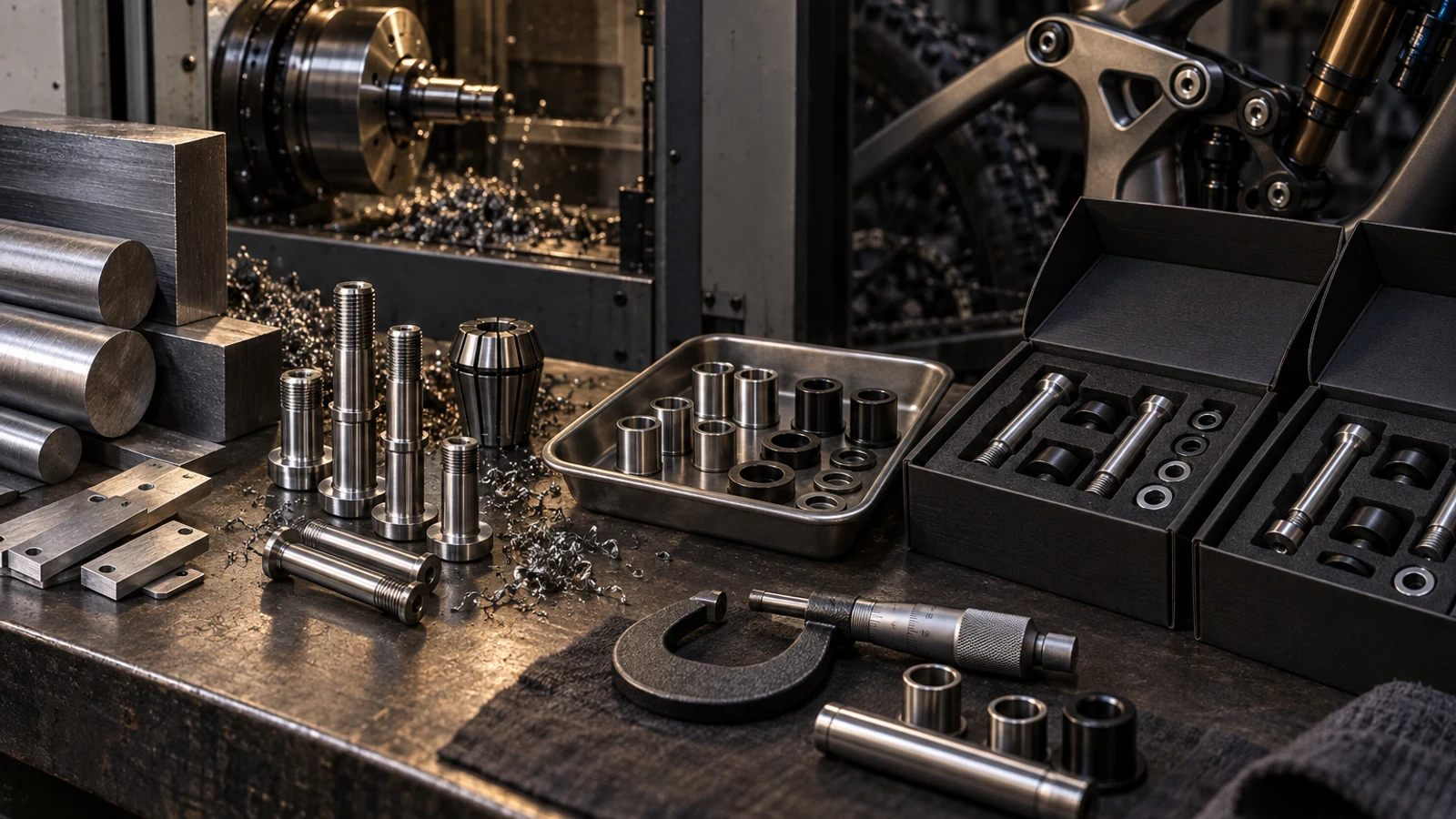
One-stop pivot hardware manufacturing is useful when it coordinates the complete supplied condition, not merely the purchasing contact. Follow each functional feature from material through machining, any specified treatment, inspection and packing. Establish who carries the final requirement across those handoffs and what the quoted kit contains. PremFixer combines confirmed in-house manufacturing with qualified partner operations for agreed treatment and testing work; the route depends on the part. A single supplier name does not make every operation internal or every component included. The buyer's key decision is whether the proposed scope delivers an identifiable, usable configuration without leaving responsibility gaps between operations.
Hero: concept illustration of example hardware and its application. It is not a factory photograph, tested component or approved production geometry.
Define integration by the delivered requirement
A pivot project's output may be a machined bolt, a finished bolt-and-sleeve pair or a complete defined kit. Name that output before comparing integrated services. A supplier responsible only for bare machining cannot be evaluated as if its quotation includes the final finish and assembled kit.
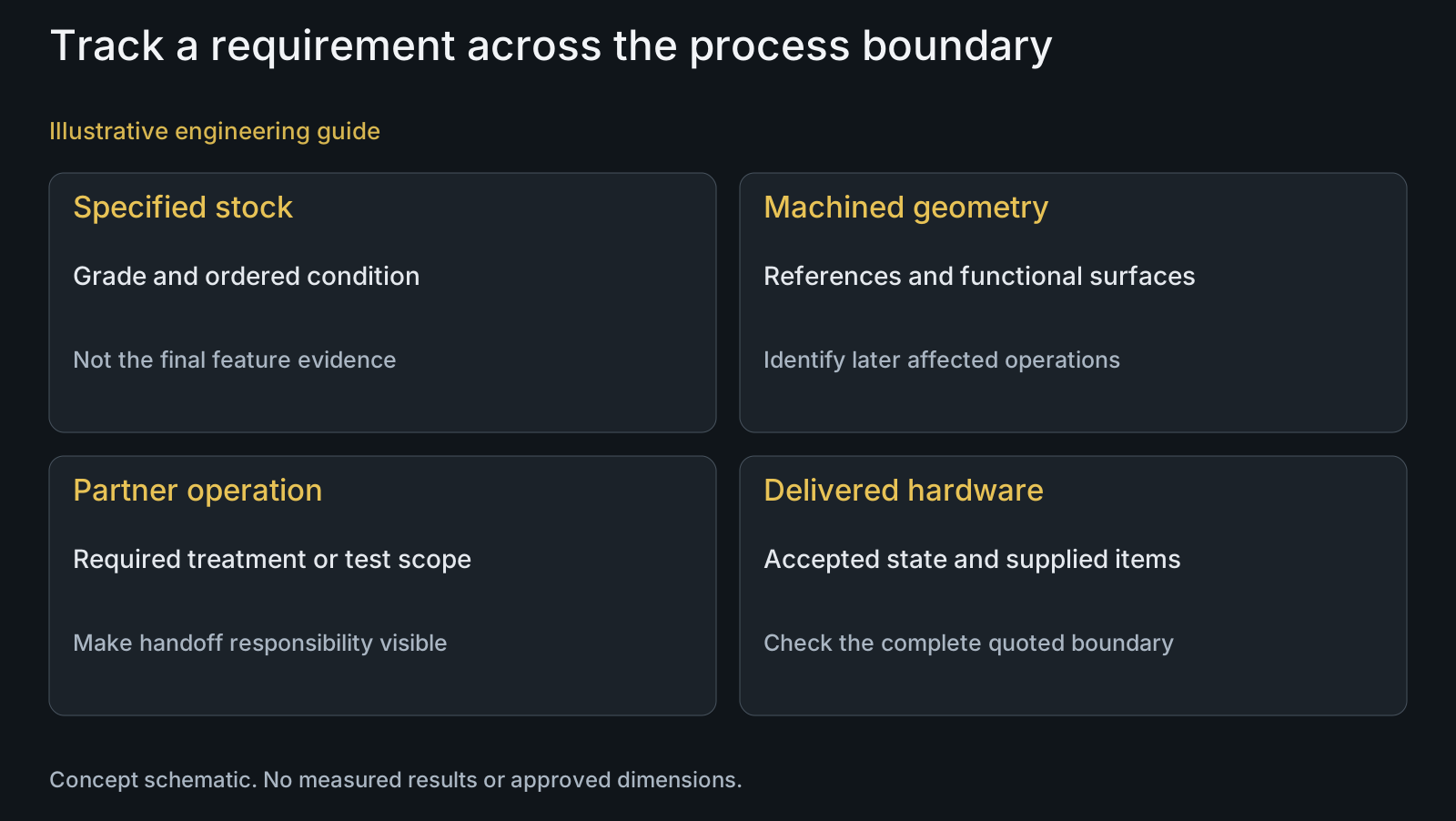
Choose a functional requirement to follow through the route: a bearing-contact diameter, a seating face or a thread's delivered condition. Ask how each proposed operation affects that requirement and who decides acceptance afterward. This reveals responsibility gaps that a broad one-stop description can conceal.
ISO 37500's public outsourcing scope discusses governance and tailored responsibilities across outsourcing arrangements. It is guidance, not evidence that a particular pivot supplier has executed every control. Here the practical engineering question is whether the agreed handoffs preserve the part's required output.
Keep the confirmed factory and partner boundary visible
PremFixer's confirmed in-house operations include cold heading, CNC machining, thread rolling and tool/die manufacturing. Qualified partner scope includes specified dimensional and mechanical testing, heat treatment and surface treatment. Which of these operations applies must be established for the actual drawing and order.
Do not turn the capability list into one compulsory route. A bar-machined prototype need not use heading, and a thread feature is not automatically rolled because rolling equipment is available. Discuss the applicable geometry and manufacturing approach through CNC turning.
Where a partner operation is needed, identify its output and the coordinating responsibility. An external operation is not inherently a gap; an undefined acceptance boundary is. Likewise, placing several operations in one building does not itself demonstrate that the final interface is correct.
| Supply arrangement | When it can fit | Unresolved risk | What to verify |
|---|---|---|---|
| Bare machined parts only | Buyer owns later processing | Early measurements mistaken for final acceptance | Excluded operations and final-feature responsibility |
| Machining plus coordinated finish | Final condition is defined jointly | Appearance scope overlooks functional zones | Process definition and delivered-condition checks |
| Finished parts with agreed reports | Buyer needs part-specific acceptance evidence | A generic report title hides limited coverage | Characteristics, represented state and sample identity |
| Defined complete hardware kit | Buyer purchases a specified BOM configuration | Illustrated parts assumed included or compatible | Part revisions, included quantities and customer inputs |
| Buyer-coordinated separate providers | Buyer can manage technical boundaries | No party resolves conflicting assumptions | Named responsibility for each affected final requirement |
Carry final-state requirements across processing
The relevant acceptance stage depends on what follows the operation. A diameter measured after machining may not describe the delivered diameter if later processing changes that surface. A surface used only for appearance may require a different control than the bearing-contact zone on the same part.
For the surface-treatment discussion, identify the functional zones, specified process, masking if required and final acceptance basis. Avoid a handoff where the machining team assumes finishing will resolve size while the finisher assumes the incoming size is already final.
Material identity must also remain associated with the manufactured component. Select the ordered grade and condition through Materials, then keep the represented stock and relevant later processing state distinguishable. A supplied stock certificate cannot silently cover every finished-part property.
Compare the responsibility boundary, not only the number of suppliers
When one supplier coordinates the complete route, ask which final requirements it accepts responsibility for and which remain customer-supplied inputs or exclusions. When the buyer coordinates separate operations, identify the party that resolves conflicting interpretations between those operations.
A coordinated quotation may include partner work, selected reports and protective packaging; another may stop at machined parts. Compare those boundaries before treating a price or schedule difference as an integration saving. No universal cost reduction or lead-time advantage is established by the supplier count.
The stainless stock-to-kit article develops material and kit-definition details. This guide focuses on the functional requirement crossing process boundaries, so the buyer can decide which coordination responsibility is actually being purchased.
Review a finish handoff before it becomes an acceptance dispute
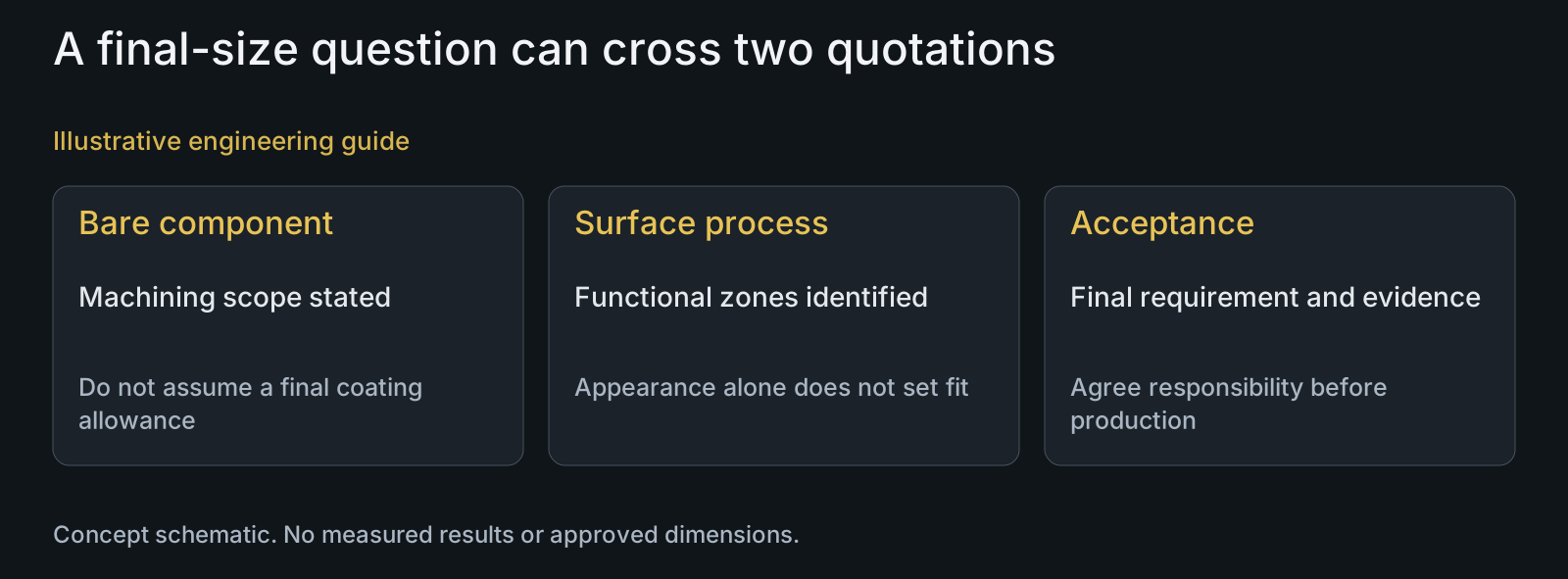
Illustrative engineering example: assume a pivot's bearing-contact surface has a specified final size and receives a later surface process. The machining quotation describes the bare part, while the finishing request describes appearance without addressing that contact surface. No measured change or real rejected batch is assumed.
The reviewer identifies the final drawing requirement and asks what manufacturing allowance, treatment definition and final measurement are needed for the proposed route. Those choices require engineering agreement; neither team should invent an allowance from a generic coating name.
An integrated scope can coordinate that decision and its final evidence. A buyer-managed route can also work if the same responsibility is explicitly assigned. The meaningful distinction is who closes the functional handoff, not whether both teams share a purchase-order heading.
End the route at the actual supplied configuration
Specify the BOM's supplied parts, revisions and quantities, along with any customer-supplied bearing or frame interface. Product illustrations demonstrate component types and applications; they do not establish an included SKU list or universal bicycle compatibility.
Decide which finished surfaces require separation or protective packaging, and how the item identity remains visible at receipt. Packing should preserve the accepted configuration, not conceal whether an operation or component was excluded from the order.
Use manufacturing process information to discuss the route and the pivot RFQ guide to define its input scope. Keep special tests, partner operations and delivery responsibilities explicit so a one-stop quotation can be evaluated against the actual project need.
Questions buyers need to confirm
Does one-stop mean all operations take place in-house?
No. PremFixer's confirmed delivery model includes in-house manufacturing and qualified partner operations. Request the route for your drawing, including the specified treatment or testing boundary, instead of assuming every service occurs at one site.
What should be included when quoting a finished pivot rather than a bare part?
Specify the final material condition, surface requirements, functional zones and acceptance evidence. Those fields determine whether later processing and final checks are included; a bare-machining quotation does not establish them.
Who should resolve a conflict between machining and finishing requirements?
The project needs an explicitly agreed coordinating responsibility and customer engineering authority. Provide the final feature requirement and proposed process so conflicting allowances or acceptance assumptions can be resolved before manufacture.
Does integrated supply always reduce price or lead time?
No universal reduction is established. Compare equivalent delivered scope, tooling, partner work, inspection and packing. Coordination may change effort and dependencies, but the quotation and schedule must show the actual project basis.
Are bearings and illustrated frame parts included in a pivot kit?
Only if listed in the agreed supplied BOM. Identify each included part and customer-supplied interface. A concept image or application example is not a stock-kit specification or a compatibility approval.
What information starts a stock-to-kit review?
Send the drawings, STEP models, material and final finish requirements, BOM revisions and intended acceptance scope. Identify open functional interfaces and excluded work so the review can define the manufacturing and handoff responsibilities.
Technical references and scope
ISO 37500 public outsourcing scope. Governance and tailored responsibilities in outsourcing; not a universal bicycle route or evidence of a supplier's actual execution.
Explore related component, material and sourcing decisions in the customer decision knowledge center. For a drawing review, use the Drawing/BOM RFQ path.
Define the complete supplied pivot condition
Submit the drawing, STEP model, final surface requirements, mating-interface information and supplied BOM with quantities and project stage. The review will map the necessary operations, identify functional handoffs and clarify the final-condition evidence and packing scope for the coordinated quotation.
Discuss the drawing and BOM