
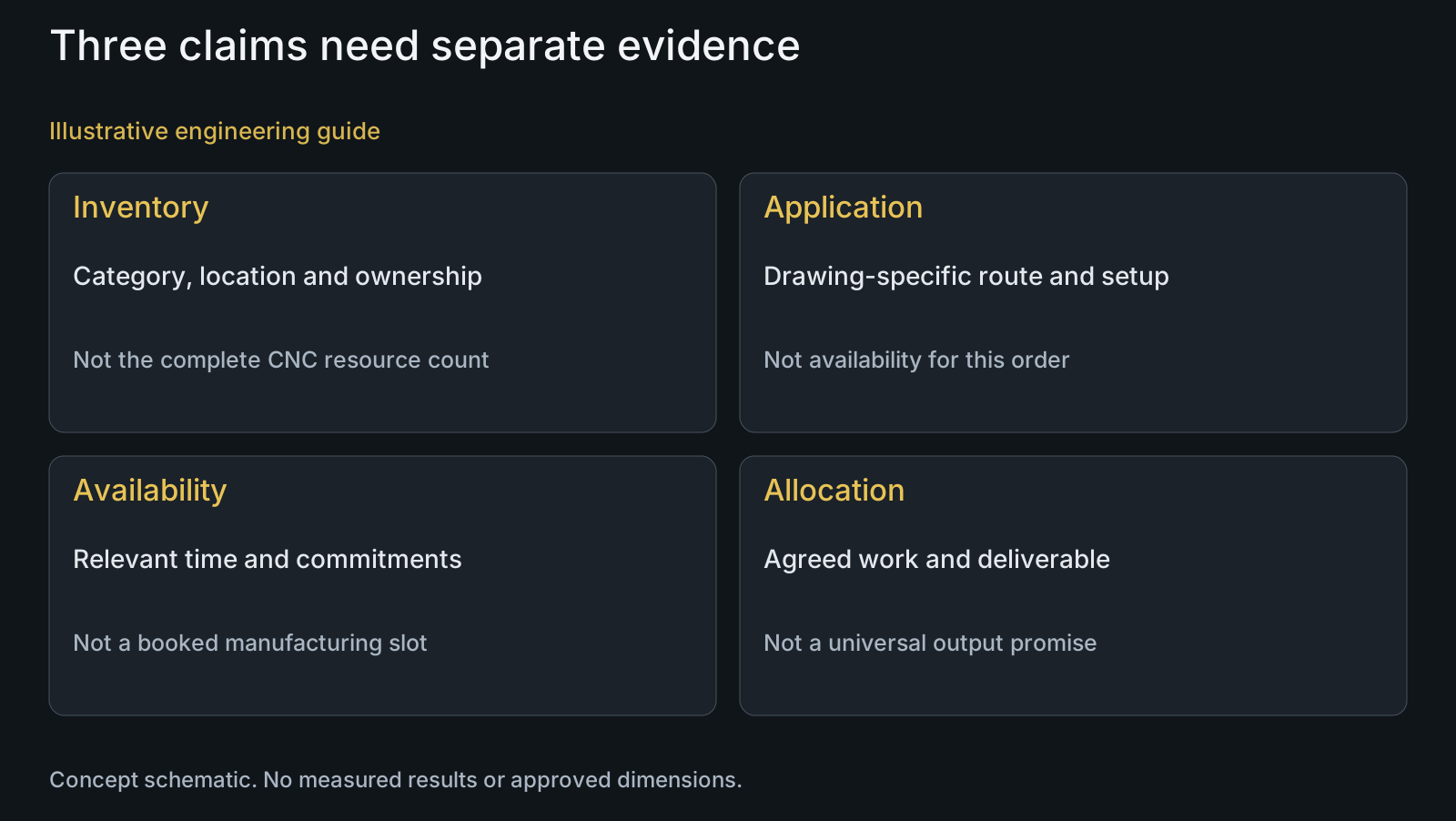
A supplier's total equipment count does not establish available CNC capacity for a custom pivot order. Separate installed assets, relevant machining resources, a suitable component route and time actually allocated to the order. For a buyer assessing bolts, hollow axles, receivers and sleeves, those distinctions matter more than one combined machine total. A resource suitable for an exposed outside diameter may not represent a recessed feature or its required inspection. Confirm what the overview includes, who performs each operation and when the required work can be scheduled. Neither a factory photograph nor historical piece output is a commitment to your drawing and delivery window.
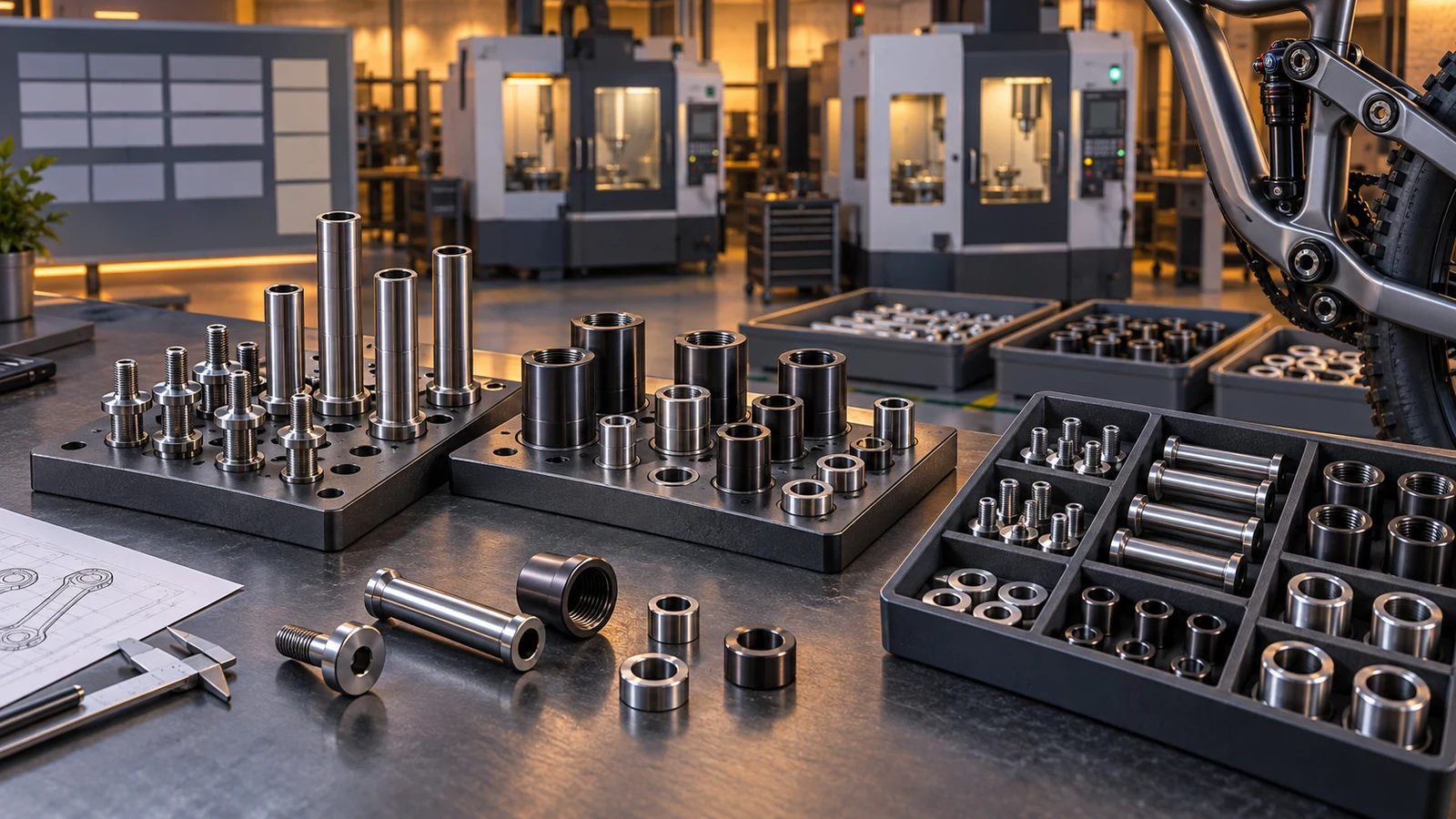
Hero: concept illustration of example hardware and its application. It is not a factory photograph, tested component or approved production geometry.
Ask what the equipment total actually includes
An equipment overview can combine cold-heading machines, CNC machines, thread-rolling equipment, toolmaking resources and support equipment. Ask for the categories and scope before interpreting the total as a CNC count. A production-line count likewise needs a defined meaning rather than an assumed number of interchangeable machining resources.
Identify the date and facility boundary represented by the overview. Owned equipment, arranged partner resources and a network total are different descriptions. A facility photograph may show relevant operations but cannot establish a complete current inventory or available hours.
Request the level of detail needed for the sourcing decision, not every machine's confidential operating information. For an initial review, equipment category, relevant operation, process location and responsibility can be more useful than an unexplained asset list.
PremFixer's process boundary is not all-in-house production
PremFixer's confirmed in-house scope includes cold heading, CNC machining, thread rolling and tool/die manufacturing. Specified inspection, testing, heat treatment and surface treatment can involve qualified partner operations, coordinated through the agreed project scope. Those partner resources must not be described as owned CNC assets.
Use the manufacturing overview to start a route discussion, then identify which operations the actual component needs. A machined axle with a specified finish requires the appropriate finishing scope as well as machining. A named material test or dimensional deliverable also needs a confirmed performing scope.
The buyer should know who is accountable for the supplied component and which operation needs separate coordination. One project contact can coordinate a complete route without every operation taking place in the same facility. No universal machine count, installed model or monthly output is established here.
| Statement | Useful meaning | Risk of the shortcut | Buyer confirmation |
|---|---|---|---|
| Total equipment | Defined inventory and facility boundary | All equipment counted as CNC | Categories, date and ownership scope |
| CNC resource group | Resources proposed for relevant operations | Every resource assumed interchangeable | Drawing-specific access, tooling and setup |
| Suitable process route | Manufacturing proposal for the component | Feasibility called current availability | Preparation and applicable acceptance basis |
| Available machining time | Uncommitted time within a defined scope | Spare outside-turning time covers internal work | Relevant resource and represented period |
| Output or order allocation | Defined state or specific commitment | Historical pieces called a booked order | Mix, completion state and agreed allocation |
Map relevant resources to the drawing's difficult features
Show the features that determine access and setup: locating shoulders, hollow regions, internal threads, cross-holes and any slender or interrupted geometry. Include material condition and required final surfaces. Small overall size does not make these features identical manufacturing tasks.
A resource category needs an application basis for the proposed part. Ask how the features will be established, supported and transferred between operations, and which required checks follow. Avoid ranking suppliers by machine axes or tool names without connecting them to the actual route.
A fixture, tool or program change may be needed before an otherwise suitable machine can produce the component. That preparation is not visible in the installed-machine count. The quick-change fixture guide distinguishes fixture exchange from the complete setup needed to establish acceptable output.
Send the drawing and STEP to CNC turning review. A drawing-led proposal can identify the relevant route without promising unconfirmed live tooling, Swiss-type equipment or a universal tolerance from a general capability label.
Inventory and availability answer different sourcing questions
Equipment inventory describes a resource population. Route suitability describes whether the proposed work can be performed with the required preparation and acceptance basis. Availability describes the time accessible for that work in a stated period. Allocation describes the agreed reservation for the specific order.
A research paper hosted by NIST distinguishes assigning jobs to workstations from evaluating production bottlenecks. That supports reviewing the work and its constraints rather than equating more listed machines with a guaranteed increase in complete output. It is not evidence of PremFixer's scheduling software or performance.
Ask which resource or dependency constrains the proposed route. Unused time in one category cannot automatically replace unavailable time elsewhere. If additional equipment is proposed as a contingency, confirm its suitability, necessary preparation and applicable acceptance rather than counting it as immediate interchangeable capacity.
Read output claims in their stated unit and process state
A piece total can include different hardware types and completion stages. Finished short screws, machined long axles and partially processed receivers are not equivalent route tasks. State the product mix and whether the reported output is machined, finished, inspected or ready in the agreed supplied condition.
Do not add capacities from sequential operations as though their outputs were independent finished components. The same part may pass through several listed resources. Similarly, a daily or monthly figure needs its represented period and assumptions before it can inform the current order.
The custom pivot order planning guide develops complete-kit quantities, commitments and shipment milestones. Keep that order-planning task separate from this overview assessment: a useful resource map establishes what must be scheduled, not the final dispatch date by itself.
An unchanged machine total can hide a changed resource requirement
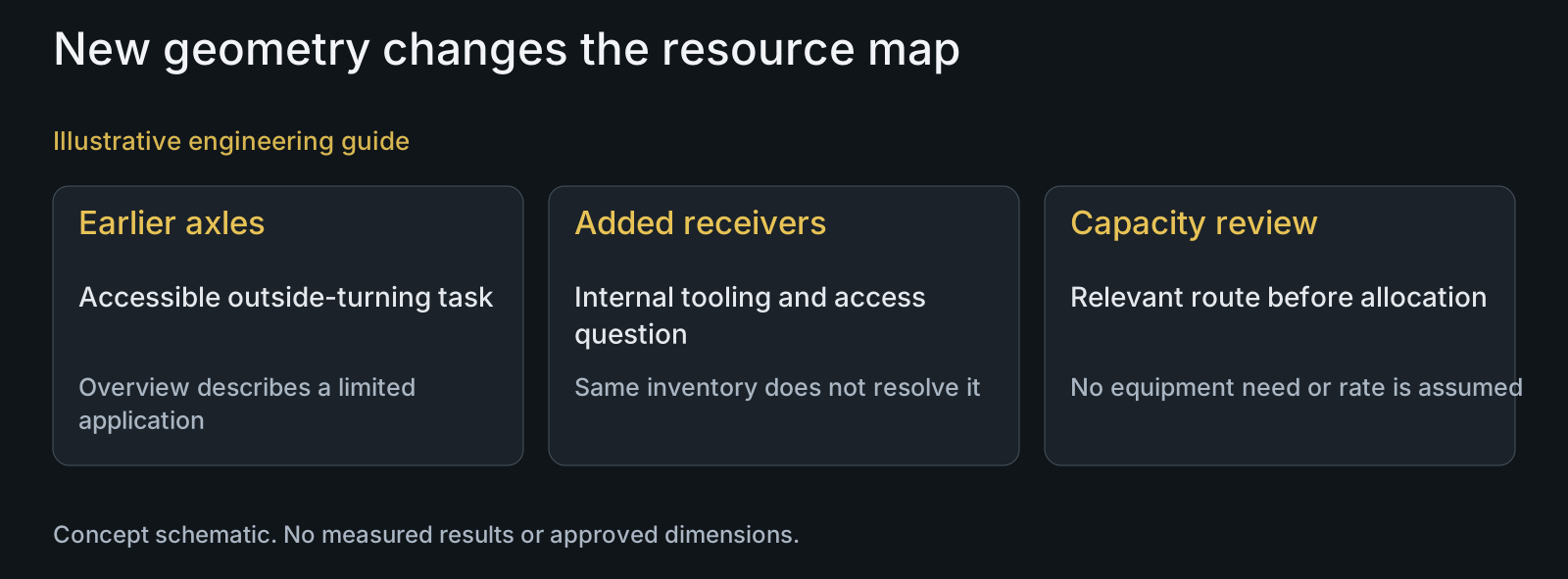
Illustrative engineering example: assume a supplier overview describes a resource group used for outside turning of short axles. A new BOM adds hollow internally threaded receivers. The total equipment inventory remains unchanged. No machine models, quantities, operation times or proven route are supplied.
The reviewer identifies the new internal access, tooling, support and inspection requirements before deciding which resources are relevant. Spare time for the previous outside-turning task cannot establish immediate receiver capacity. The new route may be feasible, but its application and availability still need review.
The outcome is a drawing-specific resource question, not a conclusion that the factory is too small or that another machine is required. Provide the application interface, BOM and required supplied state so the manufacturing proposal addresses the intended components rather than an unrelated headline count.
Questions buyers need to confirm
Can total equipment be reported as the number of CNC machines?
Not unless that is the defined category. Ask whether the count includes heading, rolling, toolmaking and support resources, and confirm its date, facility boundary and ownership scope.
What is PremFixer's confirmed manufacturing scope?
In-house scope includes cold heading, CNC machining, thread rolling and tool/die manufacturing. Specified testing, inspection, thermal and surface operations can involve qualified partners. Confirm the exact operation and responsibility in the drawing-led quotation.
Does a factory photograph prove current machining availability?
No. It can illustrate a facility or operation but does not establish the complete dated inventory, relevant tooling or uncommitted time. Request the drawing-specific route and applicable availability assessment.
Can spare machine time cover any small pivot component?
Not automatically. Internal access, material condition, tooling, support and inspection may require different resources or preparation. Define the component's features before treating the resource pool as interchangeable.
Does a monthly piece total establish capacity for my kit?
No. Identify the represented mix and finished state, then map your BOM to its actual route. Complete-kit readiness and order commitment need separate confirmation rather than an assumed conversion from total pieces.
What should be sent for a useful CNC capacity assessment?
Provide drawing revisions and STEP, BOM item mix, material conditions, finishes, critical features, required checks, quantities and requested windows. Ask for relevant resource categories, preparation needs and availability, then distinguish that assessment from an agreed allocation.
Technical references and scope
Brundage and coauthors: Analyzing environmental sustainability methods for use earlier in the product lifecycle, NIST-hosted manuscript. Title and full relevant scheduling and bottleneck sections2.4.1 and2.4.2.2 read. Distinction between workstation-job scheduling and constraining resource only; environmental figures, algorithms, historical standards and company performance not adopted.
Explore related component, material and sourcing decisions in the customer decision knowledge center. For a drawing review, use the Drawing/BOM RFQ path.
Request capacity for your actual pivot drawings
Send drawing and STEP revisions, BOM mix, materials and finishes, critical internal and locating features, quantities and required supply windows. PremFixer will review the relevant manufacturing resources, partner dependencies and acceptance scope before discussing order-specific availability and allocation.
Discuss the drawing and BOM