
The duty on custom pivot hardware imported from China cannot be determined from the phrase bicycle bolt alone. Identify the destination, shipped articles, materials and transaction, then confirm the applicable classification, origin and current measures with the importer or customs adviser. A kit may contain a threaded fastener, axle, spacer and other components whose descriptions are not interchangeable. Do not assign one steel-bolt code to every item because they share an application. A manufacturing quotation also needs a defined delivery scope before it can support a landed-cost comparison. This guide explains the information handoff, not a binding classification or shipment-specific tax calculation.
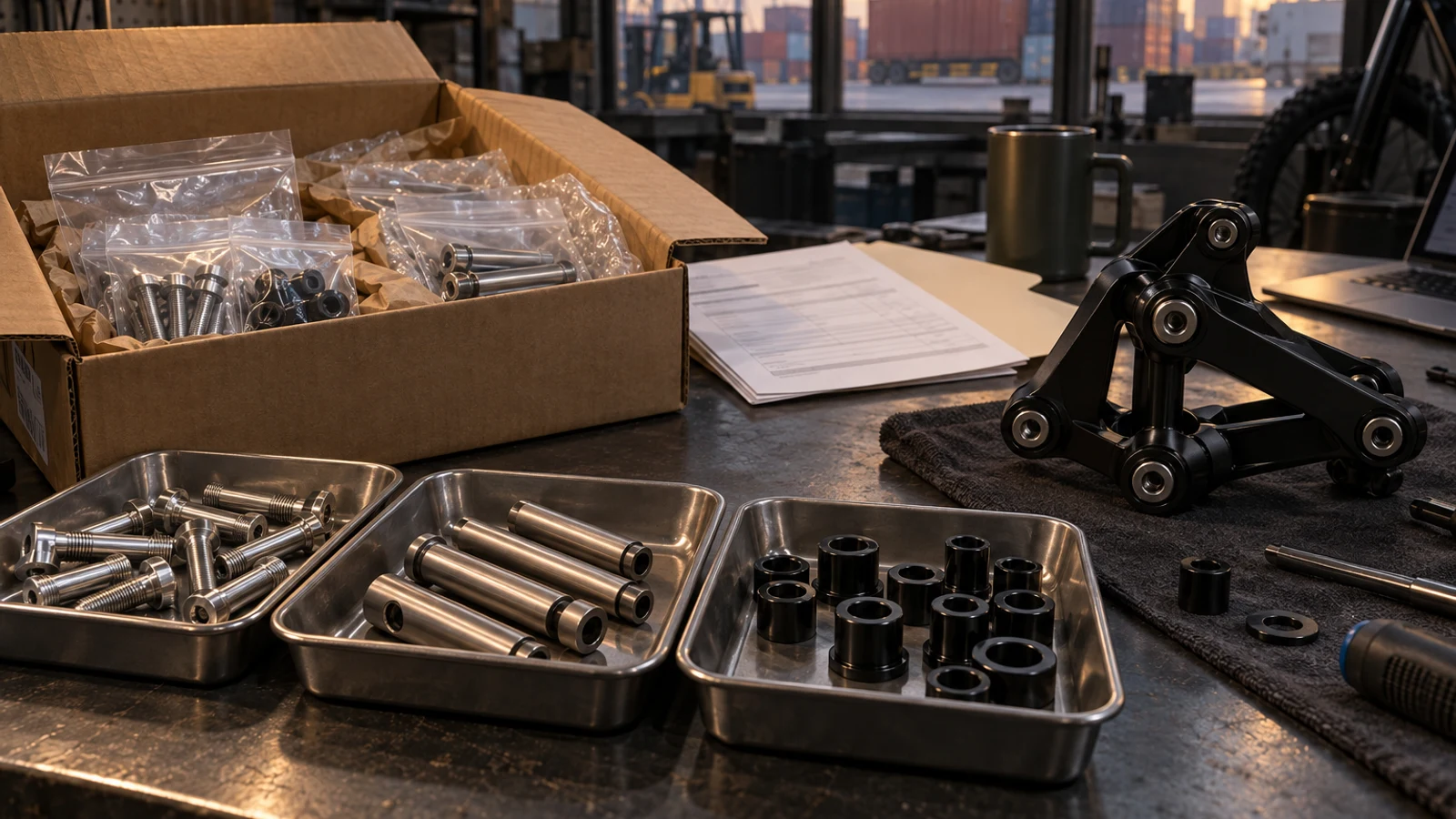
Hero: concept illustration of example hardware and its application. It is not a factory photograph, tested component or approved production geometry.
Describe the goods as shipped, not just their application
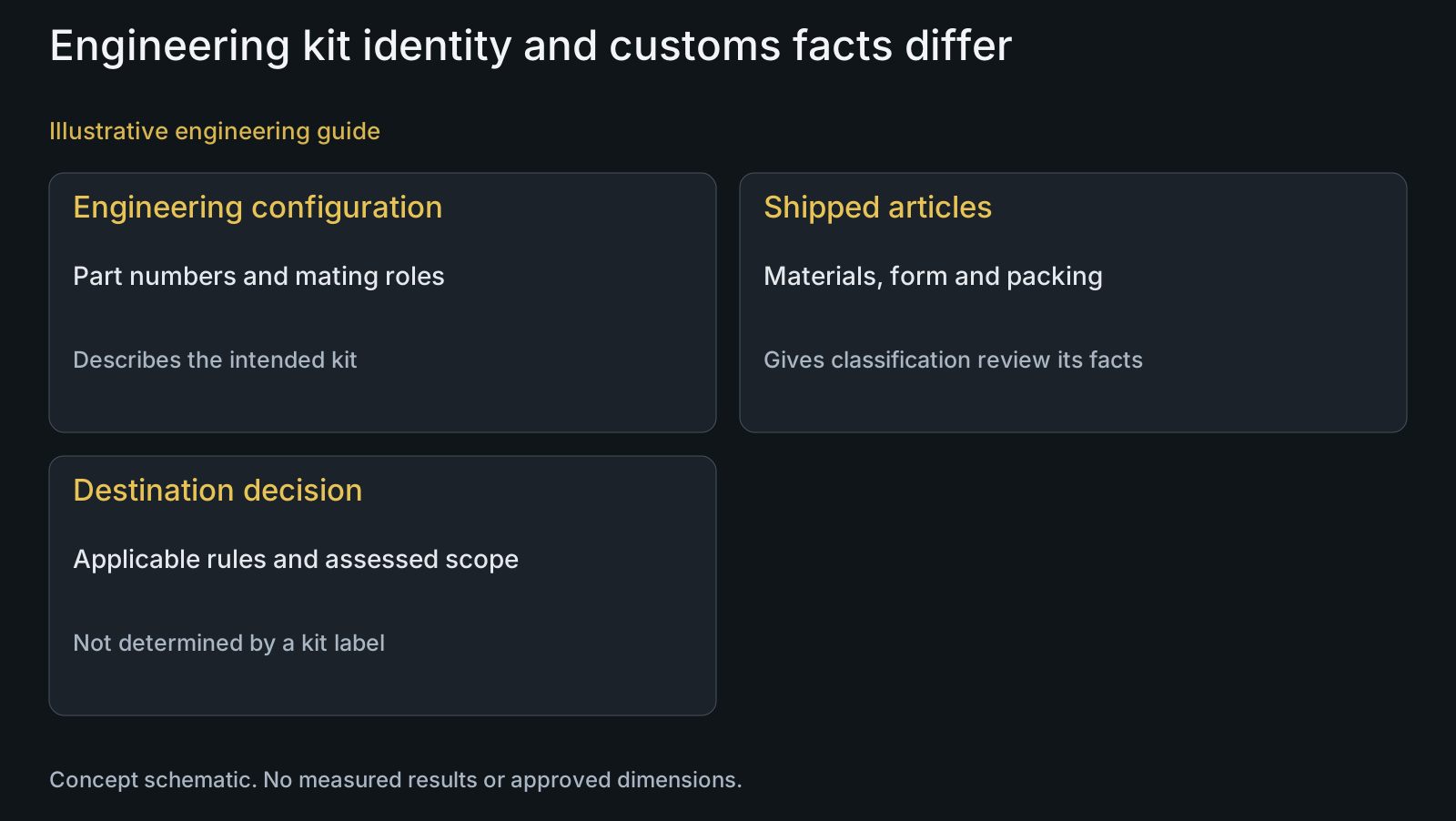
Begin with the actual articles and their materials, geometry and function. A shoulder bolt with a threaded end is not described adequately by the same generic phrase as an unthreaded spacer. The destination's classification analysis needs the facts, not only the bicycle platform on which the parts will be used.
A BOM can support that description by connecting each part number to its drawing, material and quantity. Identify whether the goods are shipped as separate components or in a defined combined configuration. Do not decide the legal treatment of that configuration solely from the supplier's commercial kit name.
If a customs adviser requests sections, photos or additional product information, provide the actual configuration. PremFixer can support a drawing-based manufacturing review; that is distinct from issuing a customs classification ruling or promising that every destination accepts one code.
Resolve classification before reading a rate
The European Commission's tariff guidance places product classification before checking the applicable tariff and explains the EU's Binding Tariff Information route. A search result for a broadly similar bolt is a starting clue, not approval for a different shipped article.
For US imports, CBP's Binding Ruling Program provides advance classification decisions. CBP distinguishes binding tariff classification from duty rates, which are not binding. That distinction matters when budgeting an order that will enter later.
Keep the destination's complete required classification and applicable version with the assessment. Do not treat an abbreviated code supplied for one market as a complete import declaration in another. Where facts are uncertain, resolve them through the responsible importer and appropriate adviser rather than guess from alloy appearance.
| Input | What it supports | What it does not settle | Buyer action |
|---|---|---|---|
| Article drawing and material | Description of the shipped goods | Destination classification by itself | Provide each actual component |
| Kit BOM | Composition and quantities | Automatic single-code treatment | Describe shipped configuration |
| Classification assessment | Applicable product category | All later rates and charges | Retain destination and assessed facts |
| Origin information | Relevant production facts | Automatic preferential eligibility | Check applicable origin requirements |
| Rate lookup | Defined tariff estimate | Complete landed cost | Check measures and valuation scope |
| Delivery quotation | Agreed supply/transport boundary | Universal importer obligations | Compare matching scopes |
Keep origin and preferential treatment separate
Origin information describes a different question from product classification. Identify the actual production and sourcing facts requested by the destination. The dispatch location, seller address and product's origin should not be collapsed into one unexplained field.
The Commission's rules-of-origin guide explains that preferential treatment requires the relevant arrangement's specific origin conditions. Possessing an origin-related document does not by itself establish eligibility for a reduced rate under every trade arrangement.
Specify which document or information the importer requires and its purpose. Do not promise a particular preferential certificate or duty outcome before the actual eligibility and document requirements are established. Manufacturing records can support the facts without replacing the importer's legal decision.
Distinguish a tariff estimate from the full landed-cost scope
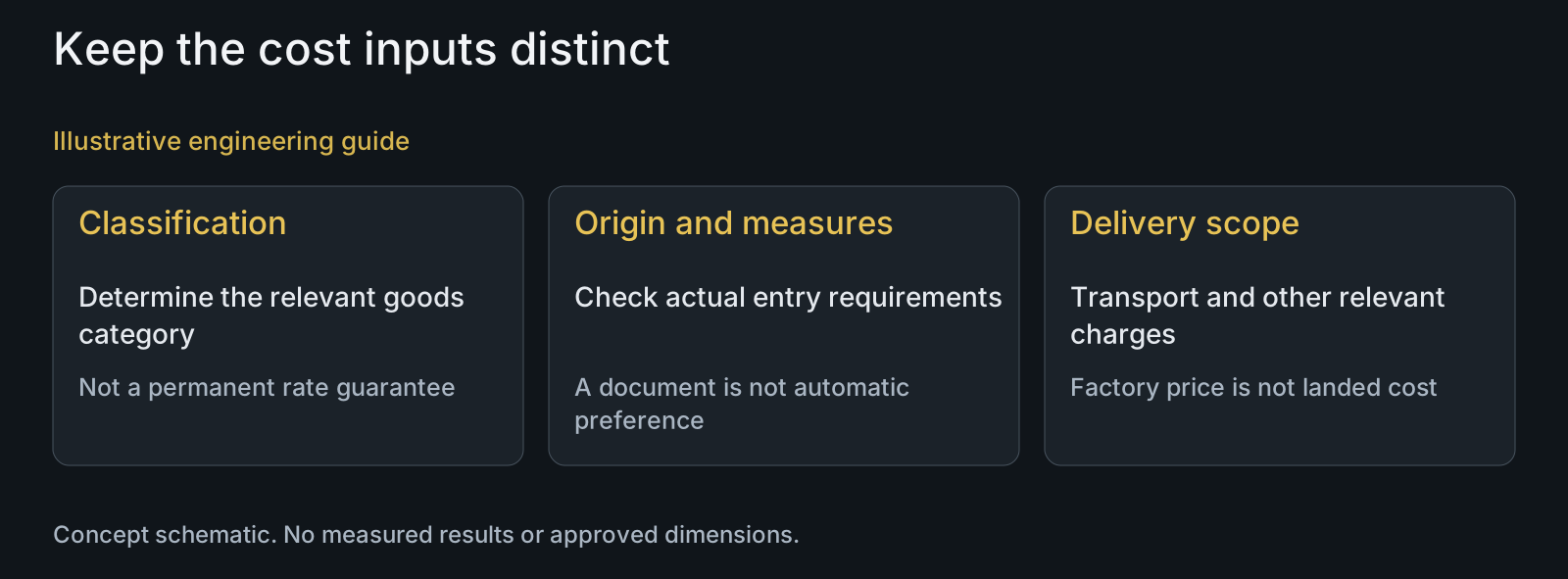
A rate lookup is not a complete delivered-cost calculation. Keep product value, the applicable valuation basis, transport charges, clearance services and other relevant charges distinct. Ask the responsible adviser how each enters the actual destination's calculation rather than applying one generic percentage to a factory price.
The EU tariff guidance also identifies potential trade-defence measures beyond ordinary duty. Their applicability needs checking for the actual goods and origin. This article does not state that a particular measure applies to every PremFixer shipment or quote a current percentage for an unspecified order.
Compare supplier quotations on the same supplied scope and delivery boundary. A price including one transport service cannot be compared directly with an ex-factory component price as though the difference were entirely manufacturing cost. The international sample-shipment guide treats dispatch and transit as separate milestones.
Make the documents describe the same physical shipment
Connect invoice descriptions, packing information and supporting product definitions to the actual part numbers, materials and quantities. Generic invoice wording can obscure information that the BOM already contains. A clear description supports review; it does not authorize an unsupported classification.
Keep pieces and kits distinct when reconciling quantities. If the shipment contains loose components and boxed kits, make that arrangement visible. The package-labeling guide addresses how item and container identities relate after unpacking.
Identify the party coordinating classification, entry and requested documentation before shipment. PremFixer's agreed supply scope can include the required available product information, but a document bundle is not universal customs approval. Do not invent origin evidence or reduce declared values to fit a preferred cost assumption.
Illustrative review: a steel-bolt code attached to a mixed kit
Illustrative engineering example: assume an importer requests an estimate for a kit containing stainless threaded bolts, titanium axles and aluminum spacers. A draft inquiry lists one familiar steel-bolt code for the entire kit. No destination, classification decision or duty rate is assumed.
The team separates the physical articles and their material descriptions, identifies the shipped configuration, and sends the drawings and BOM to the importer's adviser. The adviser can then determine the applicable destination-specific treatment, including how the combined shipment should be considered.
Only after that assessment can the estimate use the relevant charges and delivery scope. The improvement is a better-defined question, not a claimed duty saving or a fabricated customs outcome. If the material or shipped configuration changes, the earlier assumptions must be reviewed for the changed goods.
Questions buyers need to confirm
Can every pivot kit use a steel-bolt code?
Do not assume that. A kit can contain different articles and materials, and its combined treatment needs destination-specific assessment. Provide the actual drawings, composition and shipped configuration rather than classify from the word pivot.
Does a supplier's suggested code bind the importing authority?
Not merely because it appears on a quotation. Identify the assessment basis and responsible importer. Where certainty is needed, use the destination's applicable advance-ruling route. A suggestion should not be presented as a binding customs decision.
Does an origin document guarantee a reduced duty?
No. Eligibility depends on the applicable arrangement and its requirements, not the mere existence of a document. Confirm what origin evidence is required for the actual claim. Do not infer a preference from the dispatch country alone.
Can last year's imported bolt rate be used for a new titanium axle?
Not without reviewing the changed goods and current applicable treatment. Article identity, material, destination and entry conditions can affect the assessment. A historical rate for another item is not a reliable universal budget assumption.
Does a tariff rate equal the total cost of importing?
No. Keep the applicable valuation, additional measures and relevant service or delivery charges distinct. The importer or adviser should establish how they affect the actual transaction. Compare suppliers on a consistent delivered scope.
What should accompany an import-cost RFQ?
Send the destination, importer contact, drawings, item-level materials, BOM quantities, shipped configuration and intended delivery scope. Include existing classification advice with its assessed facts. PremFixer can support product information while the importer confirms customs treatment.
Technical references and scope
European Commission: Tariffs. Classification-before-rate method, BTI and separate trade-defence/valuation considerations; no code, rate or measure assigned to an unspecified shipment.
CBP: Binding Ruling Program. US advance classification route and distinction between binding classifications and non-binding duty rates; no actual ruling obtained.
European Commission: Quick guide to rules of origin. Preferential origin conditions belong to the relevant arrangement; no preference, origin certificate or universal document entitlement promised.
Explore related component, material and sourcing decisions in the customer decision knowledge center. For a drawing review, use the Drawing/BOM RFQ path.
Make the shipment description ready for customs review
Share the item-level drawing and BOM, materials, destination and intended shipping configuration. Add the importer's documentation requirements and delivery boundary. PremFixer can review the manufacturing and information handoff; the importer and qualified adviser should confirm classification and applicable charges.
Discuss the drawing and BOM