
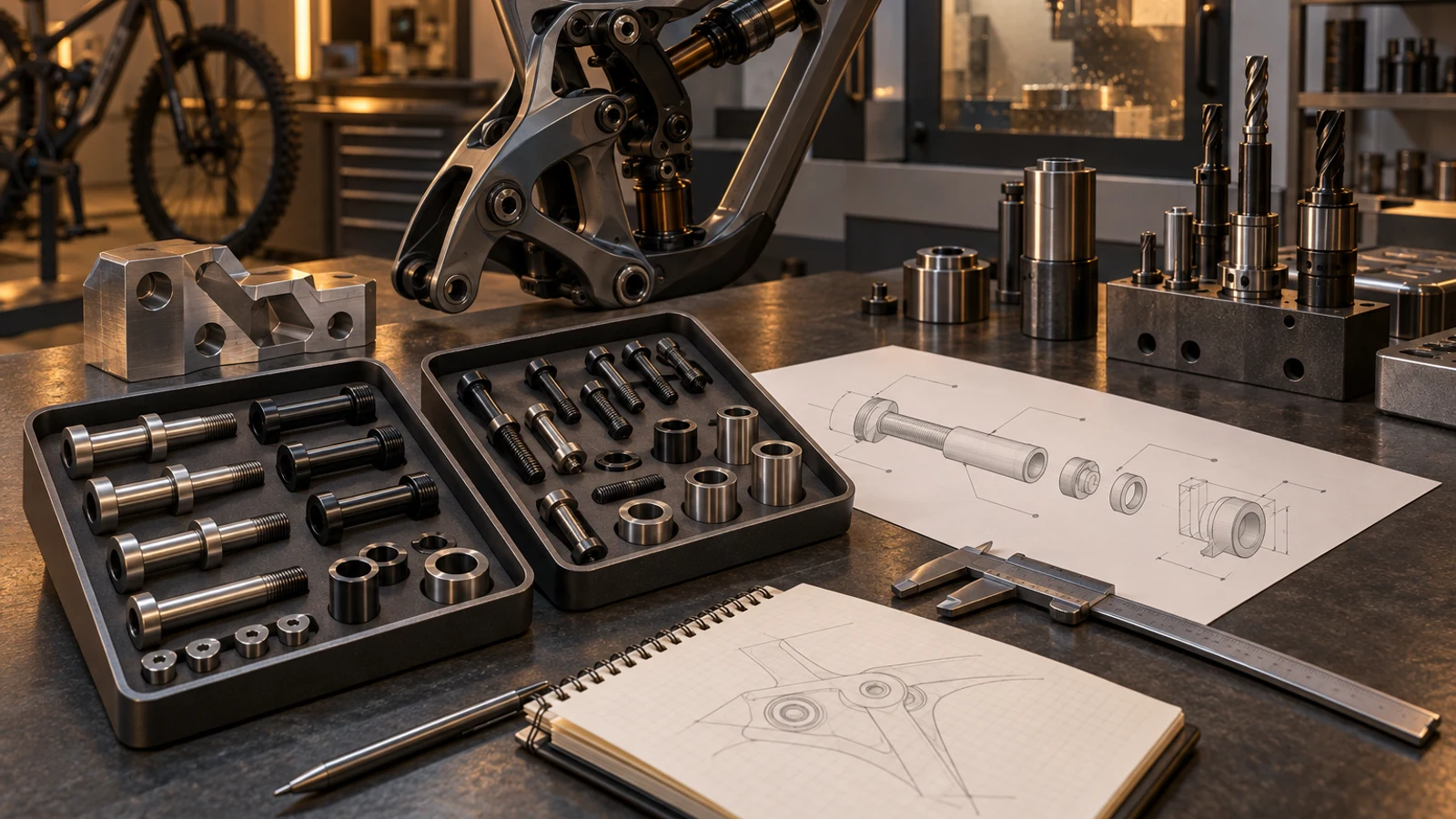
Useful manufacturing experience helps an OEM understand a custom pivot feature and the conditions that affect its manufacture. When evaluating PremFixer, look for a specific explanation of the shoulder, thread, material state or finishing requirement being discussed, not only a statement of years in business. An earlier solution can inform a new drawing without qualifying it. The geometry, mating interface and supplied condition may have changed. Distinguish company history from team experience, and compare the relevant learning with the present requirement. Past project volume, product photographs and a familiar part shape do not establish approval for your bicycle application.
Hero: concept illustration of example hardware and its application. It is not a factory photograph, tested component or approved production geometry.
Separate business history from relevant technical experience
Company history describes an organization and its activities over a stated period. Team experience describes the work performed by particular people. Do not add overlapping careers together and treat the total as the age of a factory or proof of continuous experience with one pivot family.
For supplier selection, identify the part and process experience that relates to your task. General fastener manufacture, drawing-led pivot development and complete kit supply can involve different decisions. A long history in one field is not automatically evidence for an unfamiliar material or assembly interface.
PremFixer's confirmed scope includes in-house cold heading, CNC machining, thread rolling and tool/die manufacture, coordinated with qualified partner operations. Discuss how the relevant manufacturing scope addresses your drawing; do not interpret that scope as a dated project history or universal route availability.
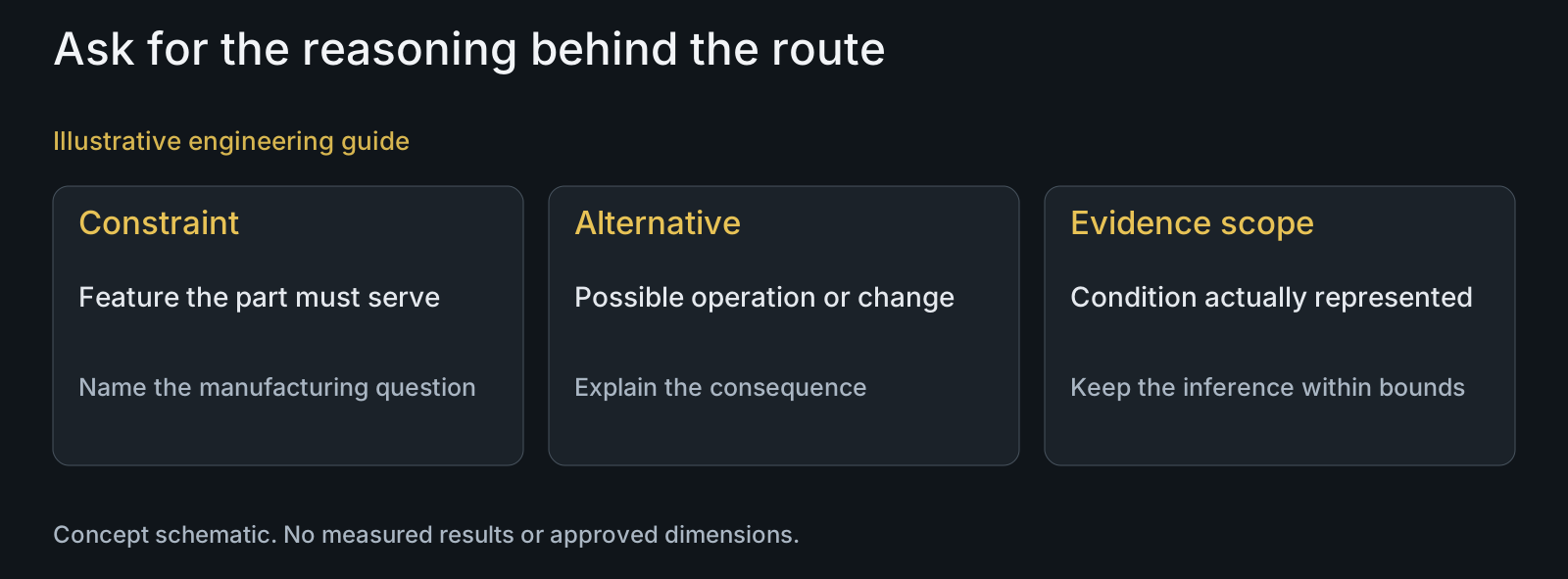
Ask what decision was learned rather than only what part was made
A useful explanation connects a constraint to a decision. If access near a shoulder affects a proposed operation, the response should identify the feature and explain the consequence. A photo of a similar bolt may help communication, but it cannot supply the missing material, tolerance or processing context.
Ask what alternatives were considered and why the selected approach served the requirement. Keep the rationale separate from any measured result. An engineering explanation can be valuable even when a confidential project record cannot be shared, but it should not be presented as an invented customer success.
The NIST publication abstract on manufacturing knowledge management discusses integrating and updating knowledge across design, planning, production and inspection. It supports the importance of transferable information, not a claim that PremFixer operates a particular knowledge system or achieved a measured improvement.
| Experience item | What it can support | What it cannot prove | Buyer review |
|---|---|---|---|
| Company history | Activities during a defined period | Approval of a new custom interface | Identity, dates and relevant work scope |
| Similar part photograph | Shared visual feature context | Material, tolerance or current fit | Compare the actual drawing and condition |
| Feature-level explanation | Reason for a proposed operation | Unreported measured outcome | Constraint, alternatives and decision |
| Earlier process lesson | Candidate reasoning for reuse | Transfer across every changed condition | Geometry, material and finish differences |
| Authorized project record | Its represented configuration and result | Every future order or public disclosure | Scope, permission and relevance |
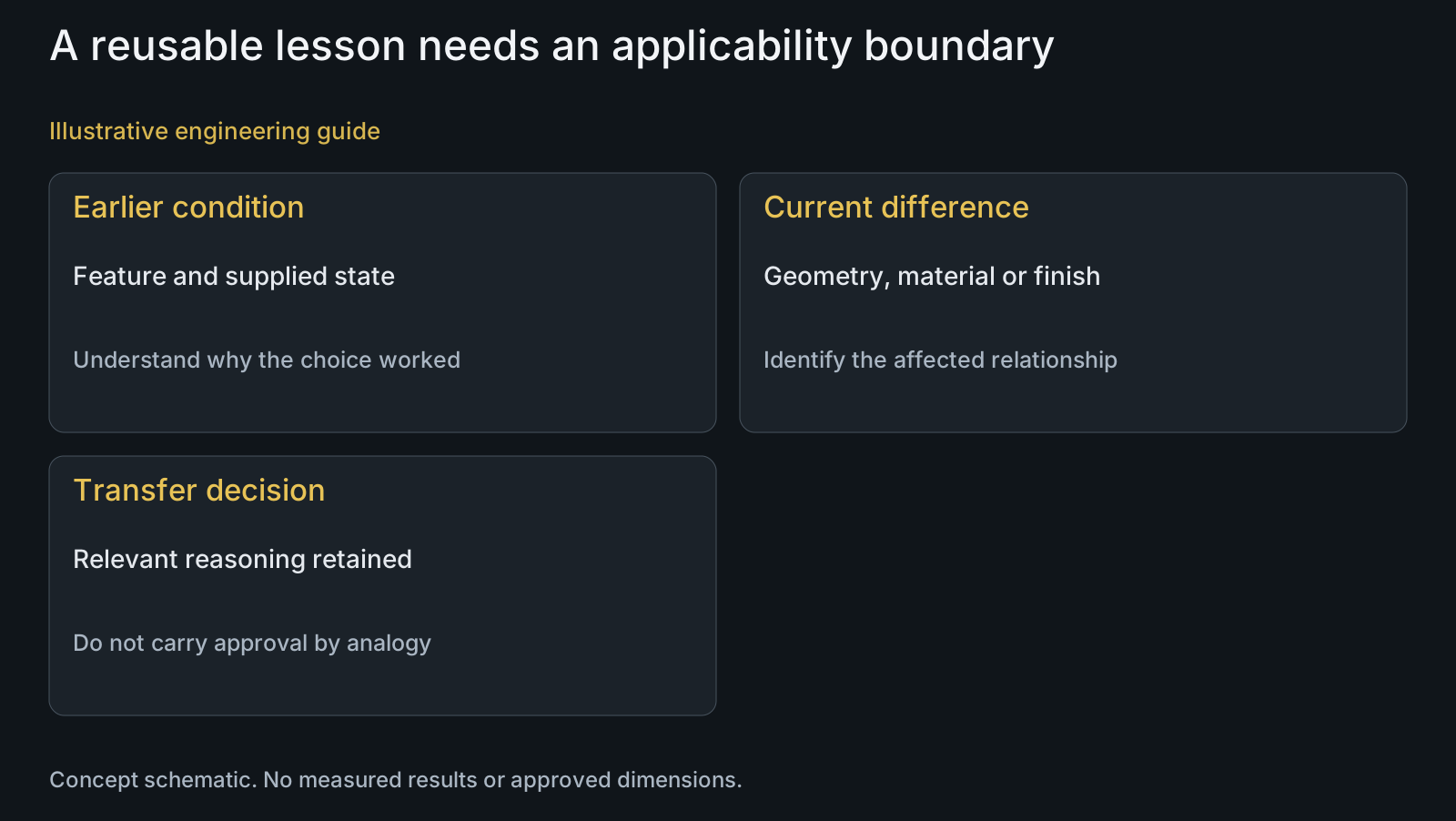
Identify the boundary of an earlier solution
A lesson should state the feature, material and supplied condition to which it applied. If the new part changes one of those fields, examine whether the reason for the earlier choice still holds. Reuse the explanation, not an unexplained operation list.
For example, similar external geometry does not establish identical finishing or final inspection requirements. A treatment change can alter the question the team must answer about a finished surface. The old route is a candidate to review, not permission to carry over every acceptance assumption.
Use the drawing DFM discussion to identify affected features. Relevant material context helps define the starting state. The customer design remains the baseline unless a proposed change is authorized.
Review how an explanation survives a handoff
Experience has limited purchasing value if only one person remembers why an interface was produced in a particular condition. Ask whether the proposed scope connects the part definition to the required operation and evidence. The next team should be able to understand the reason, not merely copy an old job name.
A useful handoff preserves the relationship between requirement, proposal and accepted condition. If the order changes, it identifies which relationship needs review. This is narrower and more practical than a generic promise that all previous lessons are permanently captured.
Do not confuse this review with an audit of every internal record. Request the information relevant to the current feature and supplied package. The one-stop pivot guide addresses operational responsibility; here the concern is whether the reasoning can be understood and reused.
Test an earlier lesson against a different sleeve condition
Illustrative engineering example: assume a supplier explains a previous route for a shoulder-and-sleeve interface, while a new OEM drawing uses similar geometry with a different specified finish. No actual customer, historical route, tolerance or measured result is assumed.
The earlier explanation may help identify the locating feature and operation sequence. It does not demonstrate that the changed finish leaves the new interface acceptable. The useful next question is what final condition must be supplied and how the relevant feature will be evaluated after that change.
If the finish changes only a nonfunctional surface under the stated requirements, less of the earlier reasoning may need to be reopened. If it affects the locating surface, the boundary is different. The experience value lies in identifying that distinction, not declaring either case automatically approved.
Use a representative drawing to assess the present response
Provide one representative pivot or kit drawing and identify the unresolved decision. Ask the supplier to explain the relevant feature, proposed approach and remaining uncertainty. That response makes the usefulness of experience visible for your actual project.
Authorized historical evidence can strengthen the discussion when its scope is clear. Do not demand disclosure of another customer's drawing or infer a named customer relationship from a generic example. A confidential reference and a public engineering illustration serve different purposes.
Keep the present requirement for the intended bicycle application separate from the history being discussed. No age, project count or reusable lesson removes the OEM's design and validation responsibilities. Select the next review on the basis of the information and approval state you actually have.
Questions buyers need to confirm
How should I assess PremFixer's manufacturing experience?
Ask how the relevant feature, material and supplied condition affect the proposed route. Compare the explanation with your drawing and any authorized evidence. Years in business alone do not establish that the new pivot configuration is suitable.
Are company age and accumulated team experience the same?
No. They describe different subjects and may cover overlapping periods. Ask whose experience is stated, what activities it covers and how it relates to the requested part. Do not treat summed careers as a factory founding date.
Does a photograph of a similar pivot prove relevant experience?
It can help illustrate geometry, but not the hidden specification or delivered result. Compare the shoulder, mating parts, material state, treatment and acceptance fields. A visual resemblance does not qualify your interface.
Can a proven route be reused after changing material or finish?
Treat it as a candidate rather than automatic approval. Identify which features and process relationships change, then review the required finished condition. The earlier decision remains useful only within the conditions its rationale supports.
Must a supplier reveal another customer's drawing to demonstrate experience?
No. Authorized records or a bounded technical explanation can support discussion without exposing confidential information. Keep any public illustration clearly separate from a real customer result and assess the current proposal against your requirements.
What is a useful first request for an experienced custom manufacturer?
Send a representative drawing or STEP, mating context and supplied-condition requirements with the unresolved question. Ask for a feature-specific explanation and proposed next decision. This tests relevance more directly than a general request for a company presentation.
Technical references and scope
NIST publication abstract: Towards Knowledge Management for Smart Manufacturing. Published abstract on integrating and updating manufacturing knowledge; not verified PremFixer practices, a full-paper case study or a quantified company result.
Explore related component, material and sourcing decisions in the customer decision knowledge center. For a drawing review, use the Drawing/BOM RFQ path.
Make experience relevant to your current pivot decision
Send the pivot drawing or STEP, mating sleeve information, material and finish requirements and the question your team needs to resolve. PremFixer can discuss which manufacturing considerations apply, what changes the proposed approach and which conditions still require project-specific review.
Discuss the drawing and BOM