
A single Gulf certificate cannot be assumed to settle every Saudi bicycle-hardware shipment. Gulf conformity marking concerns products covered by relevant technical regulations; Saudi Saber also distinguishes commercial products from products not intended for consumer display. For a custom pivot, identify whether the supplied goods are an individual OEM assembly input, a service kit or part of another product before the importer selects the applicable path. A factory purchase is not automatically exempt, and an ISO 4762 reference does not complete portal or shipment requirements. Agree the actual importer tasks before accepting a delivery commitment.
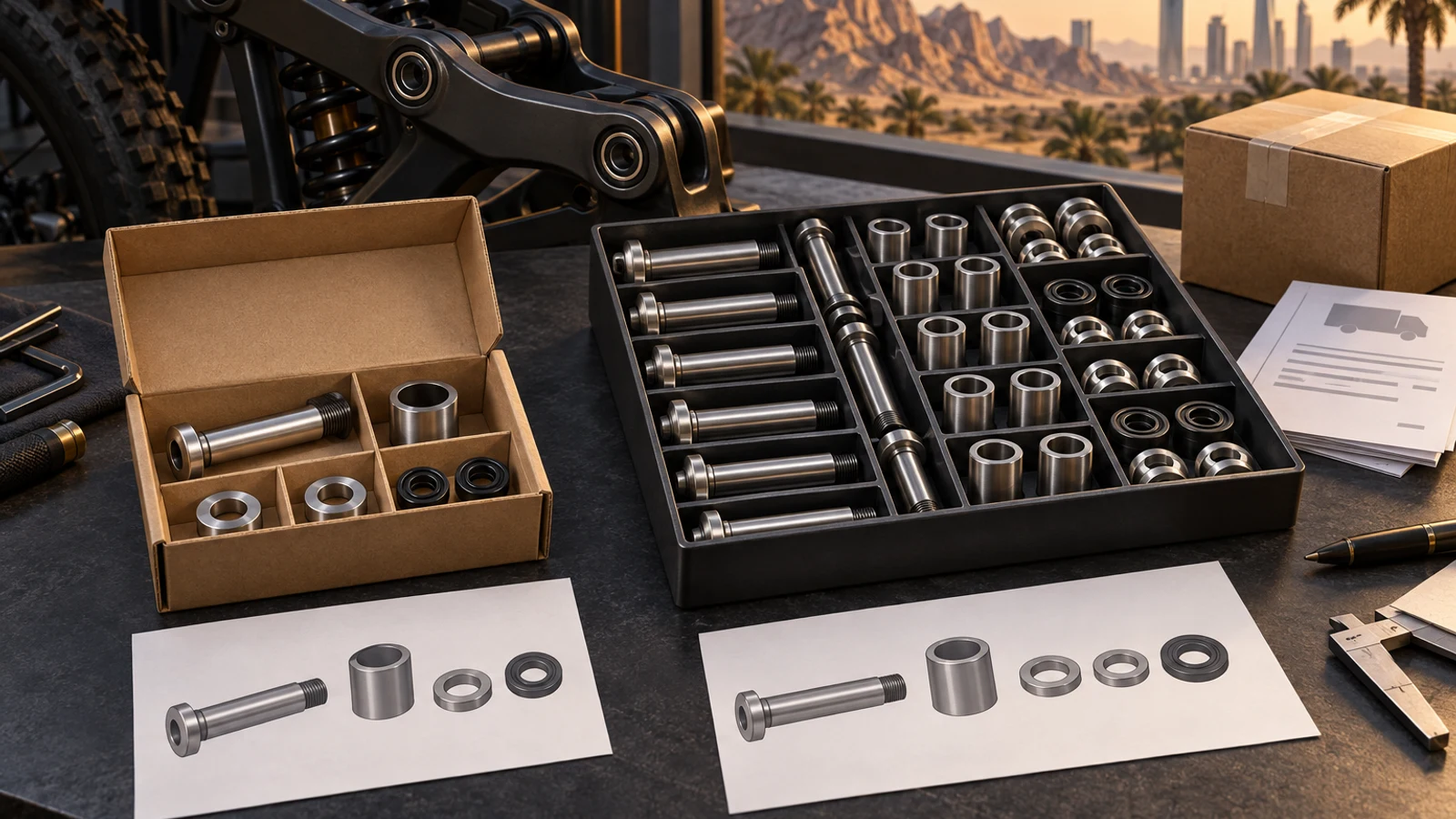
Hero: concept illustration of example hardware and its application. It is not a factory photograph, tested component or approved production geometry.
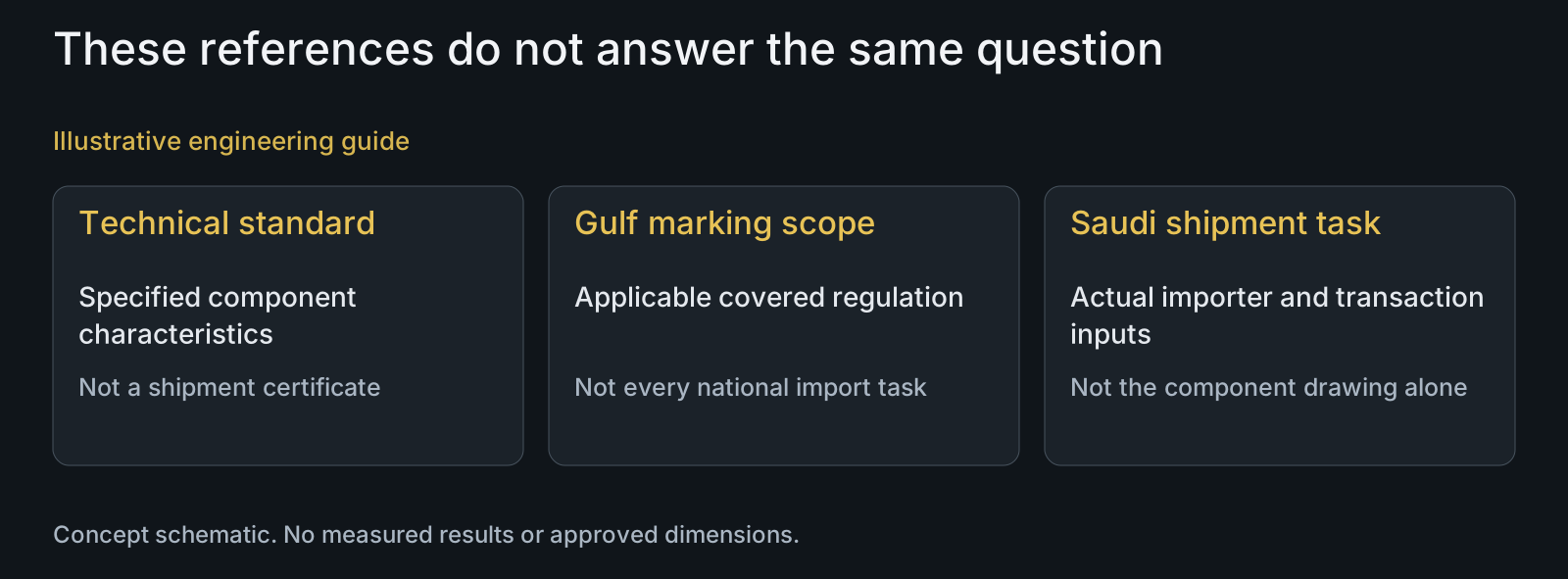
Separate a Gulf mark from a Saudi import task
GSO explains that Gulf conformity marking relates to applicable Gulf technical regulations and the assessment procedures those regulations establish. Its public explanation is not a universal certificate requirement for every machined bicycle bolt. Ask which covered product category and regulation a proposed mark actually concerns.
Saudi Saber is a national platform for product and conformity registration and shipment-certificate services. A region-wide description cannot determine the tasks for a particular Saudi order, nor establish another Gulf destination's acceptance. Identify the destination importer and actual supplied goods before borrowing a route from another project.
The ASEAN evidence-reuse guide concerns common technical facts across destinations. This guide addresses a different distinction: consumer-facing goods and OEM inputs can lead to different Saudi portal questions even when their machined geometry is unchanged.
Describe consumer display and OEM supply accurately
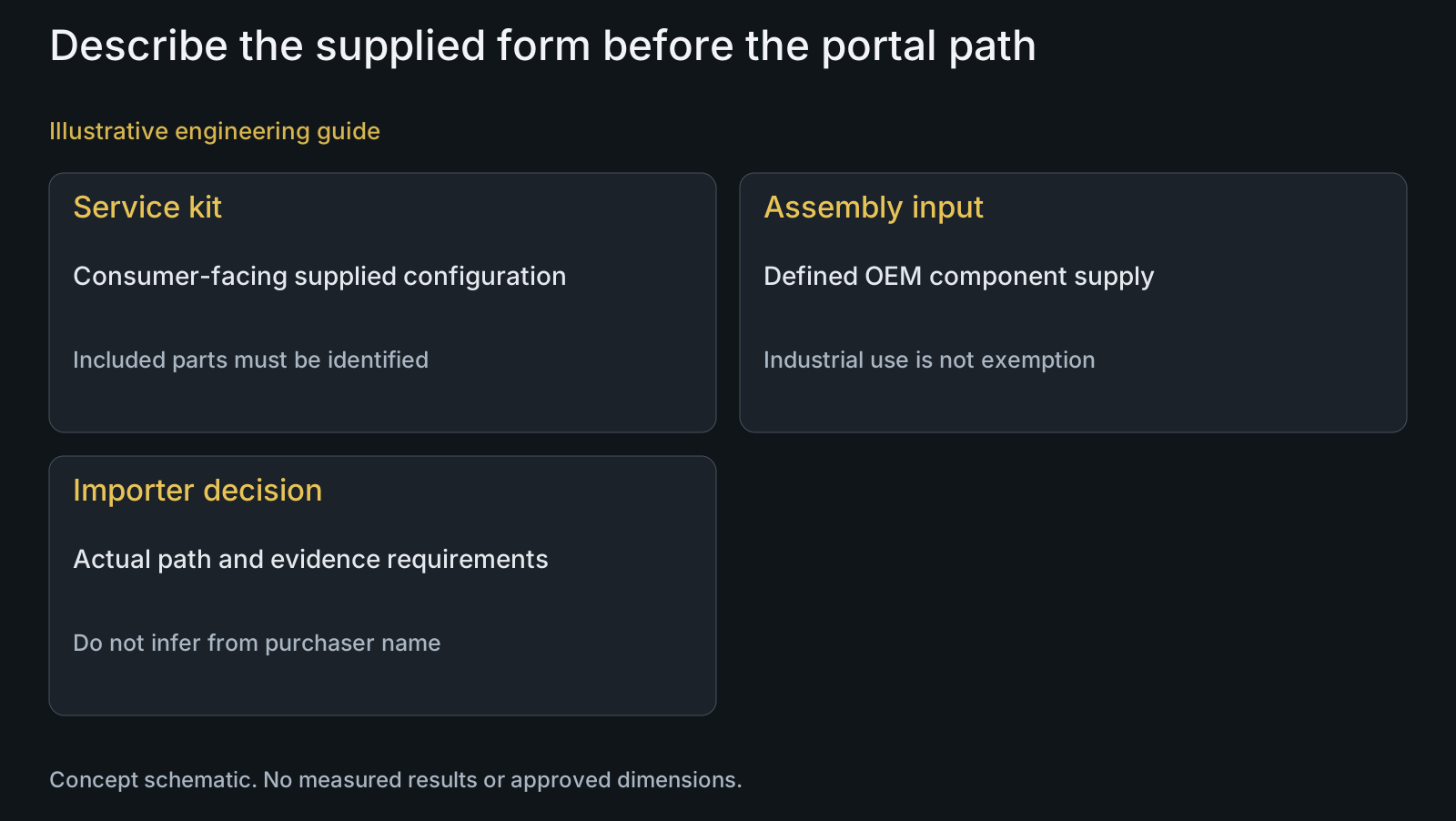
Saber's current public services distinguish a commercial-product path from a path for products not intended for display to the consumer. Do not choose between them solely from the purchaser's company name. Describe the goods' supplied form, intended use and how they enter the buyer's activity, then have the responsible importer confirm the correct path.
A labelled service kit intended for customer sale and bulk components delivered to a frame assembly operation have different supply descriptions. The latter is not automatically a personal-use import or a declaration of exemption. An OEM description should explain the included parts and assembly use without concealing how the goods will be supplied.
Keep a common controlled drawing where the component is identical, but identify packaging, included receiver or spacers and the responsible importer for each order. Use the drawing and BOM guide to make those physical differences explicit before portal data are prepared.
| Order situation | Input that changes the review | Risk of a generic Gulf answer | Action to verify |
|---|---|---|---|
| Consumer-facing service kit | Included receiver, spacers and intended sale | Loose-part description hides kit scope | Importer confirms product and commercial path |
| OEM assembly components | Actual assembly use and supplied BOM | Industrial purchase mistaken for exemption | Importer confirms applicable non-display or other path |
| Product conformity request | Covered goods and relevant requirements | One certificate assumed for every supply form | Establish the actual product evidence basis |
| Shipment-certificate task | Actual transaction and required documents | Drawing treated as shipment evidence | Use current importer service requirements |
| New label instruction | Named technical regulation and supplied object | Portal banner copied onto every pivot | Verify scope and engineering marking location |
| Delivered-price quotation | Owner of each local and external task | Delivery wording hides unassigned actions | Agree responsibilities and separate costs |
Product evidence does not replace shipment information
SASO's commercial-product shipment service describes product registration and registration of a product conformity certificate or a self-declaration as inputs to that service. Which evidence applies must follow the actual route. Do not interpret these alternatives as permission to select whichever document is easier for an undefined pivot.
Saber's separate service for products not intended for consumer display identifies product data, a bill of lading and an imported-product invoice among its requirements. A drawing can describe a component, but it cannot stand in for the actual transaction documents. Keep the product identity consistent across the BOM, invoice and intended supplied configuration.
The importer should establish the current service and requirements for the actual shipment. This article does not submit a portal application, determine a tariff code or confirm that a custom pivot qualifies for a particular path. A quote should show which input remains outstanding rather than imply clearance has been obtained.
Check standards and label notices within their stated scope
ISO's public description identifies ISO 4762 with hexagon socket head cap screws. It does not establish that every custom pivot has a Gulf or Saudi equivalent requirement, or that a standard head defines the bearing shoulder and receiver. Confirm any requested national reference and retain the custom interface requirements.
Saber's supplier-name and commercial-registration-number circular, effective 1 October 2026, lists ten technical regulations. Its published list is not a blanket notice naming every loose bicycle pivot. Have the importer identify the actual applicable labelling basis instead of copying a banner into every component drawing.
Ask whether information belongs on the component, a supplied kit or its package under the established requirements. Engineering should separately review any proposed marking on a bearing seat or clamp face for interference with the ordered surface and fit. This is a design review, not a claimed regulatory permission to relocate a required label.
Illustrative engineering example: two supplied forms, one drawing
Illustrative engineering example: assume the same custom pivot geometry is planned for an OEM frame assembly order and a consumer-facing replacement kit. The latter includes a receiver and spacers; the assembly order has a different supplied BOM. No actual Saudi route selection, registered product or accepted shipment is assumed.
The manufacturer retains the common component drawing and separates the supplied configurations. Each importer confirms the applicable path and required product or shipment inputs. The buyer cannot reuse a kit description for the assembly supply merely because the pivot itself looks identical.
Purchasing then assigns who provides technical records, prepares shipment data and obtains any required external assessment. The comparison prevents an undefined Gulf certificate line from hiding an unresolved Saudi task. It does not demonstrate clearance or suggest that industrial use avoids applicable requirements.
Connect delivery responsibilities to the chosen path
Agree who prepares the product description, supplies manufacturing evidence, handles importer actions and accepts any external service cost. A delivery term alone should not be treated as proof that the supplier can perform every local regulatory task. Identify the responsible party and required inputs alongside the commercial commitment.
Keep manufacturing work, any assessment-provider service, portal charges and logistics responsibilities distinguishable in the offer. A public portal fee is not the total cost of an undefined compliance project, and a published service estimate is not a guarantee of shipment acceptance. No fixed fee or approval duration is promised here.
PremFixer can discuss manufacturing, materials and suspension hardware against defined customer requirements. Keep the customer decision knowledge center as the entry point for adjacent engineering questions after the importer path is clarified.
Questions buyers need to confirm
Can one Gulf certificate cover every Saudi pivot shipment?
Do not assume that. Establish the covered technical regulation and actual goods, then confirm the Saudi importer path and shipment requirements. A regional mark does not define all national tasks for each order.
Does buying components for a factory automatically avoid Saber tasks?
No automatic exemption follows from a factory purchase. Saber has a separate path for products not intended for consumer display, but the importer must confirm its applicability to the actual supplied goods and transaction.
What distinguishes a service kit from an OEM supply for this review?
The intended supply and use, included BOM and presentation matter. Explain whether the goods are a customer-facing replacement kit or defined assembly inputs. Keep the receiver, spacers and responsible importer explicit rather than use one vague hardware description.
Can a technical drawing replace shipment documents?
No. It answers geometry questions. The official non-display service identifies product data, a bill of lading and the imported-product invoice. Have the importer establish the current requirements and keep transaction and component identities consistent.
Must the October 2026 supplier-label notice be copied onto every pivot?
Do not infer that. The published circular lists ten technical regulations. Confirm the actual applicable product and labelling basis, then review the required location alongside shoulder-fit and surface requirements; this guide grants no exemption or alternative placement.
What does PremFixer need for a Saudi or Gulf hardware RFQ?
Provide the drawing or STEP, supplied BOM, material and finish, destination, intended use and whether the supply is for consumer display or assembly. Identify the importer, requested evidence and unresolved path questions so manufacturing and local responsibilities can be agreed.
Technical references and scope
GSO: Gulf conformity mark. Public explanation connects regional marking to covered technical regulations and their assessment procedures. Not a universal custom-pivot certificate.
Saber: current platform paths and services. Current public commercial and non-consumer-display paths, product and shipment services, and linked scope-specific notices. No actual importer classification performed.
Saber: shipment service for products not intended for consumer display. Public service purpose and listed product data, bill of lading and imported-product invoice. Does not establish that every OEM pivot follows this path.
SASO: commercial-product shipment-certificate service. Public service description separates product registration and product certificate or self-declaration from the shipment task. No route, total cost or duration guarantee for a custom pivot.
Saber: supplier-name and commercial-registration circular. English page lists ten technical regulations and an effective date of 1 October 2026. Not a blanket label instruction for every bicycle fastener.
ISO: ISO 4762 public catalogue. Public socket-head cap-screw product identity. Not complete clause review, a Saudi/Gulf equivalence or approval of custom bearing interfaces.
Explore related component, material and sourcing decisions in the customer decision knowledge center. For a drawing review, use the Drawing/BOM RFQ path.
Identify the supplied hardware and responsible importer
Send the drawing or STEP, BOM, material and finish, destination and intended supplied form. Include the importer's confirmed path or outstanding questions and requested component evidence. PremFixer can discuss manufacturing inputs and responsibilities without promising a Gulf mark, Saber acceptance or customs clearance.
Discuss the drawing and BOM