
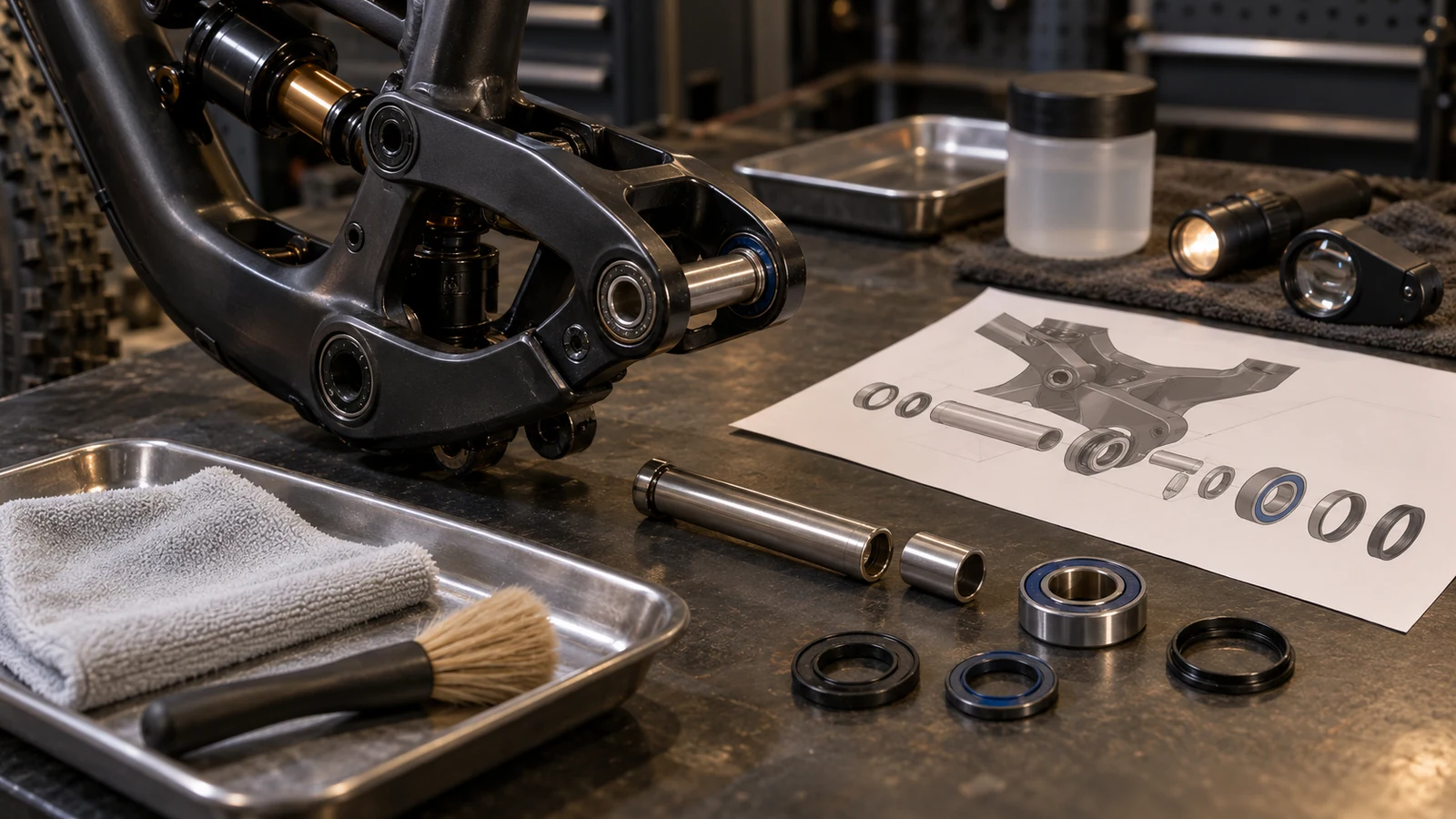
A titanium pivot bolt does not make a suspension joint maintenance-free. The visible fastener is only one part of an assembly containing bearings, seals, receivers and retention interfaces. Use the bicycle model's cleaning and service instructions rather than assigning care solely from the titanium grade. Routine dirt removal, investigation of new play or binding, and decisions about disassembly or reuse are different tasks. A clean bolt head does not establish the condition of the hidden interfaces. If movement or damage raises a safety concern, stop using the bicycle and obtain appropriate service assessment instead of adding torque or lubricant to conceal the symptom.
Hero: concept illustration of example hardware and its application. It is not a factory photograph, tested component or approved production geometry.
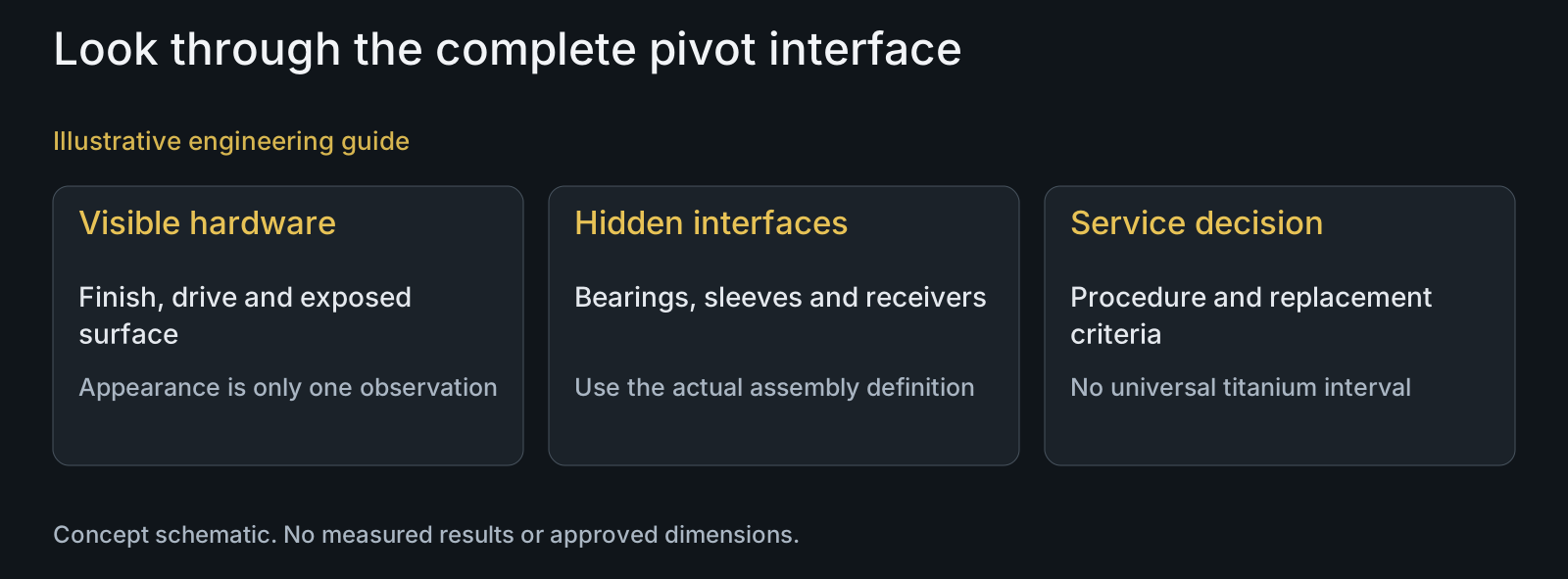
Look beyond the exposed titanium surface
List the parts that the pivot connects and the interfaces that permit or restrain movement. A bearing may provide rotation while the bolt clamps a sleeve or inner-ring stack. The relevant service question is which interface is moving, not whether the exposed bolt remains shiny. The pivot preload guide separates these roles.
A material's corrosion behavior does not establish the condition of adjacent seals, bearing surfaces or a threaded receiver. Mud around a joint also does not reveal its internal condition. Inspection should follow the released assembly requirements and observed symptoms, with the hardware material recorded as one input.
For OEM documentation, distinguish a routine owner check from a service operation requiring tools, disassembly or replacement parts. Otherwise an instruction to inspect the pivot can be mistaken for permission to loosen it. Titanium alone does not define a reusable fastener policy or a maintenance interval.
Keep cleaning within the whole assembly's limits
Trek's bicycle maintenance guidance warns against pressurized washing because water can enter unwanted places and describes gentle cleaning followed by drying. This is a manufacturer example, not a universal cleaning approval for every frame, seal or titanium finish.
Check the actual cleaner, application method and nearby materials against the bicycle's instructions. A product compatible with bare titanium is not automatically suitable for a coated head, painted frame, bearing seal or installed retention compound. Keep the distinction between a removed bare reference part and an installed joint clear.
Do not prescribe a blanket chemical ban or a solvent recipe from the alloy name. Obtain the cleaner information and assembly compatibility decision. If the permitted method does not remove a mark, document it and request assessment rather than escalating abrasion on a working shoulder or exposing seals to an unspecified chemical.
| Observed condition | Appropriate decision | Risk of the wrong response | Information to confirm |
|---|---|---|---|
| Routine exterior dirt | Use the model-approved gentle cleaning method | Liquid or cleaner reaches incompatible interfaces | Cleaning instruction, finish and adjacent materials |
| Persistent surface mark | Identify its location and functional relevance | Abrasive treatment changes a working surface | Photos before intervention and affected feature |
| New play | Seek the applicable joint assessment | Extra torque hides or adds an interface problem | Where movement occurs and assembly revision |
| Binding after a change | Record the change and investigate the relevant interface | Lubrication is treated as proof of root cause | Service, cleaning and component-change history |
| Hardware removed for service | Apply the named reuse and replacement criteria | A clean part is assumed automatically reusable | Bolt, receiver, sleeve and bearing conditions |
| Titanium substituted for another material | Review the released supply and service definition | Material choice silently changes care instructions | Finish, retention, assembly and maintenance requirements |
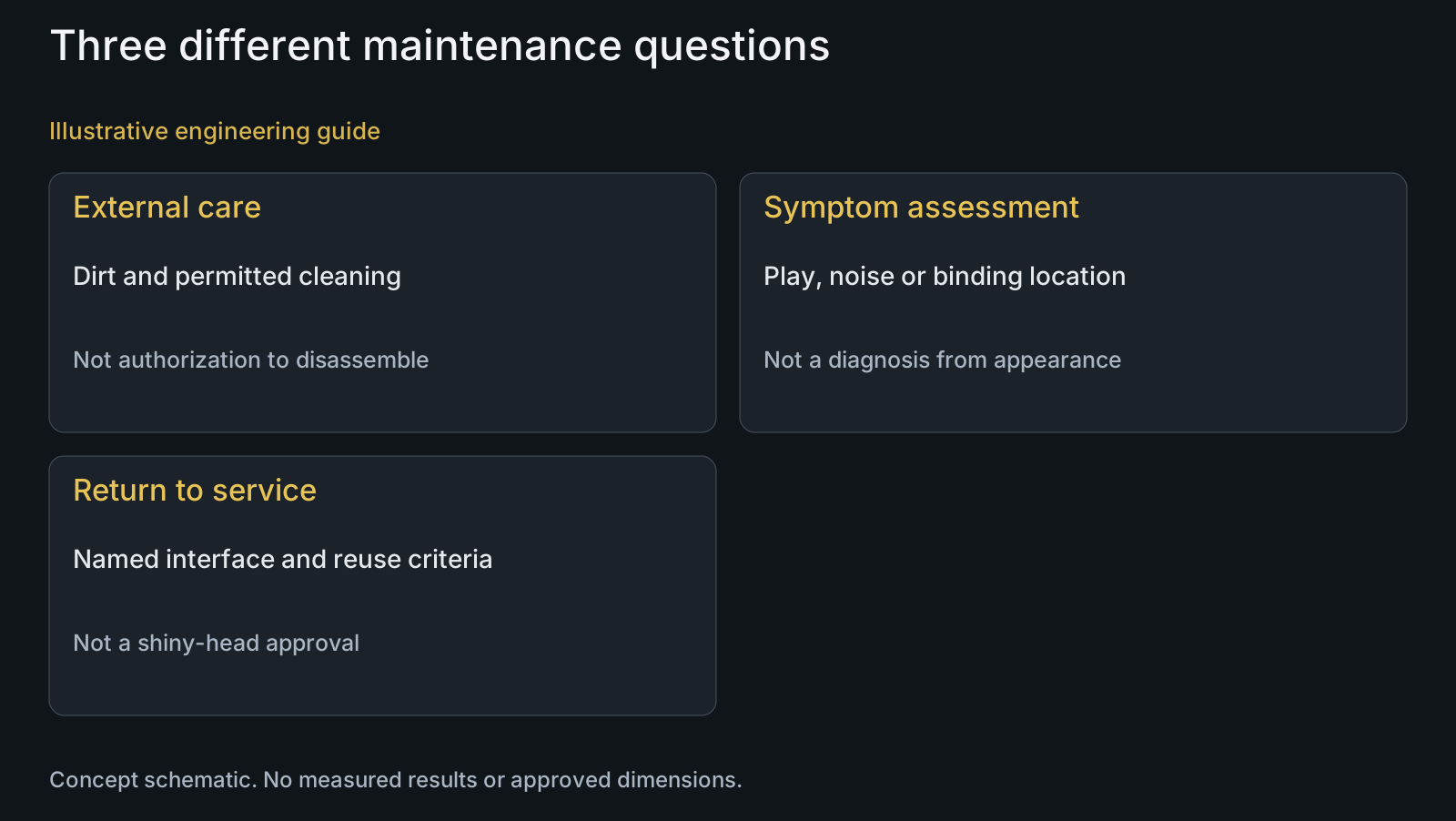
Treat play, noise and binding as observations
Record when the symptom occurs, where movement appears and whether it changed after an impact, cleaning, service or component substitution. A noise alone does not identify titanium galling, bearing damage or an incorrect spacer. An observation is useful because it narrows the investigation; it is not already the root cause.
Do not respond to play by tightening beyond the specified assembly procedure. Trek's torque guidance explains that both over-tightening and under-tightening can create problems and directs users to component-specific specifications. No torque from another model or unrelated fastener is transferred here.
Adding lubricant is also a change, not a diagnosis. The titanium lubricant selection guide separates smooth-interface lubrication from thread retention. If a product enters the wrong zone, the attempted noise remedy may alter a different function. Leave adjustment and disassembly to the applicable service method.
Define reuse and replacement at the component level
After authorized removal, evaluate the named functional surfaces under the relevant service criteria. Thread damage, altered drive features and a marked fit-controlling shoulder raise different questions. Do not polish, recut or recoat a surface merely to improve appearance without an approved repair decision.
The mating part matters to the return-to-service decision. A replacement bolt does not correct an unassessed receiver, sleeve or bearing condition. Record the assembly revision and any replacement components so the reviewer can identify the configuration being evaluated.
For a custom supply program, state the OEM's reuse policy and replacement identification needs in the drawing or associated service documentation. PremFixer's manufacturing review can address the supplied hardware definition. It does not create universal owner-service authority, replacement intervals or compatibility with unspecified bicycle models.
Illustrative review: a clean head and a changed joint
Illustrative engineering example: assume an owner notices binding after washing a suspension bicycle fitted with titanium reference hardware. The visible heads are clean, and no cause or measured defect has been established. The proposal is to add anti-seize to the assembled joint and tighten the bolt again.
The reviewer first separates the observation from the proposed remedies. Useful inputs include the bicycle and hardware revision, permitted cleaning method, where resistance is felt, and whether recent service changed the sleeve, bearing or retention condition. The clean head does not answer those questions.
The service decision follows the actual assembly procedure, with examination of the relevant interfaces if authorized. The example does not conclude that water entered a bearing or that titanium caused the symptom. It shows why an appearance-based maintenance claim and an improvised tightening response cannot establish readiness for use.
Questions buyers need to confirm
Are titanium pivot bolts maintenance-free?
No. Titanium does not remove bearing, seal, receiver or retention requirements. Use the model's care and service instructions; a corrosion-related material choice is not a whole-assembly maintenance policy.
Does a clean titanium head prove that the pivot is in good condition?
No. Hidden interfaces may need assessment under the actual procedure. Record new play, resistance or damage separately rather than treating exterior appearance as functional acceptance.
Should I tighten a noisy or loose pivot more?
Do not exceed or improvise the specified procedure. Identify the assembly and where movement occurs, and seek appropriate service assessment. Neither a noise nor visible play supplies a new torque specification.
Can a titanium-compatible cleaner be used on an installed pivot?
Not from that statement alone. Check its compatibility with the actual finish, seals, frame and other exposed materials, as well as the permitted application and drying method.
Does titanium require a standard cleaning or replacement interval?
No universal interval is defined here. The model's released maintenance requirements, exposure, service history and observed condition govern; material grade alone does not determine reuse or replacement.
What should an OEM provide for a pivot maintenance review?
Provide the hardware and assembly revisions, finish, mating interfaces, retention condition and existing cleaning and reuse instructions. Identify whether the question is routine care, a symptom investigation or a proposed component change.
Technical references and scope
Trek: Bicycle maintenance and washing tips. Manufacturer example of pressure restrictions and gentle cleaning/drying. Not universal seal, finish or cleaner compatibility.
Trek: Owner's manual torque guidance. Over/under-tightening risks and actual component specifications. No unrelated torque transferred.
Explore related component, material and sourcing decisions in the customer decision knowledge center. For a drawing review, use the Drawing/BOM RFQ path.
Connect custom hardware to the intended service instruction
Send the pivot drawing or STEP, assembly section, bearing and sleeve BOM, hardware finish and current cleaning, retention and reuse requirements. Identify any observed symptom or planned material change. PremFixer will review the supplied hardware and interface definition so the OEM can resolve the appropriate manufacture and service questions without treating titanium as maintenance-free.
Discuss the drawing and BOM