
Titanium carburizing research does not establish a qualified surface treatment for every bicycle pivot. An OEM considering a harder Ti-6Al-4V axle needs a specific process proposal, its resulting layer and evidence for the final component state. The direct answer is to assess the complete route, including any later removal or mechanical treatment of an outer compound layer, rather than purchase an aerospace-style label. Formation of a carbide-bearing surface is a materials result, not automatic approval of contact behavior, final fit or cyclic loading. Research specimens also do not establish that a particular manufacturer routinely supplies the proposed treatment.
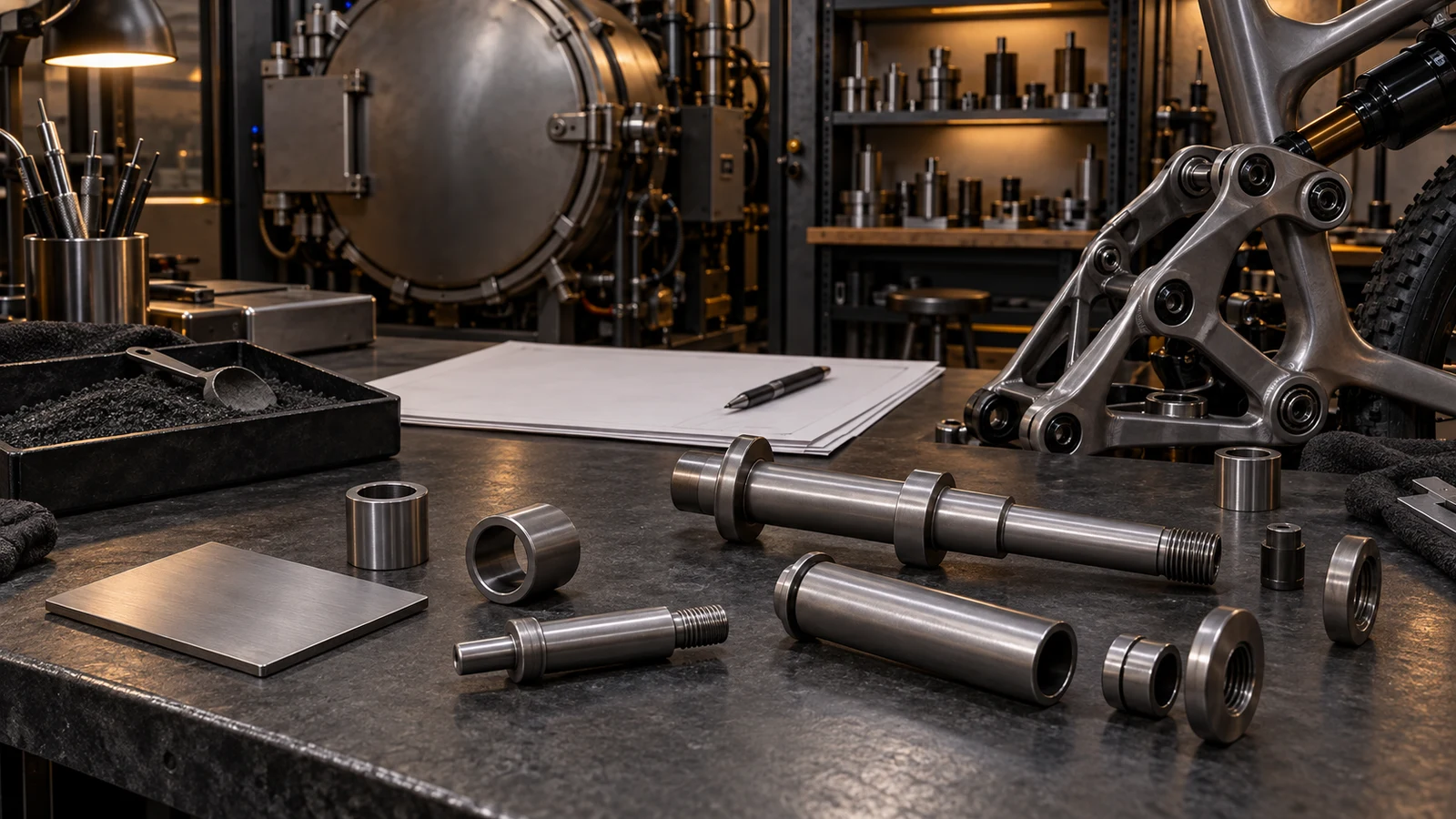
Hero: concept illustration of example hardware and its application. It is not a factory photograph, tested component or approved production geometry.
Carburizing is a family description, not one titanium recipe
Identify how carbon is introduced and what the provider proposes to retain. Plasma, source chemistry and treatment atmosphere are meaningful process distinctions, not interchangeable wording. A proposal called vacuum carburizing still needs its actual material and process scope; the atmosphere label does not describe the whole finished system.
A 2011 titanium conference paper studied double-glow non-hydrogen plasma carburizing of Ti-6Al-4V using a graphite source. It characterized carbide-bearing outer and underlying regions. This is a specific research route, not evidence that an unnamed vacuum process produces the same structure.
Keep titanium research distinct from stainless diffusion hardening. An expanded-austenite stainless explanation is not a description of titanium carbide formation. A familiar surface-hardening term should not conceal a different substrate and mechanism.
Read the layer arrangement rather than only peak hardness
Ask what the outer region contains, how it relates to the underlying modified material and what condition remains after all operations. A surface number cannot describe the entire depth-dependent region. Identify the characterization method and the material location to which a reported property applies.
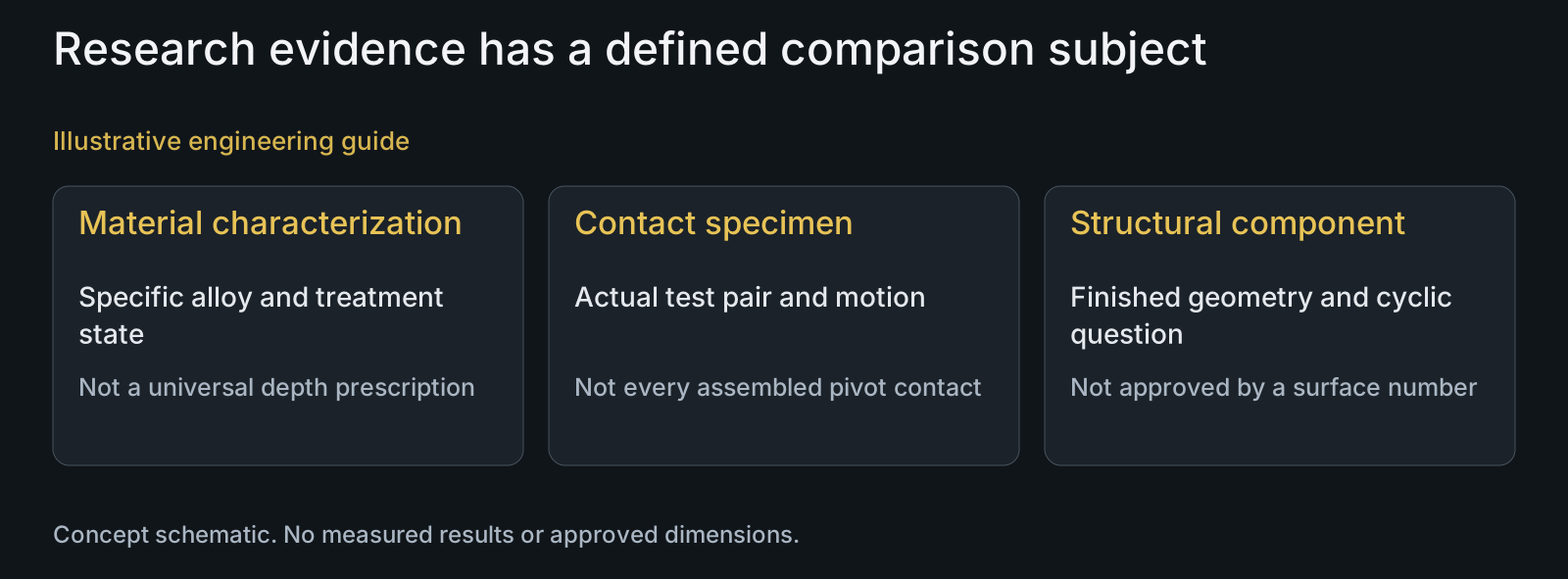
The conference study separately examined phase composition, microstructure, depth-related hardness and friction behavior on its defined specimens. Those categories show why layer identity and contact outcome require more than a headline maximum. Its reported depth or performance is not adopted as a generic target for a pivot.
For engineering review, connect the proposed region to the actual surface function. A sleeve-contact zone, thread and loaded shoulder transition may ask different questions of the same material. Do not assume that the outermost region is the one every interface should retain simply because it is described as hard.
| Proposal element | What it identifies | Risk in transfer | Useful review |
|---|---|---|---|
| Vacuum or plasma label | Part of process identity | Atmosphere treated as complete recipe | Actual carbon route and substrate scope |
| Carbide-bearing outer region | Defined material structure | Formation called component approval | Characterization and retained-region definition |
| Peak hardness | A location and measurement | Maximum called whole-layer performance | Method and depth-related context |
| Later particle or removal route | Changed final surface condition | Duplex result attributed to carburizing alone | Complete sequence and matching evidence |
| Contact evidence | Defined pair and test state | Research specimen called pivot joint | Relevant counterpart, motion and lubricant |
| Aerospace-style description | Unspecified marketing context | Label called qualification or availability | Actual specification and project evidence |
Later processing can be central to the fatigue result
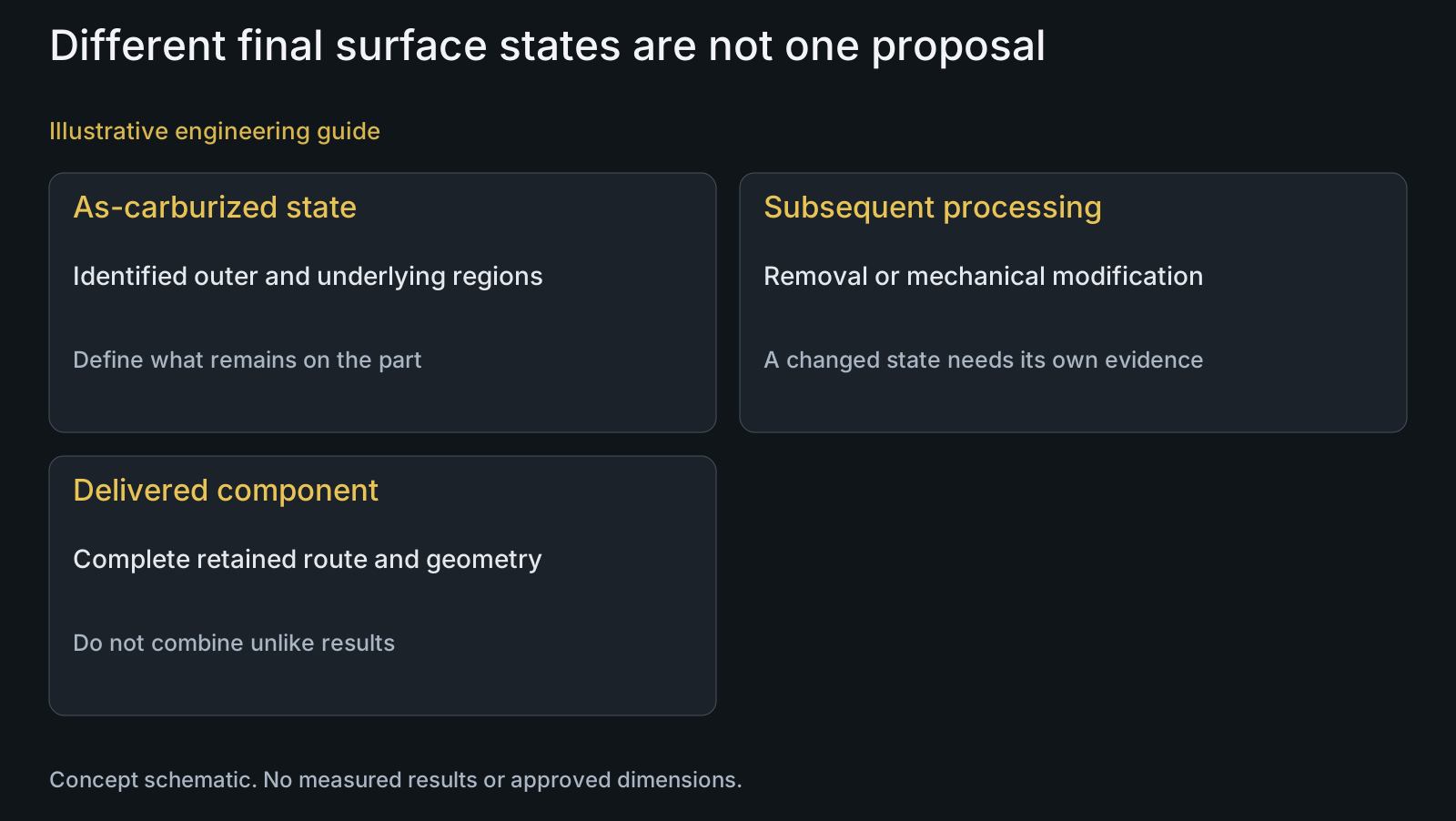
A 2007 Ti-6Al-4V study compared plasma carburizing with a subsequent fine-particle-bombarding route. Its abstract reports crack initiation associated with an outer compound layer in the carburized condition and a changed fatigue response after that layer was removed and compressive stress introduced.
That research does not prescribe particle treatment for a bicycle axle. It establishes a narrower point: the later operation and retained surface condition were part of the investigated result. A quotation citing the final duplex route should not attribute its structural outcome to carburizing alone.
Determine whether the actual proposal preserves, removes or changes the outer layer, and what evidence describes the resulting transition. Avoid combining hardness from one state with fatigue evidence from another as though both describe one supplied component. The pivot analysis-scope guide helps define the component-level structural question.
A contact result does not identify the delivered joint behavior
Specify the actual counterpart, motion and lubrication at the targeted interface. For engineering comparison, a wear assessment needs to represent those inputs rather than merely use the same titanium alloy name. A relevant material result can support development without closing the assembled contact question.
The conference study's specimen and counterface arrangement is not a suspension pivot assembly. Do not transfer its reported contact outcome into a wear guarantee for a threaded axle or convert it into an assembly torque recommendation. The complete joint and tightening requirements remain separate subjects.
Compare the development proposal with the problem defined in the titanium finish-selection guide. A simpler route may also deserve evaluation, but no universal winner is claimed. The decision is which proposal can address the required interface with relevant evidence and compatible geometry.
Treat final machining and treatment boundaries as part of the proposal
Provide the titanium grade and condition, prior thermal history and critical features. Ask the specialist to identify compatibility with the complete proposed exposure rather than approve it from an atmosphere name. The drawing's required substrate condition is not replaced by the surface development objective.
Map the targeted contact, locating seat, thread and shoulder transition, including intended exclusions. Define any subsequent cutting, polishing or mechanical surface operation and the retained state. Do not borrow a layer depth as a universal machining allowance or assume that finishing leaves all surface evidence unchanged.
PremFixer's surface-treatment review can connect these inputs with a proposed specialist scope. Actual availability requires confirmation. A technology's appearance in research does not establish an owned carburizing line, aerospace certification or an already released process for this order.
Do not assemble one promise from different treatment states
Illustrative engineering example: assume a development proposal cites a carburized material's hardness and a duplex-treated material's fatigue behavior. It offers an axle without specifying whether the outer compound layer is retained or whether the later particle operation is included. The intended sliding zone sits near a loaded shoulder transition.
The reviewer separates the cited states and asks which one will actually be supplied. Layer characterization, final geometry and relevant contact and cyclic assessments then need to describe that state. The proposal cannot be accepted as one demonstrated performance package by joining favorable conclusions from unlike conditions.
No actual crack, improved lifetime or approved treatment is asserted. With a drawing, STEP, sample and BOM, the manufacturing discussion can identify the proposed development boundary and missing inputs. The final decision remains about the actual component and route, not the prestige of the treatment label.
Questions buyers need to confirm
Has carburizing of Ti-6Al-4V been studied?
Yes. Specific plasma routes have been studied and characterized in published research. Identify the actual proposed route rather than assume every vacuum-carburizing label describes the same system. Research existence does not establish availability for a PremFixer order.
Does titanium carbide formation prove suitability for a pivot?
No. Layer identity is a material finding. The retained final state, actual contact, geometry and structural requirements need their own relevant assessment; no generic carbide layer is approved here.
Why does later removal or particle treatment matter?
It can change the delivered surface state and the evidence being relied on. The cited fatigue study investigated a complete duplex route, not carburizing alone. State what operations are included and which material condition the reports represent.
Can the research layer depth be used as a drawing allowance?
Not as a universal rule. Define the actual specialist route, relevant layer and any final finishing. Determine the retained region and delivered geometry for the specific component rather than copy a depth from another specimen.
Is an aerospace-grade label a qualification?
No. Ask for the actual specification, process identity and evidence relevant to the component. The label alone establishes neither a certified process nor a compatible bicycle interface or current manufacturing capability.
What belongs in a titanium carburizing development RFQ?
Send drawing, STEP or sample and BOM, titanium condition and thermal history, target contact and counterpart, intended layer boundaries and final operations. Include the complete process proposal and reports with treatment-state identity; separate contact, fit and structural evidence requirements.
Technical references and scope
Li and colleagues, 2011: double-glow non-hydrogen plasma carburizing of Ti-6Al-4V. Original conference research for route identity, carbide-bearing structure and defined specimen characterization; no recipe, hardness, depth or gear-service outcome transferred to bicycle hardware.
Morita and colleagues, 2007: compound-layer elimination and fatigue of plasma-carburized Ti-6Al-4V. Publisher abstract for the distinction between carburized and subsequent duplex-treated states; no numerical fatigue result or recommended particle recipe adopted.
Explore related component, material and sourcing decisions in the customer decision knowledge center. For a drawing review, use the Drawing/BOM RFQ path.
Define the complete titanium surface-development route
Submit drawing, STEP or sample and BOM with titanium condition, target contact, protected interfaces and planned final operations. Include the proposed carburizing and subsequent route so the review can establish the retained state and which material, contact and structural conclusions are actually supported.
Discuss the drawing and BOM