
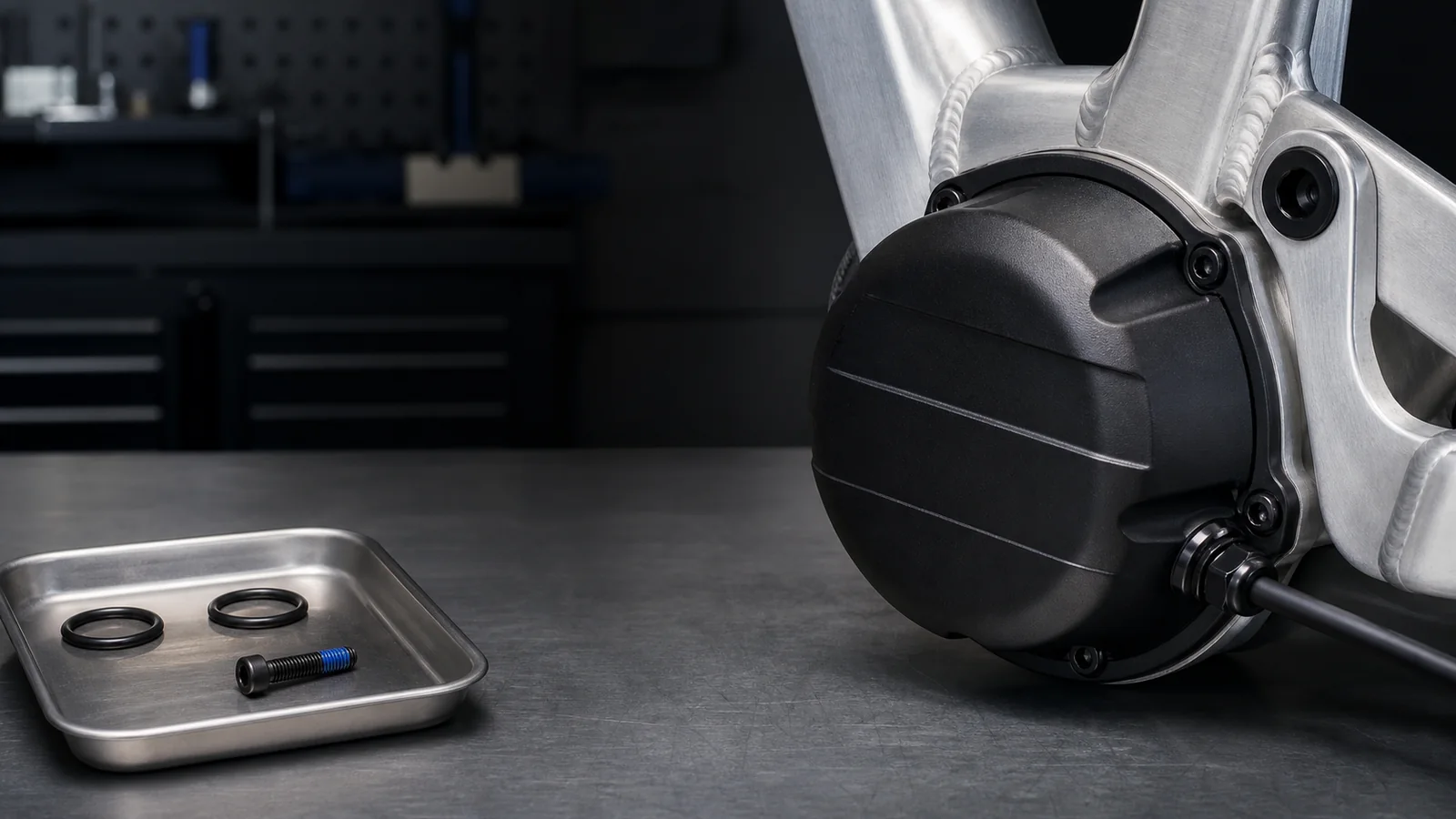
Methodology public; enclosure results confidential. This page explains the review structure and evidence gates without presenting unapproved customer data as a proven result.
Project brief
The engineering decision in context
Engineering question
How should the fastening and sealing interface be defined and tested without treating an individual O-ring bolt as proof of an enclosure-level IP rating?
The anonymized brief concerns water entry near a battery-compartment fastening point. Sealing depends on the complete interface: O-ring material and size, groove fill, squeeze, mating-surface finish, flatness, fastener runout, torque sequence, cover stiffness, temperature, pressure differential, cable glands, other openings, and repeated service assembly.
A sealed fastener can be one control within an enclosure, but it cannot independently establish an IP rating. The production-representative enclosure must be evaluated as a system.
Verification matrix
Controls, records, and release gates
The acceptance requirement is fixed before testing. Each record must identify the drawing revision, sample, method, and decision owner.
| Control | Method basis | Record required | Release gate |
|---|---|---|---|
| Seal geometry | Approved groove, O-ring, and mating-stack drawing with worst-case tolerance analysis | Dimension report, material identification, hardness, and surface-finish record | Worst-case squeeze and groove fill remain inside the approved design window |
| Assembly process | Controlled torque, tightening sequence, O-ring handling, and lubrication specification | Work instruction, calibrated-tool record, seal lot, and assembly traceability | No cut, twist, extrusion, missing seal, or uncontrolled compression |
| Ingress test | Customer-selected enclosure test based on IEC 60529, with all covers, gaskets, entries, and vents fitted | Configuration, duration, water conditions, sample count, preconditioning, images, and post-test inspection | No IP statement without a complete report for the disclosed enclosure configuration |
| Repeated service | Defined open-and-close cycles, seal replacement policy, and repeat testing | Cycle log, inspection images, replacement record, and repeat ingress result | Service instructions match the validated condition |
| EPAC system context | ISO/TS 4210-10:2020 may inform the electrical-system safety and assembly review | Customer system risk assessment and applicable compliance plan | Fastener evidence is linked to the complete EPAC subsystem decision |
Evidence chain
What makes the decision traceable
- 01
Release the enclosure, groove, sealing-stack, and assembly drawings together.
- 02
Trace the O-ring compound, hardness, size, batch, storage, and installation condition.
- 03
Test a production-representative enclosure with all openings and interfaces present.
- 04
Approve the exact public wording separately from the technical release decision.
Claim boundary
What this public record does—and does not—establish
This page does not claim IP67, waterproof performance, or a transferable number of service cycles. IEC 60529 classifies protection provided by the tested enclosure configuration; a bolt or O-ring in isolation cannot carry that rating.