
A4 does not automatically mean a stronger bolt than A2. In the A2-70 versus A4-80 comparison, both the stainless grade and the property class change. For applicable screw requirements, the 70 and 80 designations relate to minimum tensile-strength levels of 700 and 800 MPa, respectively; they are not universal joint ratings. Identify whether the actual decision concerns exposure, finished mechanical properties or both. Then check the custom geometry, mating materials and supplied condition. PremFixer can review a coherent manufacturing specification, but neither the larger suffix nor the A4 name independently establishes pivot fatigue life, receiver integrity or an approved tightening instruction.
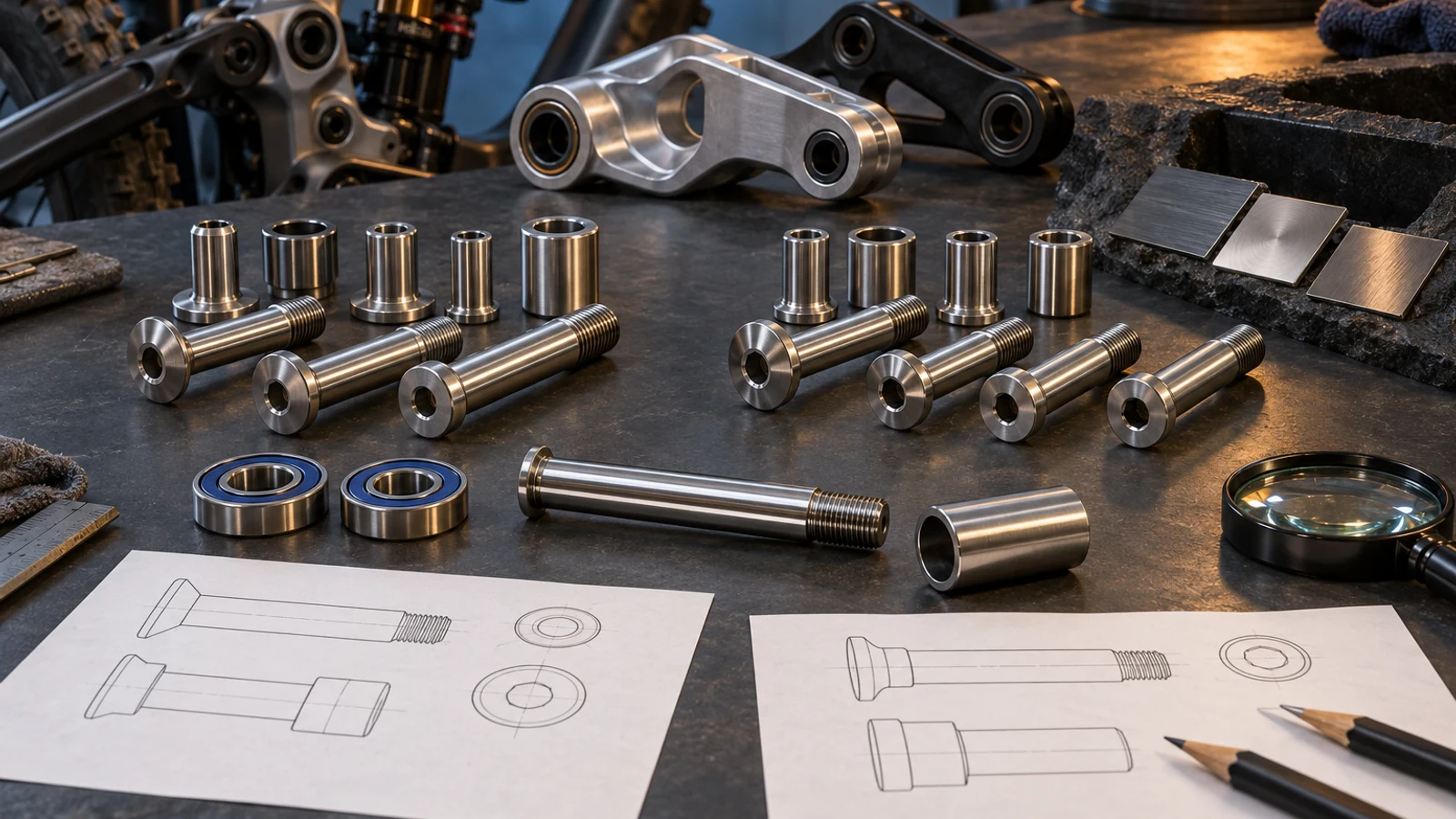
Hero: concept illustration of example hardware and its application. It is not a factory photograph, tested component or approved production geometry.
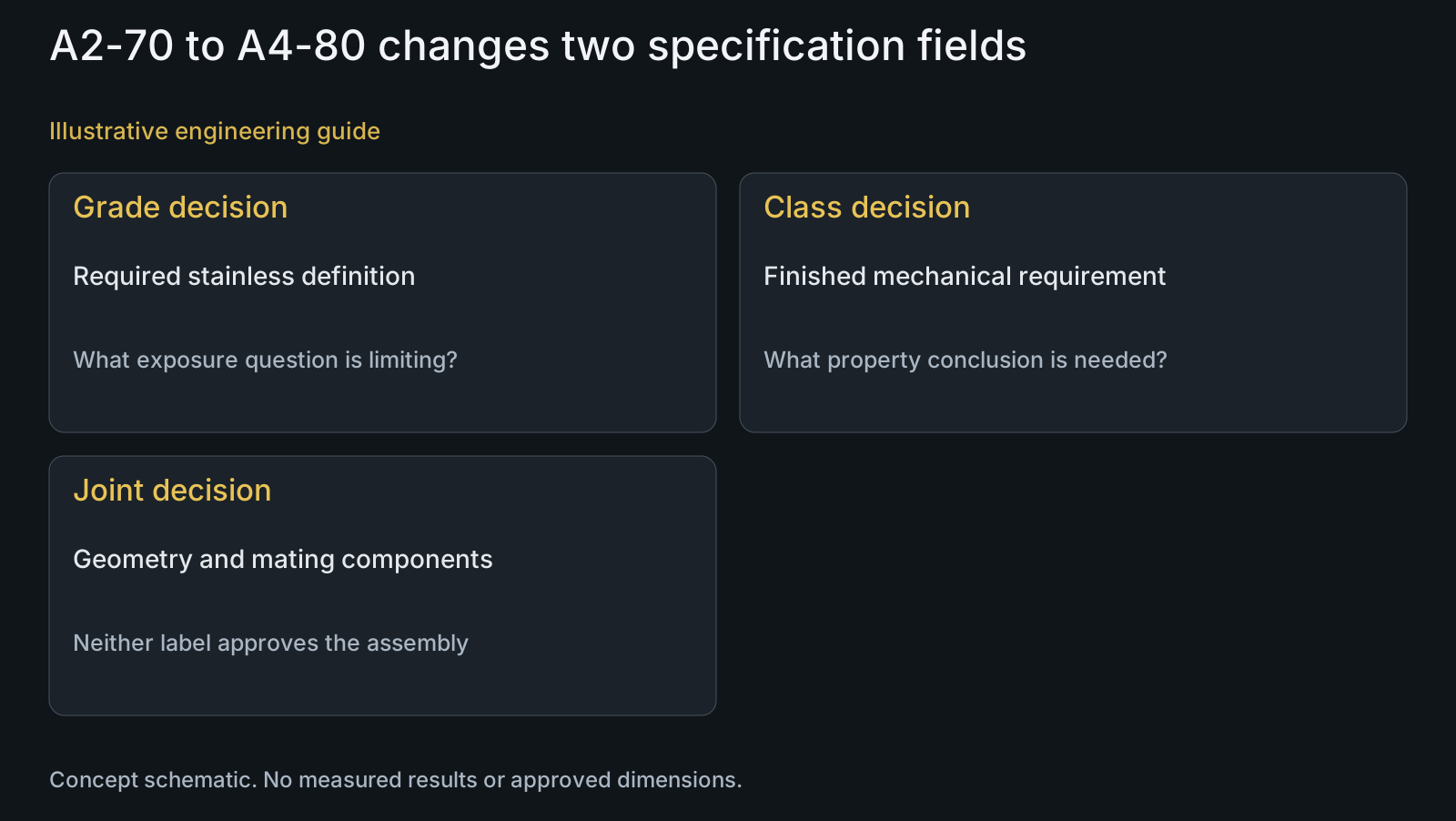
Separate the stainless grade from the strength suffix
Bossard's stainless-fastener guide distinguishes the composition-related grade block from the property class. Its screw guidance gives the tensile-strength levels above, subject to applicable product requirements and geometry. These are specification levels, not measured PremFixer results.
Do not attribute the suffix difference to the A4 name. A comparison between A2-70 and A4-70 holds the stated class constant; A4-70 versus A4-80 holds the stated grade constant. Such comparisons isolate the requested change, without assuming equal behavior in every other respect.
The property-system comparison addresses steel versus stainless specification systems. This article concerns a choice within stainless designations: which of two changing fields addresses the project's actual limiting requirement?
Use exposure conditions to frame the grade decision
The A4 composition family includes molybdenum in Bossard's overview. Outokumpu's corrosion guidance explains its role in resistance to localized corrosion, while warning that stainless behavior still depends on material and environment. No A4 immunity claim follows.
Describe wetting, contaminants, retention and cleaning at the actual contact. An accessible head and a shielded receiver are different inspection locations. A grade selection needs an exposure question rather than a generic request for the more expensive-looking label.
The wet and coastal material guide develops exposure diagnosis. Keep that decision separate from the tensile class: changing the suffix does not itself specify how the assembly manages moisture or its contacting materials.
| Proposed comparison | What changes | What cannot be inferred | Useful review |
|---|---|---|---|
| A2-70 to A4-70 | Grade field, stated class retained | Universal exposure suitability | Defined material and actual contact conditions |
| A4-70 to A4-80 | Class field, stated grade retained | Fatigue life or joint approval | Applicable finished requirement and geometry |
| A2-70 to A4-80 | Both fields | Which change addresses the concern | Separate grade and class rationale |
| Exact stock grade added | Material definition becomes narrower | Automatic finished-class conformity | Reconcile stock and component requirements |
| Surface route changed | Supplied contact condition | Same assembly behavior | Compare relevant faces and installation basis |
| Receiver unchanged | Original mating component retained | Bolt choice fixes receiver weakness | Assess engagement, material and interface |
Match the mechanical request to the actual manufactured shape
ISO 3506-1's public scope identifies grade/property-class fasteners and geometry-related loadability limitations. It does not establish fatigue resistance or torque/clamp-force requirements. A custom low head or relieved section must therefore remain in the property discussion.
Compare the drawing's critical features with the requested conclusion. A tensile-class number does not tell the reviewer whether a thin head, hollow feature or locating shoulder is acceptable under the actual joint loading. Do not multiply a generic material value by a convenient area and call the result an approved pivot load.
State the required finished condition and any applicable limits clearly. If a requested class and custom shape conflict, ask for an identified exception or alternative rather than accept a head label as the entire evidence package.
Check the receiving component before seeking a bolt-only upgrade
A joint includes the receiver, useful engagement, contact faces and clamp stack. A change intended to address the bolt may leave the limiting receiver or interface untouched. If the design concern is in the receiving thread, a different stainless designation does not independently resolve it.
Keep mating materials and surface systems in the selection request. The actual barrier, moisture path and contact geometry matter; do not judge the assembled pair only from the bolt's clean appearance. Review the application against its local interfaces.
Preserve the design owner's assembly basis until any changed material or surface condition is assessed. The torque-development guide addresses that separate question. No universal torque increase or service-life improvement is calculated from the two suffixes.
Compare quotations using the same finished specification
State the required grade or exact material designation, property requirement, drawing geometry and supplied finish. If an exact stock grade is essential, reconcile it with the broader fastener classification rather than leave potentially conflicting notes for production to interpret.
Require each alternative offer to name the changed field. An A4 proposal without the defined property requirement is not the same offer as A4-80, and a finished-property statement without the material requirement is not the full comparison either.
A stock-material document and finished-fastener evidence answer different questions. Identify their subjects, conditions and relevant scope. The material hub, manufacturing overview and test-report guide help connect the defined request without claiming universal in-house tests or a guaranteed processing route.
Review a proposal that changes two fields at once
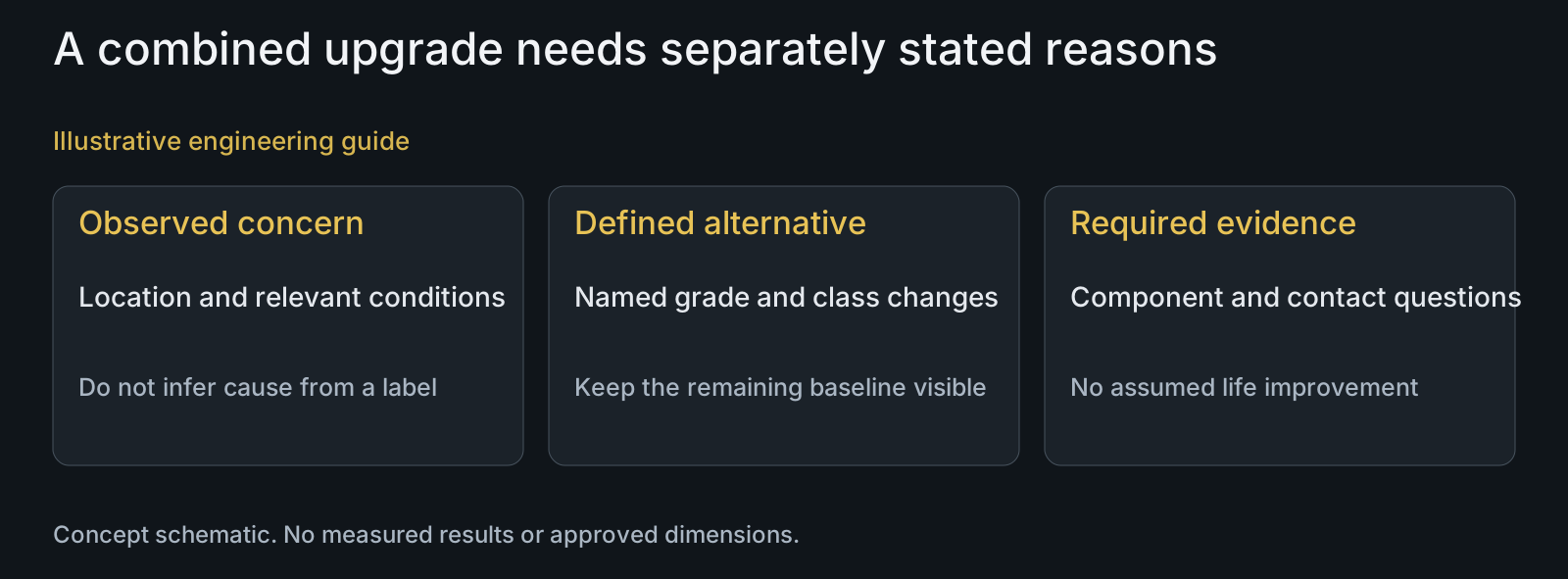
Illustrative engineering example: assume an OEM proposes changing a stainless pivot specification from A2-70 to A4-80 after observing deposits around a shielded contact. Geometry is intended to remain unchanged, but no actual material result, damage diagnosis or customer project is supplied.
The reviewer first identifies the concern and where it occurs. The grade decision is assessed against exposure; the class decision is assessed against the finished requirement. The team does not assume the deposit demonstrates inadequate tensile strength, nor that changing both fields proves the source of the concern has been removed.
The useful output is a proposal with separately stated reasons and evidence needs. Submit consistent drawing and BOM files with the current baseline, candidate definition and contact context. Keep unresolved exposure or joint questions visible rather than call the combined label an automatic upgrade.
Questions buyers need to confirm
Does A4 alone mean higher tensile strength than A2?
No. Read the full designation and applicable product requirements. A grade comparison and a property-class comparison are different decisions; do not infer one from the other.
Do the tensile levels above represent PremFixer test results?
No. They explain applicable specification designations from the cited technical guidance, not results for supplied parts. Actual component evidence needs its own identified subject and applicable requirement.
Should every high-load pivot use A4-80?
No universal recommendation is justified. Identify the actual limiting requirement, custom geometry, receiver and loading basis. A stainless designation does not establish the capacity of the complete joint.
Does A4 make wet retained contacts immune to corrosion?
No. The actual material and contact environment still need assessment. Define moisture retention, contaminants, surfaces and mating materials rather than turn a grade name into an exposure guarantee.
Can I specify an exact material grade and a fastener class together?
Yes, when they form a consistent requirement. Reconcile the stock designation and condition with the requested finished properties and actual geometry. Ask the supplier to identify a conflict before offering an alternative.
What helps compare two stainless quotations fairly?
Use the same drawing, material definition, finished requirement and supplied surface state. Name each proposed difference and the relevant evidence scope so a cheaper or larger label does not conceal an incomplete offer.
Technical references and scope
Bossard Stainless steel fasteners, January 2025. Grade/class distinction, molybdenum-related A4 composition and applicable tensile-designation guidance with product/geometry qualifications; no PremFixer measured values or blanket recommendation.
Outokumpu stainless corrosion resistance. Composition/environment relationship and localized-corrosion mechanism only; no universal A4 exposure guarantee.
ISO 3506-1:2020 public scope. Applicable grade/property-class fastener subject, geometry limitations and fatigue/torque-clamp noncoverage; no unavailable detailed clause assigned.
Explore related component, material and sourcing decisions in the customer decision knowledge center. For a drawing review, use the Drawing/BOM RFQ path.
State why each stainless specification field changes
Send the baseline and candidate drawing or STEP, BOM, material and property requirements, with mating-component and surface details. Describe the exposure or mechanical concern so PremFixer can discuss the defined alternative and relevant manufacturing/documentation scope.
Discuss the drawing and BOM