

A Chinese-manufactured custom pivot can be considered as an alternative to an imported part, but a lower quotation does not establish an approved replacement. Start with the released drawing, mating interfaces, material condition, final treatment and complete kit definition. Evaluate what the candidate actually supplies and which application questions remain open. Keep supplier capability, sample conformity and authorization for the intended bicycle program separate. A matching thread or convincing photograph is insufficient. Compare transfer work and continuing delivered scope before claiming a cost advantage; no universal saving, regional quality ranking or model compatibility is promised here.
Hero: concept illustration of example hardware and its application. It is not a factory photograph, tested component or approved production geometry.
Identify whether the task is reproduction or an approved alternative
Clarify whether purchasing wants the same released component, a revised design or a functionally evaluated alternative. These are different tasks. A candidate that proposes a different material or head arrangement is not quoting an unchanged transfer simply because the nominal thread matches.
Gather the drawing, BOM, interface definition and acceptance requirements that the OEM can legitimately share. Resolve the relationship between drawings and reference samples. A used sample can show visible geometry but does not by itself reveal the original material condition, treatment specification or intended size limits.
If only a sample is available, identify which requirements remain to be established by the responsible design team. Do not represent reverse measurement as recovery of the complete approved design. The sample-to-drawing review can organize that discussion without granting design or manufacturing rights.
Compare functional interfaces rather than a familiar appearance
Identify which surfaces locate, which faces clamp and where the thread engages. Compare shoulder length, contact faces, sleeve identity, head access and the relevant mating components. An overall envelope can look unchanged while a functional relationship differs.
Use the required finished process state for comparison. A bare-machined feature and a treated feature do not automatically represent the same supplied condition. Ask how protected surfaces and final acceptance are defined, rather than applying a generic machining tolerance to every interface.
Keep the pivot fit and datum requirements linked to the assembly. If a candidate proposes changing them, review the proposal as an alternative. An acceptable dimensional report for selected features does not silently approve unexamined service or loading consequences.
| Review subject | What it can establish | What it does not establish alone | Evidence or decision needed |
|---|---|---|---|
| Supplier route | Relevant manufacturing feasibility | Conformity of this supplied kit | Producing scope and feature control |
| Reference sample | Visible represented geometry | Original limits, grade or material condition | Released requirements and stated gaps |
| Sample dimensions | Evaluated features in a named state | Unexamined treatment or application behavior | Relevant final-state evidence |
| Complete kit | Defined bolt and sleeve positions | Compatibility of arbitrary mixed components | BOM identities and mating relationships |
| Pilot route | Represented production conditions | Every future lot or service outcome | Bounded evaluation and recurring control |
| Price comparison | Same-scope commercial difference | Guaranteed transfer saving | Preparation, qualification and delivered cost |
| Customer approval | Named authorized replacement scope | Unrelated parts, sites or revisions | Applicable authority and stated boundaries |
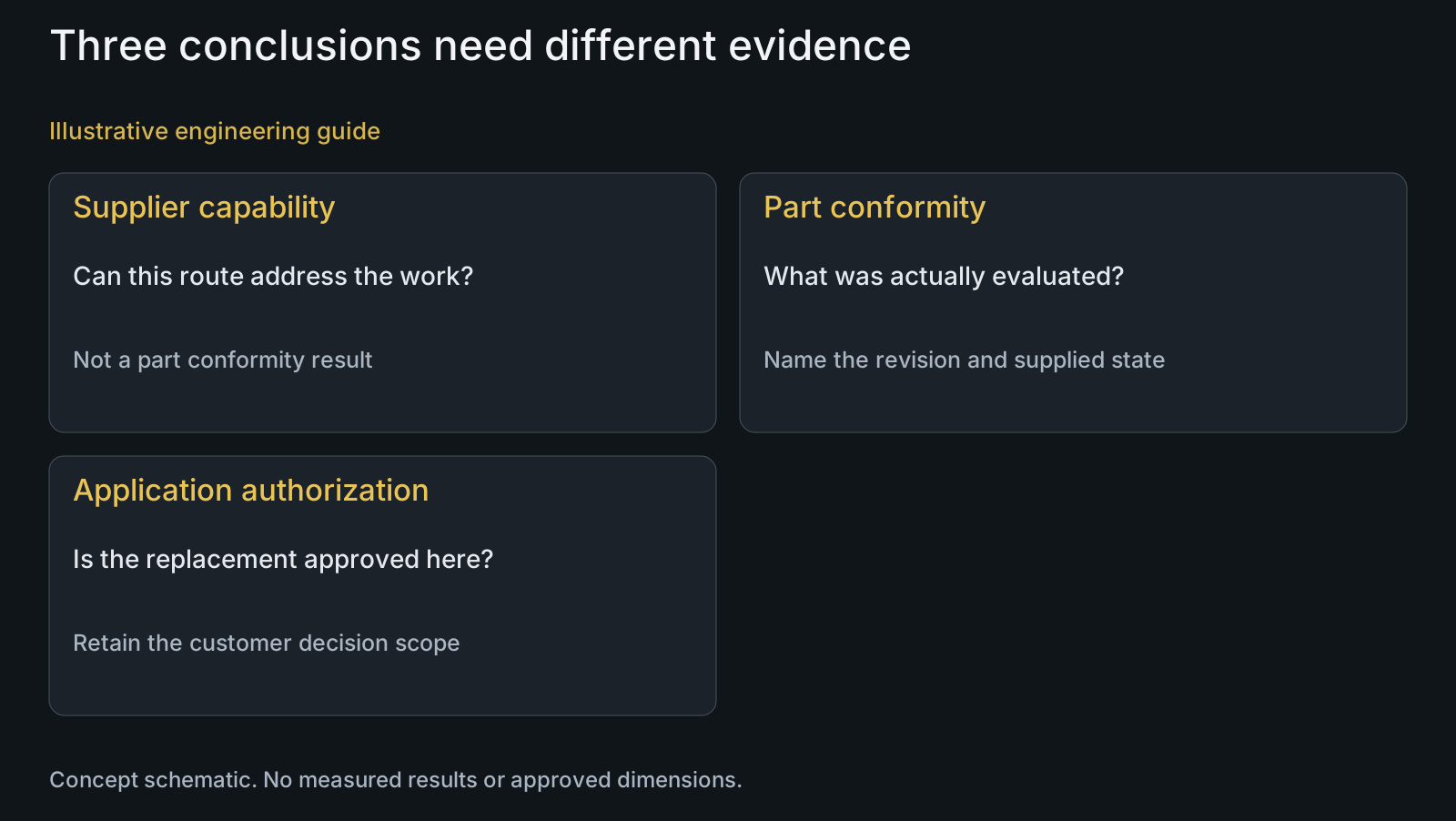
Use capability evidence for the question it can answer
Ask about the producing site, actual operations, material scope and treatment responsibilities for the proposed parts. Equipment categories can support a discussion of feasibility, but they are not evidence that this exact finished kit has been manufactured and accepted.
NIST's public supplier-scouting synopsis separates technical inputs such as dimensions, tolerances and materials from volume, delivery and packaging information. That is an input-organization example, not a China qualification scheme or approval of PremFixer.
The fifteen-question supplier audit addresses observed control execution. Decide what relevant evidence is needed for the proposed transfer. Do not treat a management-system certificate, country of origin or existing product photograph as a replacement for the required part-specific evaluation.
Keep qualification conclusions specific to the represented scope
Define what an evaluated sample needs to establish and what remains for customer application validation. A sample dimensional result addresses its identified features and condition. It does not automatically demonstrate the production route, future kit consistency or complete bicycle performance.
If a pilot is used, state the represented revision, operations, supplied condition and quantity. Examine whether the route and evidence will carry into the proposed recurring supply. A temporary sample operation should not be described as the established production method without that basis.
Identify the authority for accepting the replacement and the boundaries of that decision: site, parts, revisions and relevant operations. Keep unsupported material, finish or interface substitutions out of approved stock. For a complete program, reconcile the bolt and sleeve positions rather than approving one attractive component in isolation.
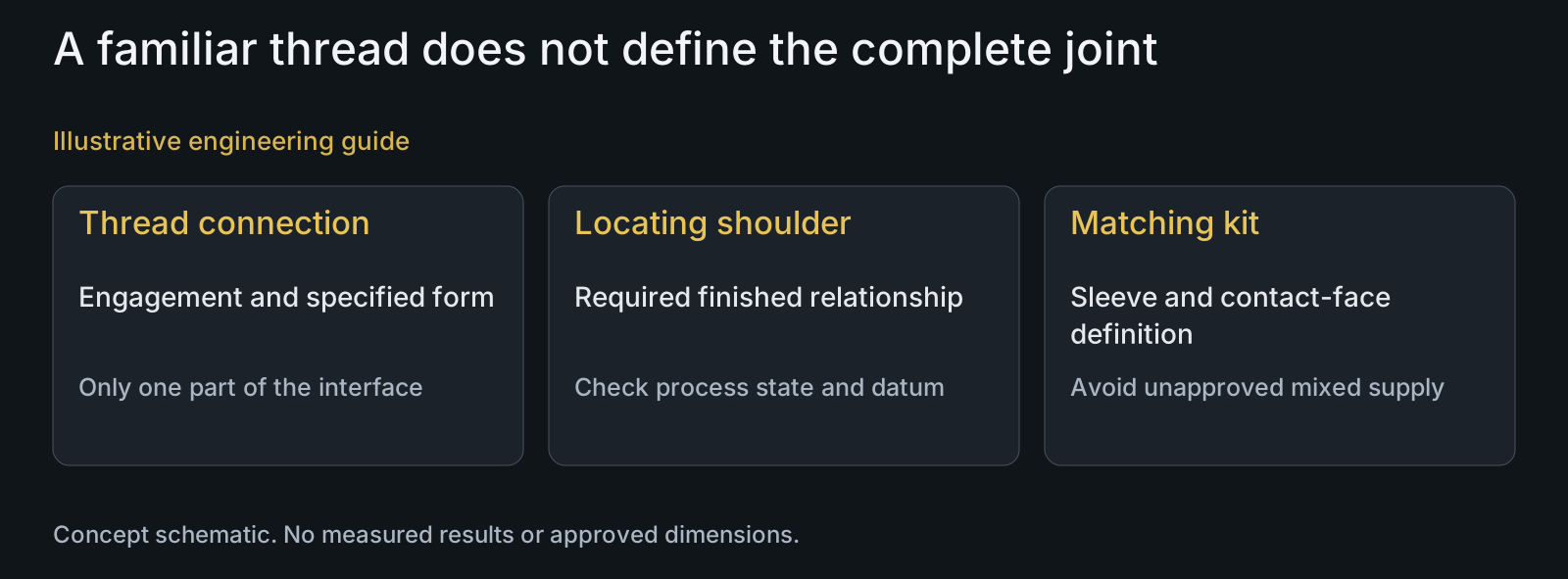
Review a candidate shoulder against the supplied process state
Illustrative engineering example: assume an OEM compares an imported reference pivot with a candidate whose nominal thread and visible envelope match. The released requirement concerns a finished locating shoulder, while the candidate's initial report describes the bare-machined state. No actual parts, measurements or failed result are assumed.
The team does not declare the candidate unsuitable from that missing connection. It asks how treatment affects the relevant surface and what evidence evaluates the required finished feature. It also confirms the matching sleeve and contact-face definitions needed for the intended kit.
The result can be a clarified evidence request, an approved alternative evaluation or a decision not to transfer. The lesson is that an apparently matching sample and a relevant capability statement still leave a specific equivalence question. Neither regional origin nor quotation price resolves it.
Compare transfer economics without assuming a fixed saving
Compare the same finished unit and recurring scope, then identify preparation, evaluation, transport, evidence and any inventory transition separately. The negotiation guide distinguishes actual work changes from removed deliverables or transferred stock risk.
Plan how old and new configurations will be identified and used if supply overlaps. Prevent unapproved mixing of similar parts or sleeves. A sourcing decision can be economically attractive yet incomplete if receiving cannot distinguish the authorized kit definitions.
PremFixer manufactures from customer drawings, samples, interfaces and BOMs; review the proposed manufacturing scope and materials on that basis. No stocked universal replacement or guaranteed percentage saving is stated. The transfer decision needs its own identified scope, evidence and customer authorization.
Questions buyers need to confirm
Does a Chinese source automatically cost less than an imported source?
No. Compare the same finished configuration and delivered scope, then identify transfer and evaluation work. Origin alone does not establish either price or quality, and no fixed percentage saving is promised.
Is a matching thread enough to qualify the replacement?
No. Check locating geometry, contact faces, engagement, head access, material condition and the matching sleeve. The nominal thread describes only part of the joint.
Can a used sample define the original specification?
Not completely. It may show visible geometry but leave original limits, material condition and treatment unknown. State those gaps and obtain the responsible engineering definition rather than treating every measured feature as the approved design.
Does a sample dimensional report approve recurring supply?
Not alone. Identify its covered features, revision and supplied state, then evaluate the represented production route and any application questions. Customer authorization must state the replacement scope.
Can old and new supplier components be mixed during the transition?
Only within a specifically evaluated and authorized configuration. Similar appearance is insufficient; reconcile component revisions, sleeve relationships and kit identity to prevent an unapproved combination.
What should we send to evaluate a replacement sourcing option?
Provide the released drawing, STEP model, BOM, interface and material requirements, finished condition and acceptance evidence. Identify reference-sample limitations, quantity and transfer constraints so the candidate can distinguish unchanged supply from a proposed alternative.
Technical references and scope
NIST supplier-scouting input synopsis. Example separates technical requirements from business/delivery inputs; its US supplier search does not constitute China supplier qualification or PremFixer approval.
Explore related component, material and sourcing decisions in the customer decision knowledge center. For a drawing review, use the Drawing/BOM RFQ path.
Compare an alternative against the released pivot scope
Send the released drawing, STEP model, BOM, material and treatment requirements, mating-interface details and relevant reference samples. Identify acceptance evidence, quantities and transition constraints. The review will clarify the proposed route, equivalence questions and scope needing customer evaluation before the alternative is treated as an approved replacement.
Discuss the drawing and BOM