
A cross-cut rating or pull-off strength cannot qualify every coating on a bicycle pivot bolt. An OEM concerned about a film coming away needs evidence for the actual coating system, substrate and relevant region, using a suitable method. The direct answer is to select the assessment first and interpret its failure, rather than copy one acceptance number across thin hard films and organic layers. Small heads, curved shoulders and recessed features can also change what is practical to test. A valid witness-panel result may support a process review while leaving the component's local coating integrity or service behavior unresolved.
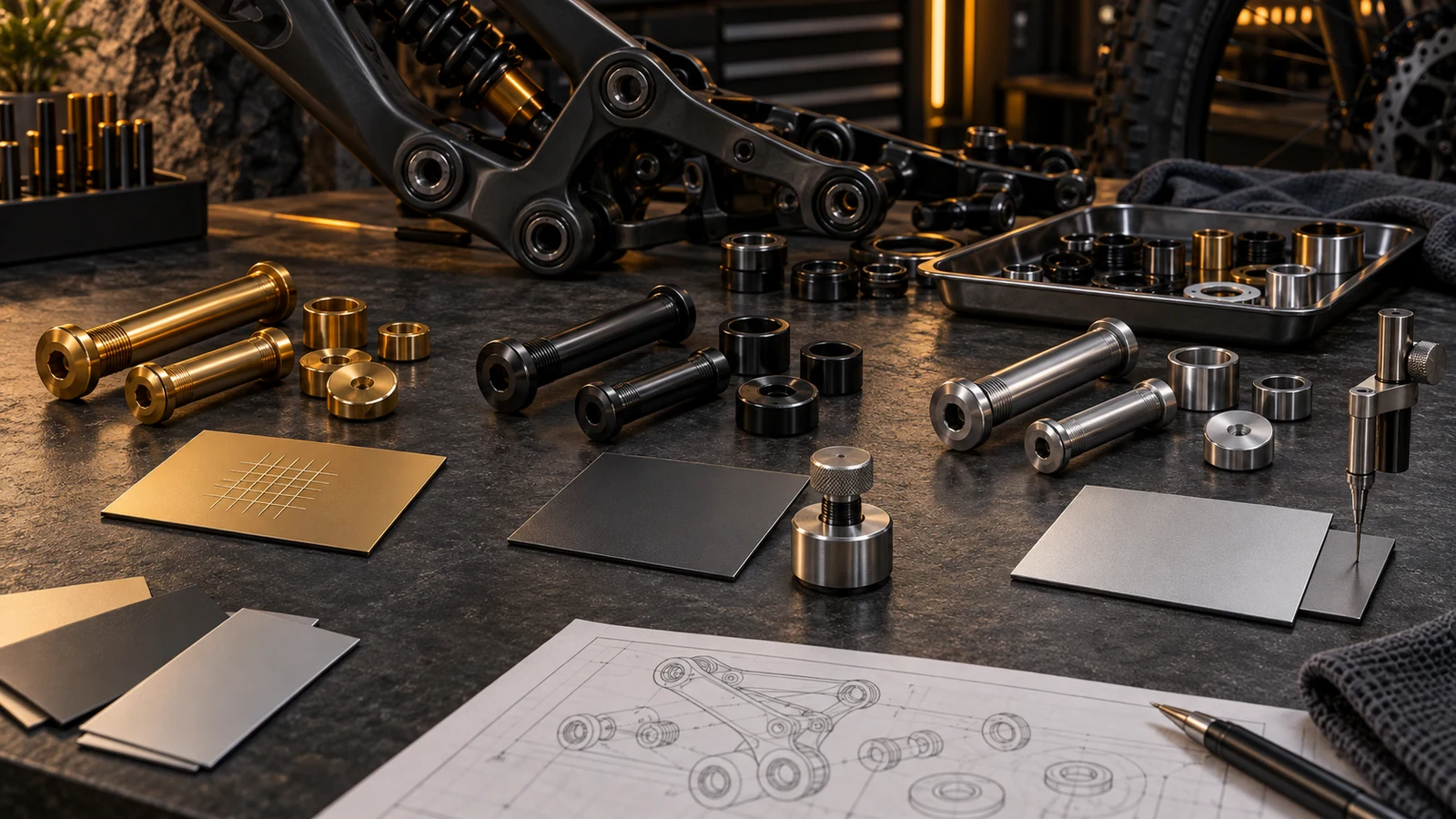
Hero: concept illustration of example hardware and its application. It is not a factory photograph, tested component or approved production geometry.
Identify the film before specifying its adhesion test
State the complete coating system, substrate condition and relevant thickness context. A hard ceramic film, an organic lubricant layer and an oxide-based surface are not interchangeable specimens. Color alone cannot identify the system or explain the mechanism that a proposed test is meant to evaluate.
The TiN, CrN and DLC comparison distinguishes coating identity from headline properties. Here the decision is narrower: whether the reported assessment actually addresses attachment or local integrity of the proposed film on the required component.
Ask the coating specialist to identify the method and represented surface before agreeing a criterion. Keep that discussion tied to the shoulder, head, cap or other required zone. A test designation without the specimen and relevant film context is not enough to interpret a quotation or conformity report.
A tape rating is not an absolute bond-strength measurement
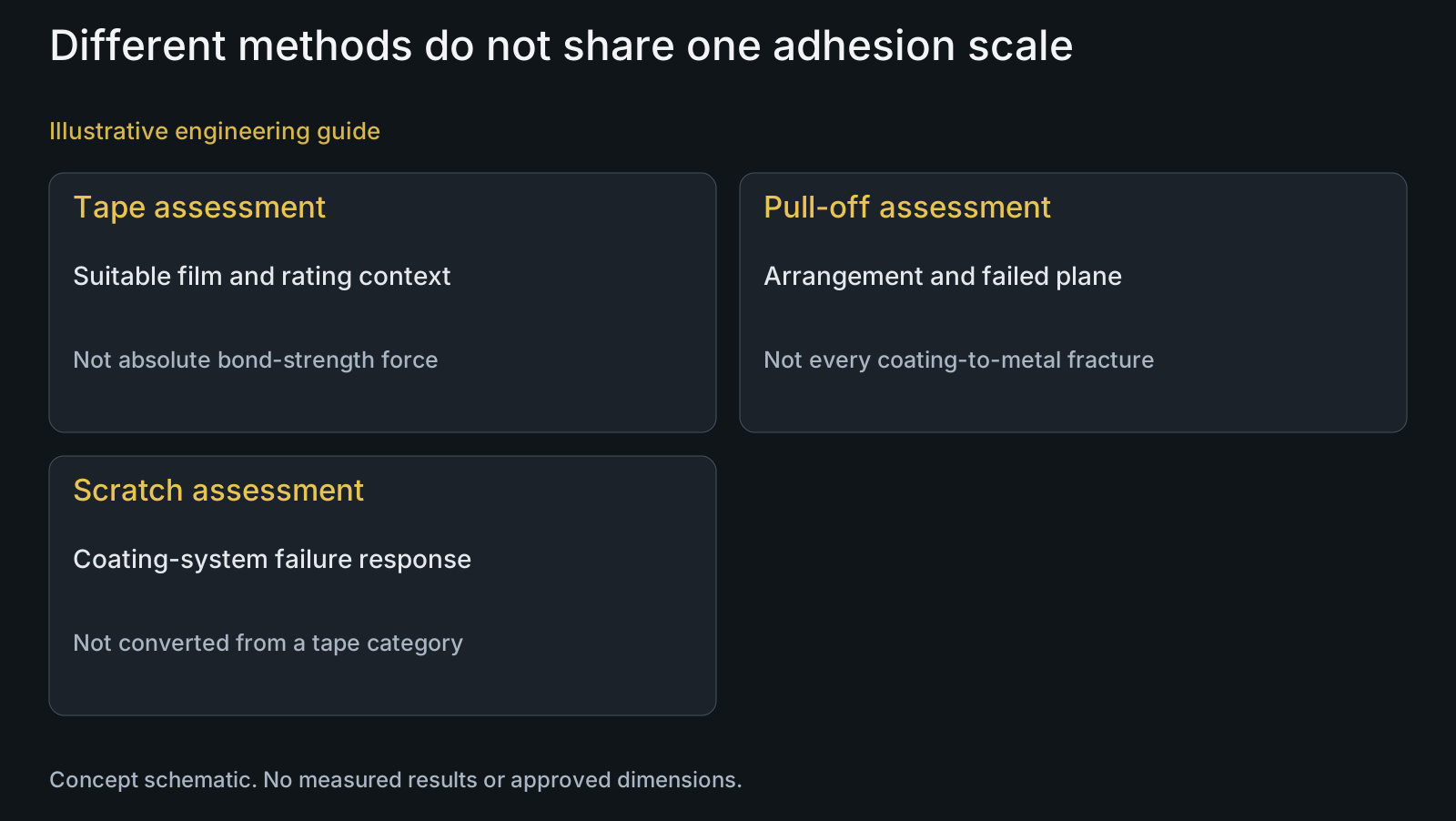
ASTM D3359-23 covers tape testing of relatively ductile films on metallic substrates. Its public scope and significance identify limited sensitivity and distinguish the method from an absolute force measurement. It should not be assumed to rank every thin hard coating.
Determine whether the actual film and available test region suit the selected procedure. The relevant tape method and thickness context belong in the proposal; a familiar cross-cut label is not a substitute for suitability. Intercoat failure in a multilayer system also may not assess the substrate interface.
For purchasing, interpret the rating within that agreed assessment. Do not convert a tape category into a pull-off stress or use a favorable category as proof of every service requirement. The dry-film lubricant guide helps identify the formulation and finished state before its evidence is reviewed.
| Evidence route | Relevant scope | Risk in interpretation | Buyer confirmation |
|---|---|---|---|
| Tape assessment | Suitable relatively ductile film on metal | Category treated as absolute bond strength | Method, film and represented interface |
| Portable pull-off | Defined coating system and test arrangement | Glue failure called coating-to-metal failure | Method identity and failed plane |
| Ceramic-film scratch assessment | Suitable coating-substrate system | Every scratch called adhesive detachment | Observed failure and specimen applicability |
| Witness specimen | Defined relationship to actual order | Unrelated flat panel called complete part proof | Material, preparation and production association |
| Component region review | Actual edge, recess or contact location | One easy-to-test face represents all regions | Relevant local evidence and remaining limits |
| Assembled contact assessment | Intended pair and service question | Adhesion report called wear or fit approval | Separate application evidence and endpoint |
Pull-off strength requires attention to the failed plane
ASTM D4541-22 describes portable pull-off testing of coating systems on metal. The measured event concerns the weakest plane in the fixture, glue, coating and substrate system. Identify where fracture occurred; a glue-limited result is not a direct coating-to-metal bond measurement.
Its public scope notes development for flat surfaces, possible additional variability on other shapes and dependence on apparatus and procedure. Define the tested geometry and method instead of treating results from different arrangements as directly comparable. No universal pull-off target for pivot hardware is prescribed here.
When evidence comes from a witness panel rather than the pivot itself, describe that distinction. The engineering review must establish what the witness represents and what local features remain outside its evidence, without claiming that a meaningful flat-panel test is useless.
Scratch assessment addresses a different coating-system response
ISO 20502:2005 describes diamond-stylus scratching to promote adhesive and/or cohesive failure of ceramic coating-substrate systems. Its public abstract identifies a thin-ceramic-coating scope. It provides a relevant method family to consider, not automatic suitability for every curved PVD-coated bolt.
Ask which response was identified and how the tested specimen and observation support that interpretation. Do not label every visible scratch as detachment from the substrate. The provider needs to distinguish the relevant coating-system failure rather than supply only an unexplained image or force headline.
Keep a scratch assessment within its stated setup and purpose. A result expressed through that method is not a conversion of a tape category or pull-off stress. Select supporting evidence according to the film and the question instead of forcing unrelated methods into a single supplier ranking.
Witness specimens and finished components answer related but different questions
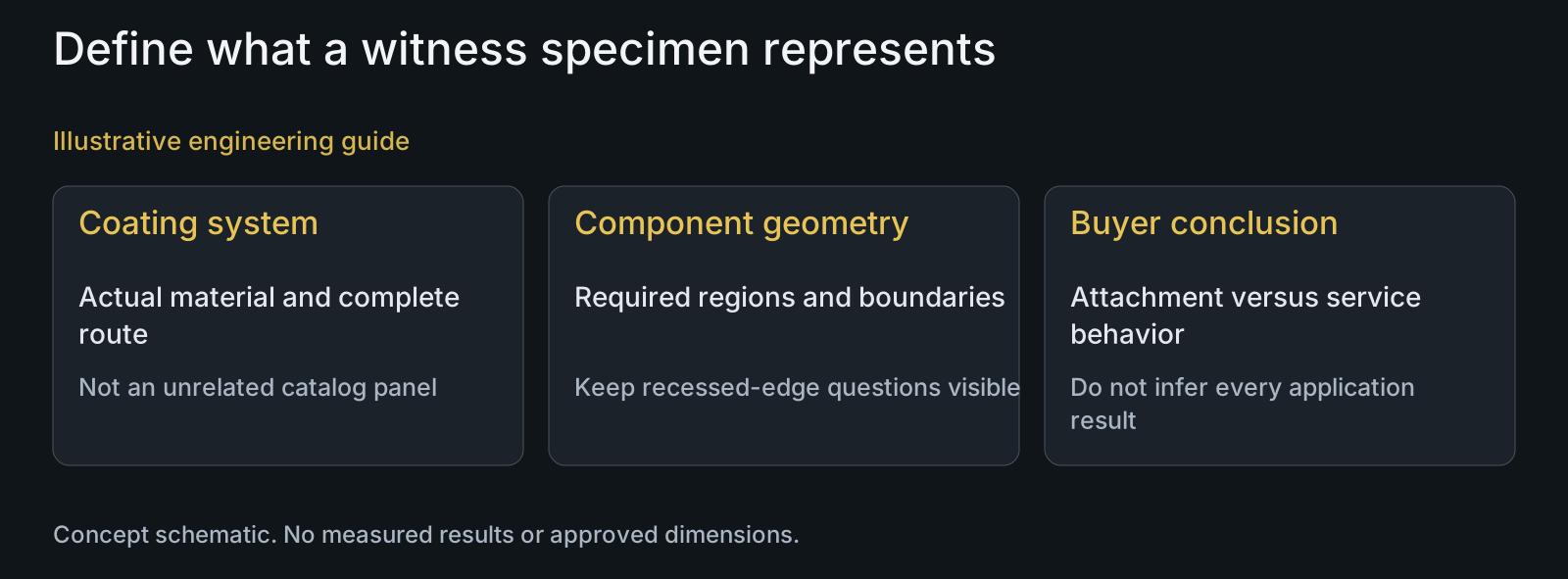
A witness specimen can make an otherwise impractical assessment possible, but its relationship to the component needs definition. Identify material, preparation, complete coating route and relevant production association. A generic catalog panel without that relationship cannot establish the finished order's local condition.
Map regions whose geometry or intended contact makes them important: a head edge, recessed seat, shoulder or thread boundary may need a component-specific review. Identify the unresolved question rather than demand that one method be physically applied to every surface regardless of its suitability.
Separate coating attachment evidence from assembled wear, handling damage and delivered fit. A coating can have an accepted laboratory assessment while another interface question remains open. Discuss the required evidence through the surface-treatment review, keeping the application objective visible.
A valid panel result may not approve the recessed cap
Illustrative engineering example: assume an OEM receives a hard-film coating proposal for a small pivot cap. The supplier attaches a tape-test rating from a flat organic-coated panel, but the cap uses a different film and has a recessed edge near its locating face. No test of the proposed hard-film system is supplied.
The reviewer does not reject the panel's stated result or convert its rating into another value. Instead, the review asks for a suitable assessment of the actual coating system and clarifies how any witness specimen represents the order. The recessed region and delivered locating face remain separate component questions.
No actual detached film or failed batch is claimed. PremFixer can discuss the manufacturing scope from drawings, samples and BOM, including the proposed specialist assessment. This does not establish an owned adhesion laboratory, a fixed test threshold or testing of every production batch.
Questions buyers need to confirm
Does a favorable cross-cut rating qualify every PVD coating?
No. Establish suitability for the actual film and geometry. A tape category should remain within its method scope, not serve as a universal ranking of thin hard films or a converted bond-strength value.
What if glue fails in a pull-off assessment?
Identify and report that failed plane. Do not present it as a direct measurement of coating-to-substrate rupture. Interpretation belongs to the specified method and test arrangement rather than a universal pivot criterion.
Is scratch testing automatically suitable for a small coated cap?
No. The coating system, geometry and available specimen must support the chosen method. ISO 20502 describes a ceramic-coating scratch approach, but its designation alone does not establish applicability to every recessed or curved component.
Can a witness panel support the order?
Yes, if its relationship to the actual coating route and component is defined. Identify substrate, preparation and production association, then state which local regions or application questions the panel does not represent.
Does adhesion evidence prove the finished pivot will not wear?
No. Attachment assessment and assembled contact performance answer different questions. Specify the actual mating pair, motion and required application outcome separately, along with final geometry.
What belongs in a coating-adhesion RFQ?
Send drawing, STEP or sample and BOM, substrate condition, complete coating system, intended regions and contact, and existing reports. Identify proposed method, specimen relationship and acceptance requirement; clarify destructive specimen allocation and unresolved local features.
Technical references and scope
ASTM D3359-23: rating adhesion by tape test. Public scope and significance for film suitability and rating limitations; no prescribed pivot rating or paid full procedure reproduced.
ASTM D4541-22: portable pull-off strength of coatings. Public scope for test-system failure, geometry and method identity; no universal stress target or numerical conversion adopted.
ISO 20502:2005: ceramic-coating scratch assessment. Public abstract and current publication status for scratch-method context; no full method, critical-force target or automatic component suitability asserted.
Explore related component, material and sourcing decisions in the customer decision knowledge center. For a drawing review, use the Drawing/BOM RFQ path.
Match coating evidence to the actual pivot surface
Provide drawing, STEP or sample and BOM with substrate, coating system, treated regions and relevant contact. Include any report with its method and specimen identity so the review can distinguish film attachment, witness representation and unresolved component or service questions.
Discuss the drawing and BOM