

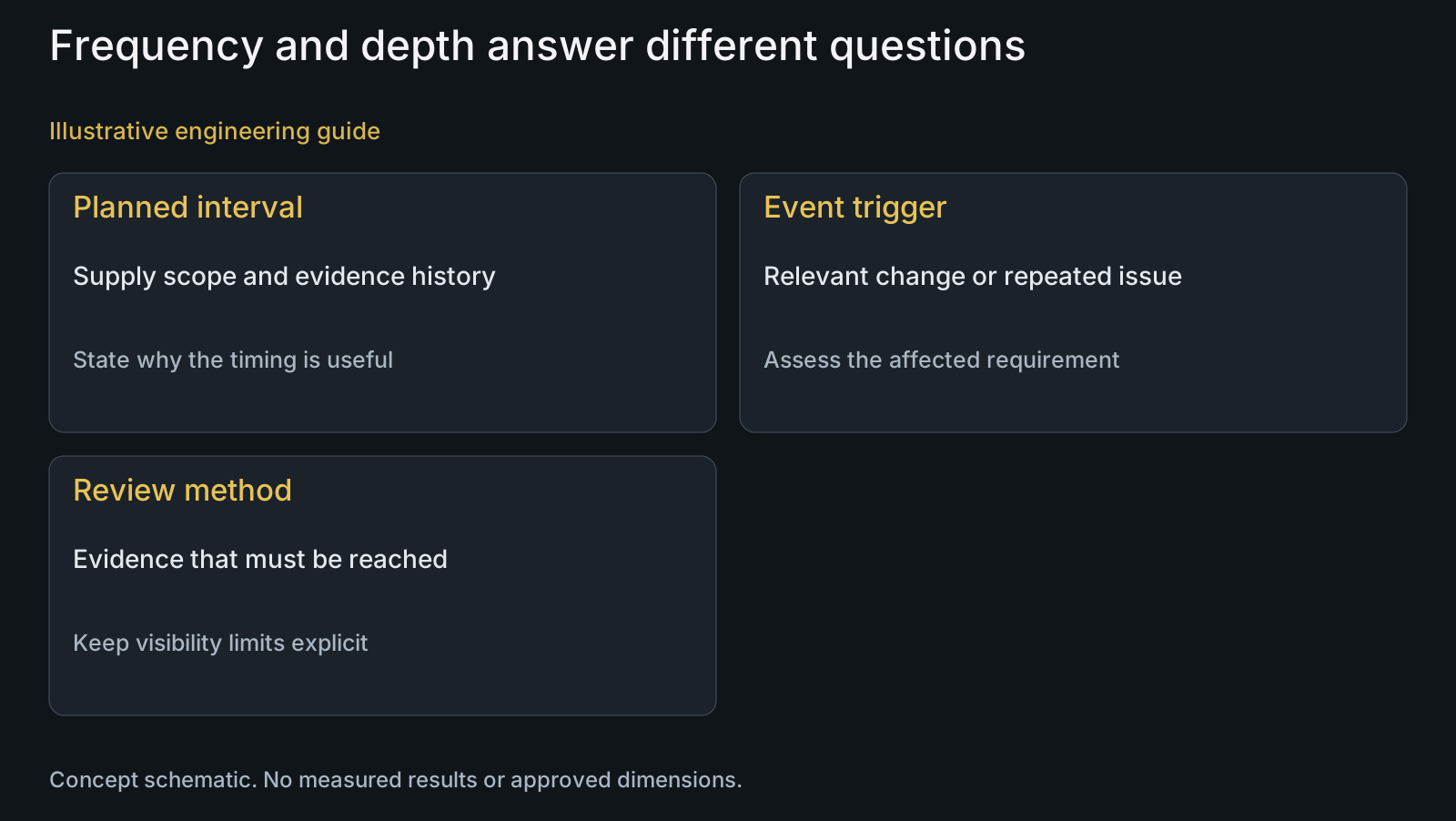
There is no single audit frequency that suits every bicycle pivot supplier or part family. Set the planned interval, review depth and method from the actual supply scope, consequence of unresolved requirements, change history, prior findings and applicable customer expectations. Add focused reviews when an important event changes the evidence needed, even if the next calendar visit is months away. The buyer is deciding where audit effort can support qualification or continued supply. A quarterly visit count does not prove deep coverage, and stable past performance does not qualify a new finishing route. Schedule observation around the relevant production activity and retain the reason for the chosen approach.
Hero: concept illustration of example hardware and its application. It is not a factory photograph, tested component or approved production geometry.
Define the reviewed supply before assigning an interval
Identify the producing site, part family, critical interfaces and operations covered. A repeat threaded pin and a treated hollow axle-and-sleeve kit may present different review questions. The supplier's trading name alone is too broad a subject for deciding how often a specific route needs attention.
Separate initial qualification, routine monitoring and issue follow-up. A first project may need evidence of a proposed process; active serial supply may need examination of change control or repeated exceptions. A follow-up concerns the specific unresolved action, not an automatic repeat of every qualification question.
Use the twenty-point supplier review to identify qualification gaps. This planning article addresses when and how to examine them. The depth should follow the decision the missing evidence prevents, not a universal score attached to the whole company.
Combine planned reviews with meaningful change triggers
Identify events that may change the represented basis: new geometry or material condition, altered workholding, a different treatment partner, site responsibility changes or recurring problems. Explain why the event matters to the ordered hardware. Not every administrative change requires the same physical review.
A trigger should lead to an impact assessment and the appropriate next action, rather than a preset conclusion that the supplier has failed. A new finish arrangement may require evidence for the delivered bearing interface; an isolated packing-text correction may be resolved with a narrower document review.
Keep unresolved changes visible between calendar reviews. Waiting for the annual visit can leave the new condition unexamined during active supply. Conversely, a focused event review does not automatically replace every other part of the agreed audit program.
| Situation | Useful review focus | Method or timing choice | Boundary to retain |
|---|---|---|---|
| New hollow-pivot family | Proposed route and key interfaces | Review requirements and representative work | Not all future designs qualified |
| Workholding change | Affected datum relationship | Observe relevant setup or evidence | Document review may not show execution |
| Treatment partner change | Finished interface and responsibility | Review new process and return evidence | Old route history cannot cover it silently |
| Repeated kit identity issue | Split and replenishment handoffs | Observe the recurring activity | More visits alone do not close cause |
| Stable unchanged supply | Evidence supporting the routine interval | Apply customer rules and stated rationale | Stability does not waive later changes |
| Intermittent production | Availability of the critical operation | Agree a representative observation opportunity | Idle equipment is not process evidence |
Choose a method that can reach the required evidence
A document review can examine identities, requirements and permitted historical records. A live remote review can discuss selected activities but depends on what can actually be shown. An on-site review can examine physical handoffs and the relevant operation, provided that activity is available at the visit.
State the limits of the chosen method. Photographs of an inspection room do not demonstrate the datum setup used for the proposed pivot. A recorded demonstration may clarify a method without showing how the current order was controlled. Missing visibility should remain an evidence limit rather than become a passing observation.
For a concern about sleeve measurement, review the actual feature and method using the inspection-capability discussion. For an external process, identify the relevant surface-treatment scope. A broader factory tour is not a substitute for access to the needed evidence.
Time observation to production rather than only the calendar
The Auditing Practices Group audit-planning paper discusses prioritizing important, changed or previously problematic areas and timing audits to relevant activity cycles. It is dated educational guidance in a certification-audit context, not a mandatory supplier-visit schedule for bicycle programs.
For a machining concern, choose an opportunity to see the relevant setup or tool event. For identity control, a container split or partner return can be more informative than idle bins. If production is intermittent, agree how the necessary activity will be represented rather than treating an empty station as observed execution.
First-year twice-yearly, annual stable-supplier or quarterly high-risk visits can be customer planning choices, but they are not universal requirements or PremFixer commitments here. Explain the scope, rationale, available evidence and triggers before adopting an interval. Frequency and useful depth remain separate variables.
Use findings to revise the plan and supply boundary
After a review, retain what was observed, what remains open and the supply decision supported. A missing finished-feature basis may constrain that part family without implying that every process at the site is defective. Schedule follow-up for the actual unanswered question and its needed evidence.
Review whether the result changes the next interval, scope or method. Repeated exceptions can call for a more focused examination; supported stable controls can inform a different routine plan within customer requirements. Do not claim that a favorable history permanently removes future review obligations.
ISO/TC 176's ISO 19011:2026 release notice identifies management-system audit guidance and increased attention to risk. It does not establish the visit counts used here or certify the original buyer-planning table. Required contractual or program rules need their own confirmation.
Illustrative review: a treatment change before the annual visit
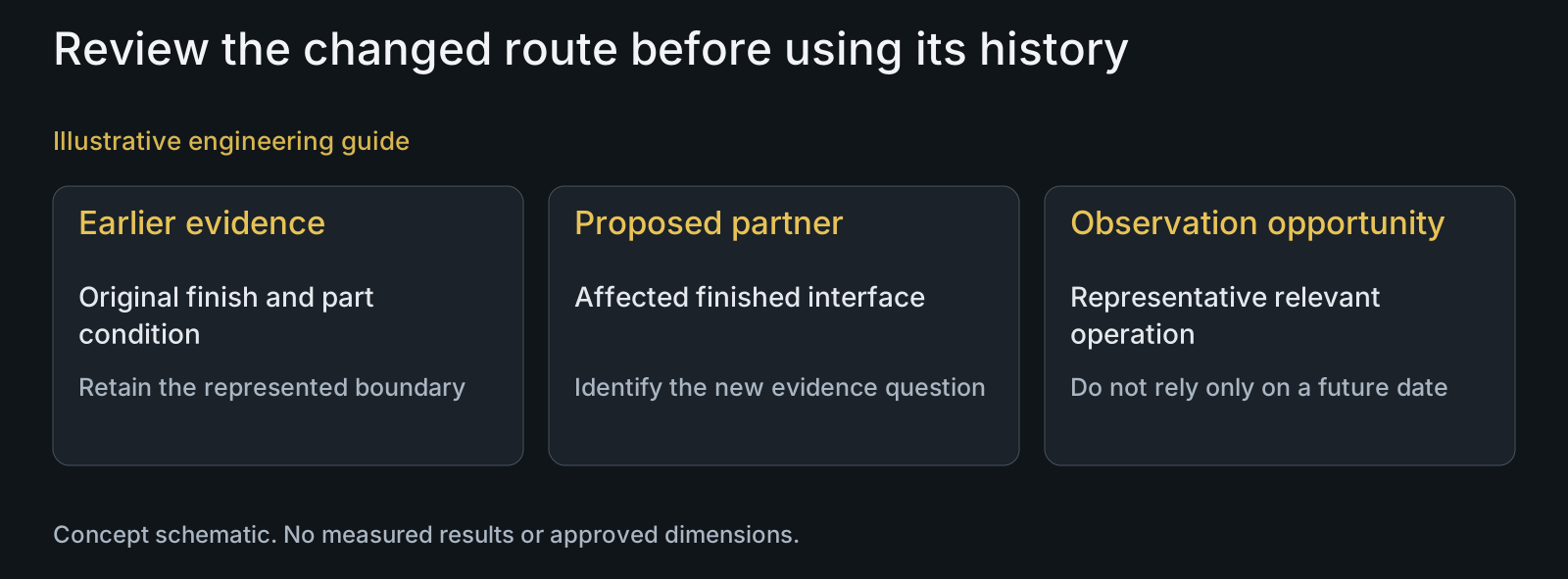
Illustrative engineering example: assume a repeat pivot supplier is due for a routine annual review later in the year, but proposes a different finishing partner for a bearing-seat axle. No real schedule, supplier history, audit result or approved change is supplied.
The buyer examines which final-state requirements and earlier evidence the change affects. A focused review can first compare the proposed process and measurement scope, then identify any necessary execution evidence. The next decision concerns that changed route, not whether the calendar date alone permits it.
If physical observation is needed, it should coincide with representative work at the relevant boundary. The later routine review can retain its remaining scope. This approach does not assume the new partner fails or passes; it prevents an unexamined change from hiding behind a favorable historical label.
Questions buyers need to confirm
How often should a bicycle pivot supplier be audited?
Choose the interval from the covered supply, relevant risk, changes, earlier findings and customer requirements. Add focused event reviews where necessary. No universal annual or quarterly rule is established for every supplier by this article.
Must every audit cover the whole factory?
Not necessarily. Define the question and the evidence needed for the buyer decision. A focused process or handoff review may be more useful for a specific concern. Retain the scope limits and any separate broader program requirements.
Can a remote document review replace on-site observation?
Only where it reaches the evidence required for that question. Records can explain requirements and history; they may not demonstrate a current physical setup or handoff. State the remaining visibility gap and select further observation if it matters to the decision.
Can a stable supplier wait until its next scheduled audit after a process change?
Do not assume that. Assess whether the change affects the represented part, route, interface or responsibility. If new evidence is needed before use, address it at that point rather than letting the calendar silently authorize the changed condition.
Does quarterly auditing automatically provide deeper control?
No. Depth depends on scope, access and relevant activity. Several visits while the critical operation is inactive may miss the needed evidence. Time the review to meaningful work and explain the observation method rather than count visits alone.
What information supports an audit-planning discussion?
Provide the part family, drawing and BOM scope, critical interfaces, manufacturing route, important changes, permitted prior findings and customer review rules. State which unresolved decision the review should support so timing and access can be discussed realistically.
Technical references and scope
ISO9001 Auditing Practices Group, Audit Planning. 2017 educational certification-audit guidance on priorities and activity timing; not a supplier audit-frequency mandate, and not endorsed normative standard text.
ISO/TC176, ISO19011:2026 Released. Official June2026 notice describing management-system audit guidance and risk focus; not the full standard or a source for fixed visit counts.
Explore related component, material and sourcing decisions in the customer decision knowledge center. For a drawing review, use the Drawing/BOM RFQ path.
Plan a review around the relevant manufacturing question
Share the representative drawings, kit BOM, proposed route, critical features, recent changes and customer audit requirements through the Drawing/BOM RFQ path. PremFixer can discuss the manufacturing scope and evidence access that require confirmation; no fixed visit frequency, audit result or approval is presumed.
Discuss the drawing and BOM