

A supplier portal is useful for custom pivot hardware when buyers can identify which order and revision an update or document represents, what it establishes and whether action is required. A downloadable report does not automatically cover the supplied final condition, and a visible button does not grant engineering or commercial approval authority. Compare order context, document status, access permissions and the next responsible action before judging convenience. PremFixer's inquiry path is available for project discussions, but this article does not establish an existing customer portal, continuous production tracker or automatic compliance-document verification service.
Hero: concept illustration of example hardware and its application. It is not a factory photograph, tested component or approved production geometry.
Organize information around the order and configuration
A generic folder named pivot order can mix bolt and sleeve revisions, sample reports and shipment files. Each entry should identify the represented part or kit, configuration, relevant order scope and observation date. That context lets a buyer ask whether a file answers the current receiving question.
Keep kit and component identities distinguishable. A sleeve report may concern one position rather than the whole assembly. A carton reference can help locate a shipment without proving that every document in its folder represents one common material lot.
The procurement status guide addresses event meanings. A portal should expose those meanings alongside the actual configuration instead of replacing them with an unexplained completion percentage.
Separate downloadable from relevant and released
A report can be accessible yet represent an earlier sample or processing state. Show whether a file is a proposed reference, applicable released record, superseded version or unresolved submission. Upload time alone does not determine engineering applicability.
Identify the document's subject, issuer and represented evidence scope. Material identity, dimensional inspection and organizational certification answer different questions. The order-document guide explains these distinctions; the portal's task is to make their context retrievable, not independently certify their contents.
If evidence is missing or its applicability is unclear, show the specific gap. Do not replace an unavailable final-condition report with a general certificate and label the order complete. Access convenience should make the difference easier to see rather than hide it behind a green status.
| Portal entry | Useful context | Risk if absent | Buyer review |
|---|---|---|---|
| Order update | Part, revision, quantity and event | Whole-kit readiness inferred from one operation | Identify represented scope and remaining work |
| Inspection file | Sample or lot and processing state | Old sample accepted as final evidence | Compare with current acceptance need |
| Material document | Represented stock or material lot | One file treated as every component's material | Check linkage and material scope |
| Changed drawing | Proposed or applicable status | Latest upload treated as released | Identify controlling configuration and authority |
| Action notice | Specific question and responsible role | Download interpreted as approval | Clarify what closes the question |
| Access role | Permitted project and operations | Unrelated information exposed | Review scope with responsible security owners |
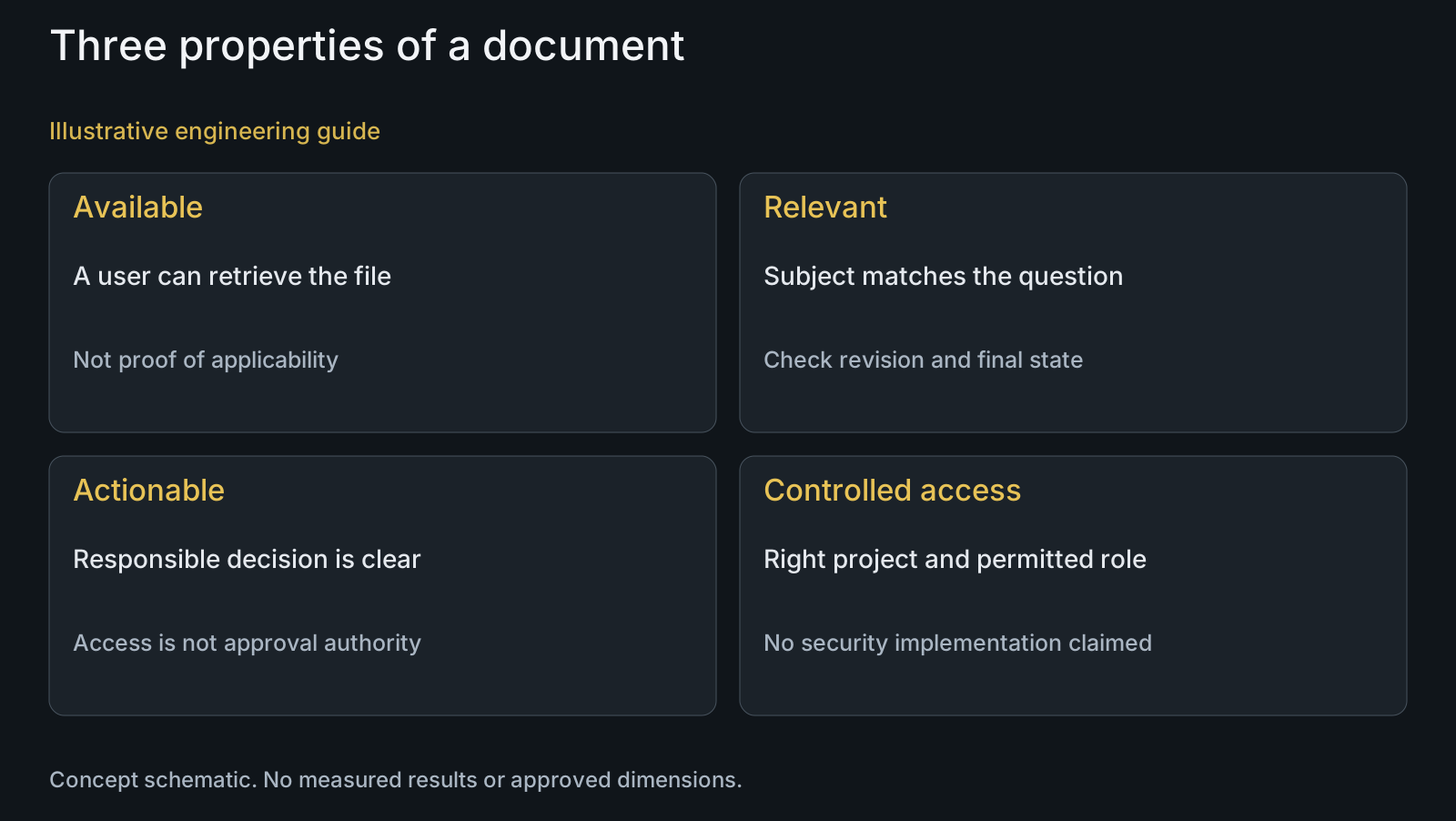
Define access and decision permissions separately
NIST's public RBAC report abstract describes controlling resource access through organizational roles. That supports the general separation of users, responsibilities and permissions; it is not certification of a proposed supplier portal or a complete security design.
For a project, distinguish viewing a report, uploading a drawing, proposing a change and authorizing a decision. A buyer may need document access without authority to approve a revised sleeve. Likewise, a receiving user should not gain unrelated customer drawing access merely because both projects share a supplier.
Agree access scope and its owner with the relevant IT and information-security team. Discuss account changes, removal of access and permitted recipients without publishing credentials or real order data. A conceptual information map does not establish that these controls are implemented.
Make a requested action specific enough to resolve
An action notice should identify the question, affected configuration and responsible role. Awaiting customer response is insufficient if the buyer cannot see whether the issue concerns a contact face, finish note, missing BOM position or commercial condition.
Separate informational updates from requests requiring a decision. Opening or downloading a file should not silently mean accepting a drawing change. If acknowledgement is required, state what that acknowledgement represents and what authority remains elsewhere.
Keep the next step understandable when information is corrected. A replacement report should preserve its relation to the superseded file and affected supply rather than erase the reason for revision. The purpose is to avoid reliance on stale evidence, not to manufacture an approval history from access logs.
Review a report that is visible but not sufficient
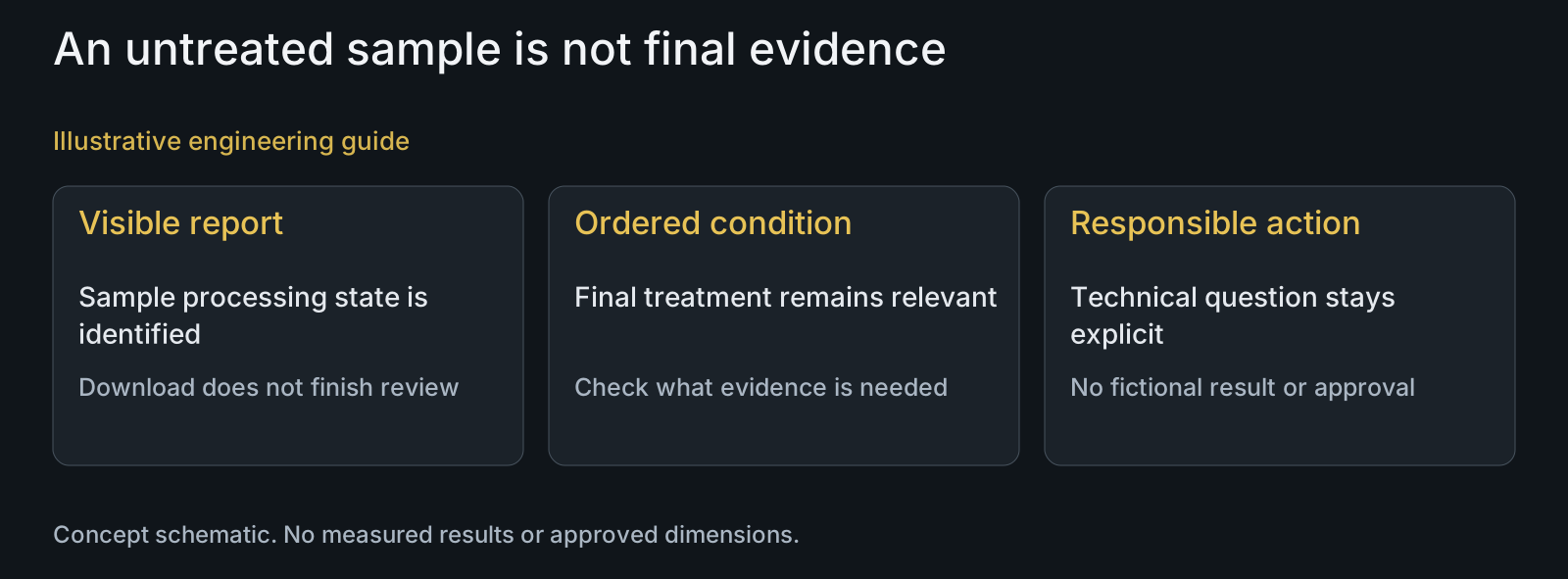
Illustrative engineering example: assume a portal concept displays a dimensional report for an untreated sleeve sample, while the ordered sleeve requires a specified final treatment. A procurement user can download the file, and a technical reviewer has a separate decision responsibility. No actual portal, report or test result is assumed.
The buyer asks whether the reported dimensions represent the required final condition. The interface should identify the sample scope and show the outstanding question rather than present download availability as evidence that final acceptance is complete.
The procurement user's file access does not resolve the technical question. The responsible reviewer can request relevant evidence or clarify the acceptance scope. The example closes no engineering decision; it demonstrates how document context and action permissions support different tasks.
Discuss needed information without promising a deployed portal
Start with the actual files, update needs and project roles. A manually provided order-specific document package may meet a bounded need without a live dashboard. Conversely, a portal with many screens may still fail if it lacks revision or final-condition context.
Identify the agreed channel, recipients and required delivery stage for records in the RFQ. PremFixer's manufacturing overview, materials information and quality-system certificate page have different scopes; a system certificate is not shipment approval.
Use the knowledge center for related receiving and sourcing decisions. Discuss actual document availability and communication arrangements for your project instead of assuming source-framework statements establish an operating portal or real-time tracking service.
Questions buyers need to confirm
Does PremFixer already provide a customer portal?
An operating universal portal is not established here. Discuss actual project update and document arrangements through the inquiry path. The diagrams are information concepts, not screenshots of an existing service.
Does downloading a report confirm product acceptance?
No. Check its represented item, revision, sample or lot and processing state against the required acceptance question. File retrieval establishes access, not evidence coverage or approval authority.
Should the newest upload always replace the old requirement?
No. An upload can be proposed, informational or superseded. Identify the controlling revision and applicable change decision rather than infer release from its timestamp.
Can procurement and engineering share the same permissions?
Do not assume identical authority. Identify who may view files, propose changes and authorize specific decisions for the project. Appropriate security owners should review the actual access arrangement.
What makes an awaiting-response notice useful?
A specific question, affected part or kit configuration, responsible role and requested next action. A vague status can conceal whether technical clarification, evidence review or a commercial decision is actually needed.
Does a portal verify compliance documents automatically?
No such service is established here. Evaluate issuer, represented subject and relevant scope with the responsible reviewers. An accessible certificate or report is not automatically current, applicable or independently verified.
Technical references and scope
NIST IR 6192 public abstract. Historical abstract describing role-mediated resource access only; not a current complete security standard or supplier implementation assessment.
Explore related component, material and sourcing decisions in the customer decision knowledge center. For a drawing review, use the Drawing/BOM RFQ path.
Define the order information and documents you actually need
Send the drawing, STEP, BOM revision, supplied condition and required document scope through the Drawing/BOM RFQ path. Identify the updates, recipients and open buyer actions so PremFixer can clarify project communication and evidence availability without promising a live portal.
Discuss the drawing and BOM