
Useful ERP integration for a pivot kit must distinguish stock that exists from stock usable for the current assembly and commitment. Link bolt and sleeve quantities to the controlling BOM, revision, final condition, allocation and disposition. Parts awaiting treatment, inspection or compatibility review should not become available merely because an electronic receipt succeeded. Order acceptance, usable-kit readiness, dispatch and arrival are also different states. Agree who owns each update and how disagreements are reconciled before relying on automated planning. This is a manufacturing-handoff design discussion, not evidence of an existing PremFixer API, EDI service or continuous inventory connection.
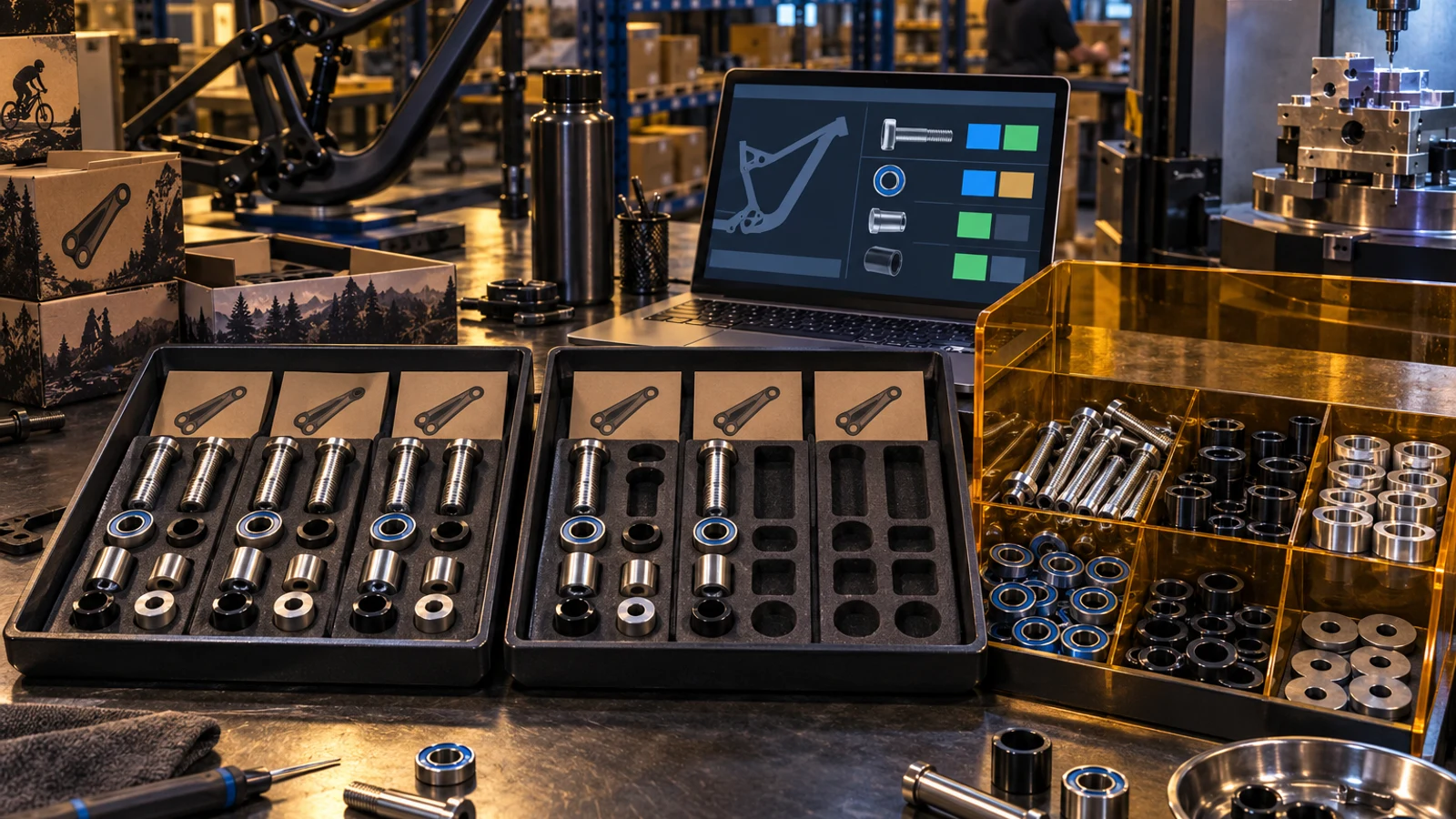
Hero: concept illustration of example hardware and its application. It is not a factory photograph, tested component or approved production geometry.
Define the physical meaning behind inventory quantities
An on-hand balance can include reserved, held or superseded parts. A planned receipt can represent future work rather than finished components. Identify what a quantity means before using it to promise an assembly kit or authorize another release.
Track the relevant part and BOM revision, location, supplied condition and quantity unit. A box of bolts cannot be converted into complete kits without the matching sleeve and other required positions. The ERP data-contract guide addresses message and unit mapping; this article focuses on physical availability and planning consequences.
Keep disposition distinct from location and ownership
A component can be at the supplier's site without being ready for consumption. It may be awaiting a finished-feature decision, reserved to another order or held for a revision question. Do not use location alone as evidence of availability.
Microsoft's inventory-blocking documentation illustrates software mechanisms that prevent inventory processing or consumption and distinguishes blocking from expected receipts. That is a product-specific example, not a configuration rule for every ERP or evidence that PremFixer uses Dynamics 365.
Define which business decision changes a held quantity's usable state and which system records that decision. A transmitted quality message can report a result without granting the authority to release stock. Preserve the responsible disposition rather than interpreting every electronic success as permission.
| Represented state | What it establishes | Allocation risk | Reconciliation question |
|---|---|---|---|
| Machining work in progress | Named operation is underway | Unfinished parts counted as final stock | Which treatment and evidence remain? |
| On hand but held | Parts exist with restricted disposition | Presence mistaken for permission to use | Who decides release and for which quantity? |
| Usable but reserved | Defined stock is committed elsewhere | Same components allocated twice | Which order owns the allocation? |
| Expected receipt | Future quantity under stated assumptions | Forecast treated as current stock | Which event and update basis support it? |
| Complete usable kit | Required components satisfy the defined basis | Mixed revisions hidden by a total | Do all BOM positions share the accepted scope? |
| Carrier receipt | Shipment handoff has occurred | Dispatch equated with arrival | Which shipment and destination are represented? |
Assess complete-kit readiness rather than the largest balance
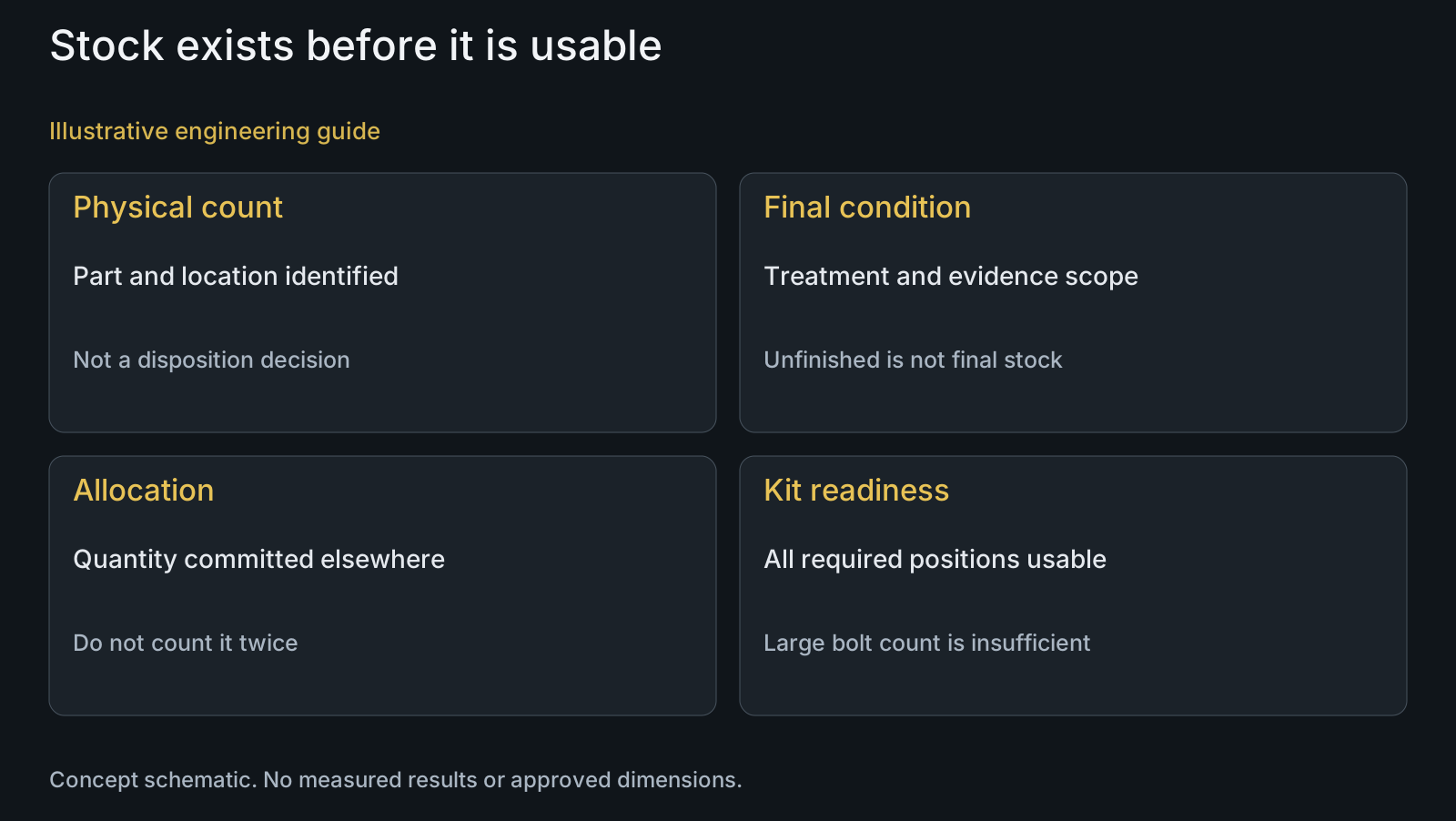
Compare each required component's usable quantity against the BOM quantity per kit. A shortage of matching sleeves can limit assembly-ready supply even when bolts are plentiful. Keep different revisions separate until compatibility has been established by the relevant review.
Treat finishing and evidence requirements as part of the supplied state. A machined sleeve that still needs its specified treatment is not automatically interchangeable with a finished sleeve. The surface-treatment discussion helps identify this boundary without creating a universal lead time.
Include allocation and intended demand. Stock committed elsewhere cannot be counted again merely because both systems display it. A useful availability exchange identifies the represented quantity, time and basis, not only one total labeled inventory.
Make delivery states explain a real event
A forecast date estimates an event under stated assumptions; an accepted delivery commitment has its actual commercial meaning. Preserve the event name and quantity scope when importing either. Manufacturing completion, ready-for-dispatch and carrier receipt should not collapse into one delivered state.
The digital procurement status guide explains these event boundaries. In the ERP handoff, identify which source owns the state and when it was observed. If data are stale, show that limitation instead of treating the latest received message as a current physical count.
Resolve conflicting messages with the responsible owners. A newer timestamp does not necessarily make a different revision or quantity correct. Reconcile the affected order line and stock before dependent allocation or a customer promise proceeds; do not overwrite evidence simply to remove a system warning.
Review received bolts beside held matching sleeves
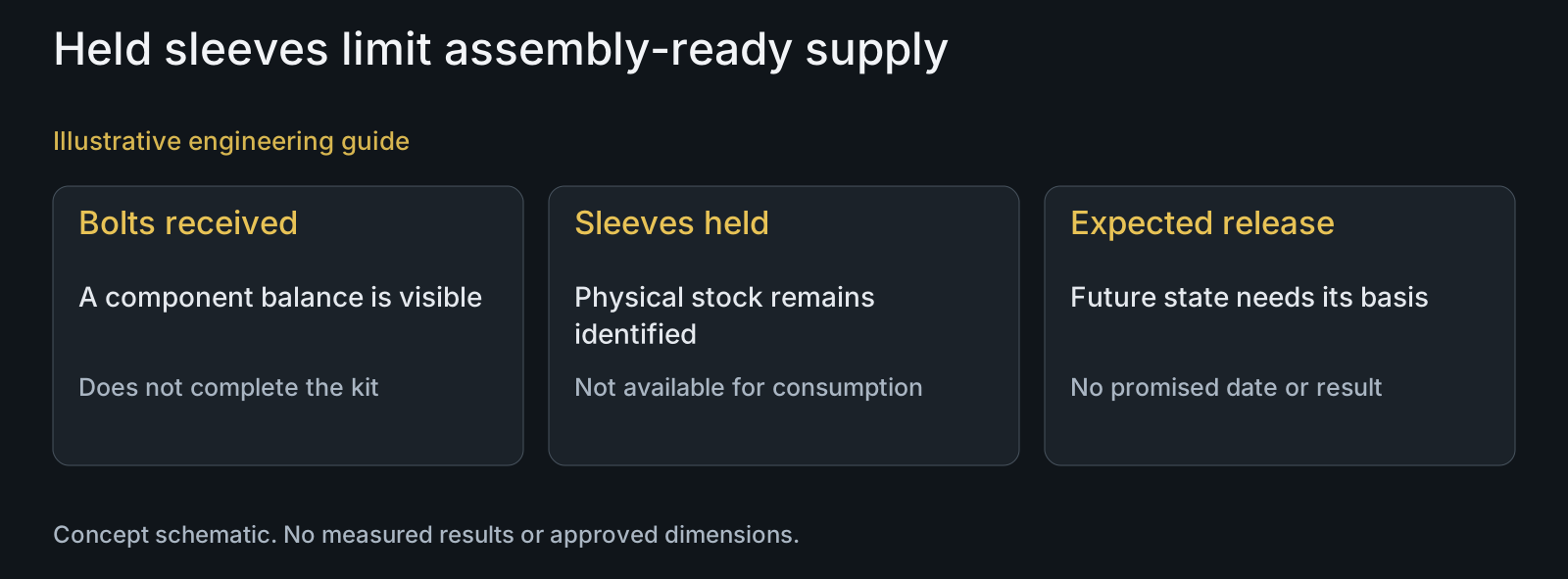
Illustrative engineering example: assume bolts have been received and counted, while the matching sleeves are physically segregated awaiting a final-condition decision. An interface sends both quantities to a buyer's ERP. No actual stock, order quantity or software installation is assumed.
If both quantities are imported as available, the system may show a complete kit without usable sleeves. The reviewer therefore checks how sleeve disposition is represented, whether planning treats the expected release as a forecast, and how a later authorized decision changes the represented state.
The example's conclusion is not to discard the sleeve balance. Keep it visible with its correct meaning so purchasing sees existing stock without allocating it prematurely. No inspection outcome or delivery date is invented; the useful distinction is between existence, expected availability and current permission to use.
Agree recovery and a bounded feasibility discussion
Repeated or missing updates need a reconciliation path. When an acknowledgement is lost, confirm the authoritative business state before creating another commitment. A manual correction should be linked back to the affected record so normal exchange does not restore the stale quantity.
Agree the limited objects, permitted actions, owners and non-sensitive example records needed for a feasibility discussion. Keep purchasing authority, stock disposition and technical change authority distinct from interface access. No endpoint or live write is created by this article.
PremFixer's manufacturing scope supports discussion of the actual component and supplied state. Use the knowledge center for adjacent supply decisions. ERP feasibility, access, support and actual data availability require project-specific confirmation rather than an unverified universal integration claim.
Questions buyers need to confirm
Can PremFixer connect directly to our ERP?
Confirm feasibility for the actual project rather than assume an existing universal interface. Provide non-sensitive objects, formats, permitted actions and expected state meanings; available access and support need separate agreement.
Can held stock be included in total inventory?
It can remain visible as stock that exists, but do not treat it as currently usable without the applicable disposition. Identify its part, revision, quantity and hold basis so planning can distinguish it from available supply.
Why can a large bolt balance still mean no complete kits?
The required sleeves, washers or other BOM positions may be unavailable, held or incompatible. Compare usable quantities with the quantities required per accepted kit rather than rank readiness by the largest component count.
Does a newer message always resolve a stock disagreement?
No. It may concern a different revision, location or quantity basis. Reconcile the represented object and authoritative physical or disposition state with its owner instead of applying timestamp precedence alone.
Can an expected receipt support a delivery promise?
Only under its actual planning and commercial basis. Identify the forecast event and assumptions separately from a commitment. Future work, final-condition decisions and transport dependencies may still be unresolved.
Does receiving a quality record automatically release inventory?
Not inherently. The record may report a result while the release authority remains elsewhere. Define the applicable disposition decision and affected quantity separately from successful transmission.
Technical references and scope
Microsoft Dynamics 365 inventory blocking. Product-specific public example of inventory blocking and expected receipts, not a universal ERP configuration or PremFixer system claim.
Explore related component, material and sourcing decisions in the customer decision knowledge center. For a drawing review, use the Drawing/BOM RFQ path.
Clarify the physical supply states behind the proposed exchange
Send the drawing, STEP, BOM revision, kit quantities and supplied condition through the Drawing/BOM RFQ path. Add non-sensitive examples of the stock and delivery states you need reconciled so PremFixer can discuss manufacturing meaning and project feasibility without promising a deployed interface.
Discuss the drawing and BOM