

Design, purchasing and quality should coordinate a custom bicycle pivot program around the same component and kit definition, but they should not share an unexplained approval button. Engineering may accept an interface change while purchasing has not accepted its cost, and quality may still need evidence for the changed delivered condition. Link each issue to the controlling configuration and identify what each decision permits. A collaboration platform can help display those relationships, but more messages or a closed discussion cannot establish missing authority. The practical goal is agreement about the same hardware, with separate technical, commercial and evidence decisions visible to everyone affected.
Hero: concept illustration of example hardware and its application. It is not a factory photograph, tested component or approved production geometry.
Give each discussion a concrete subject
Identify the affected part, kit position and revision before discussing a proposed change. Attachments with similar filenames can represent different definitions. A conversation about a spacer length is not automatically a discussion about every kit using a visually similar spacer.
The shared issue should state the unresolved question: contact geometry, alternative material, price basis or missing inspection evidence. This lets participants contribute relevant information without assuming that a reply about one subject closes another. Keep the controlled definition identifiable even when proposals circulate beside it.
Separate decisions by what they authorize
The design owner evaluates required function and applicable interfaces. Purchasing resolves price, quantity and order commitments within its authority. Quality evaluates required evidence and the agreed acceptance scope. A supplier can describe a manufacturing proposal without becoming the customer's design authority.
NASA's configuration-management guidance connects product information to controlled baselines and identifies change authority. Those general concepts inform this analysis; NASA project procedures are not imposed on bicycle buyers. Assign real project roles rather than infer authority from whoever uploaded a file or replied first.
| Response | What it can mean | Unsafe interpretation | Clarification needed |
|---|---|---|---|
| Engineering: geometry understood | Proposal is identified | Function is accepted | Interface assessment and design authority |
| Supplier: feasible route | An operation may be possible | Final design is approved | Original or proposed definition and assumptions |
| Purchasing: price requested | Commercial comparison is needed | New order is authorized | Quantity, scope and commitment authority |
| Quality: report reviewed | Evidence was examined | Every characteristic is accepted | Covered condition and unresolved questions |
| Discussion: closed | Conversation has an outcome | All dependent work is complete | Decision, applicability and implementation |
| File: latest upload | A newer file is available | It controls all live orders | Released status and applicable boundary |
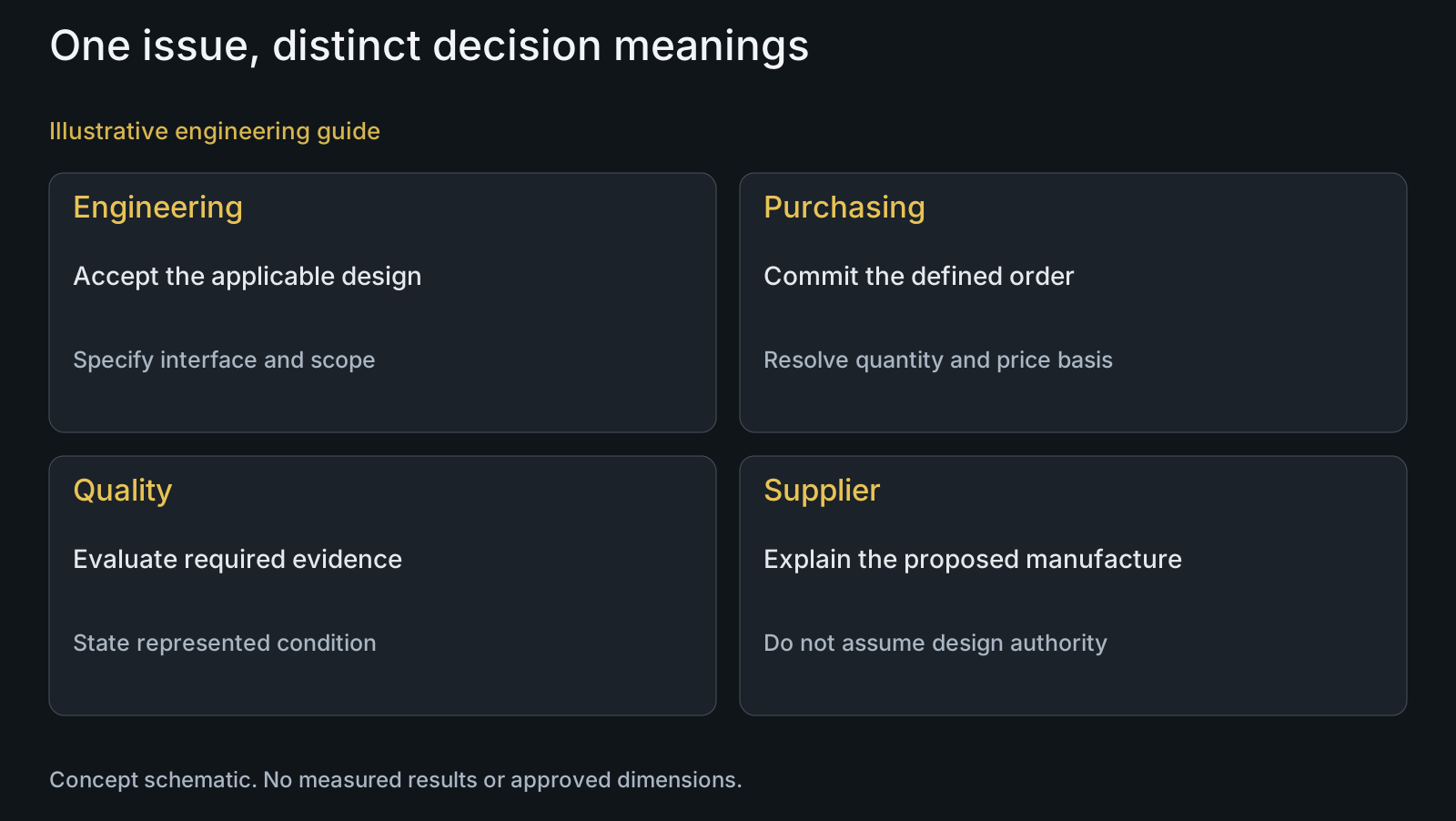
Connect the decisions without merging their meaning
If engineering accepts a revised shoulder feature, purchasing needs to know which quoted scope represents it, and quality needs to know which characteristics or delivered-state evidence changed. This is a dependency between decisions, not a reason to mark all three complete simultaneously.
State what remains usable while a question is open. An unresolved new proposal does not automatically invalidate every earlier order, and an accepted geometry does not automatically authorize manufacture under an earlier price. Explain the applicable component combination and order boundary rather than using one project-wide green status.
Make suppliers' proposals and responses interpretable
A supplier response should distinguish offered manufacture of the original drawing from a proposed alternative. Show changed features, assumptions and the question requiring customer action. A message saying possible can mean preliminary route feasibility, not accepted design, confirmed delivery or completed inspection.
Use manufacturing, materials and surface-treatment discussions to connect the relevant operation to the required supplied condition. Compare commercial responses through the supplier-quote comparison guide, keeping its normalized buying task separate from technical authorization.
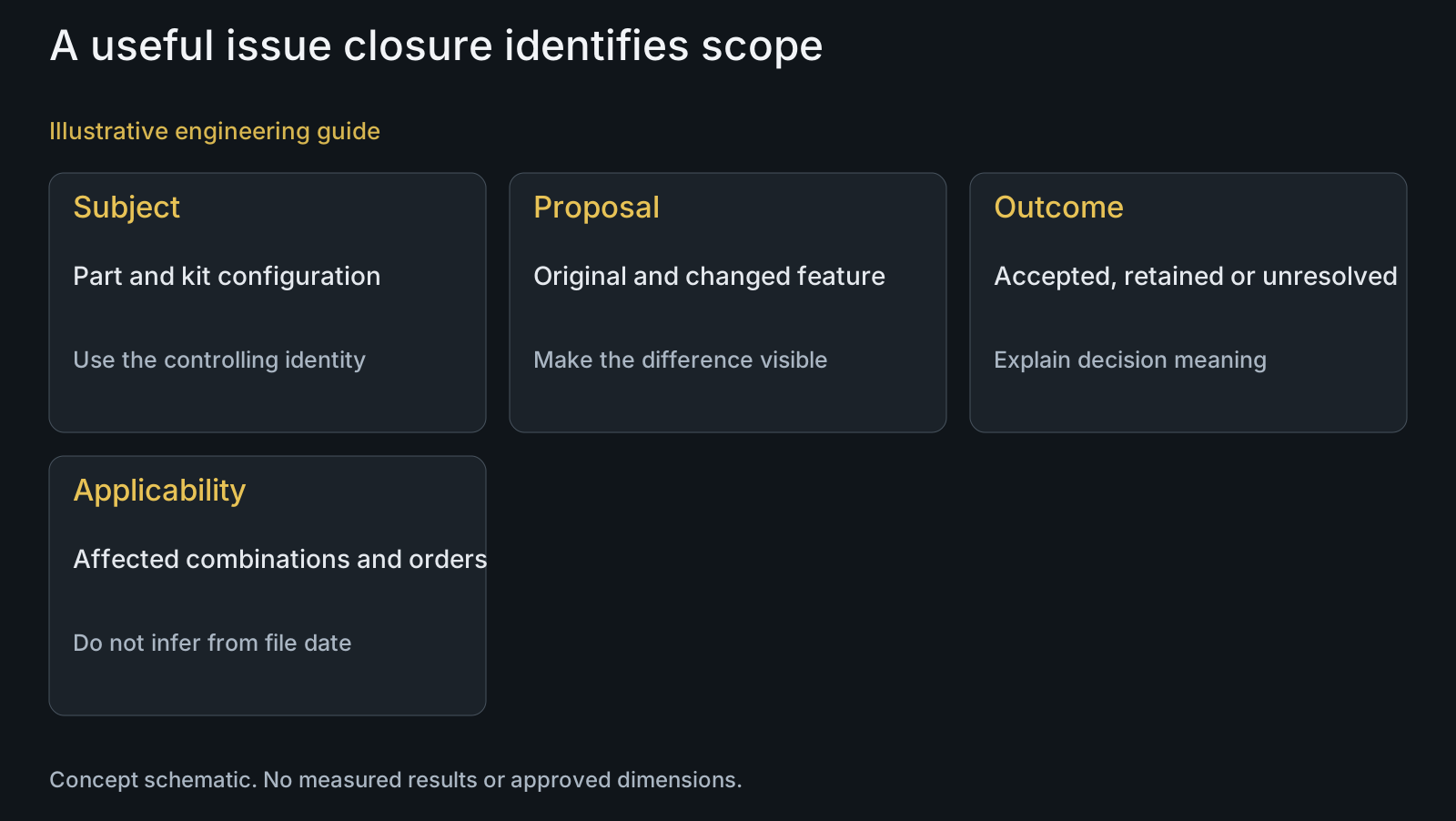
Close an issue with an outcome and applicability
Identify the accepted or rejected proposal, responsible decision-maker, represented definition and affected scope. A resolved issue might retain the original geometry, accept a marked alternative or request more information. Closing a chat because everyone has read it is not the same as resolving its engineering question.
Carry an accepted change through the relevant dependent definitions using the pivot ECN guide. That article covers change-impact closure; this collaboration task ensures participants know which decision they are making before those dependencies are implemented. Do not claim that a platform automatically discovers every physical consequence.
Example: one spacer proposal, three different answers
Illustrative engineering example: assume a supplier proposes a revised spacer contact feature. Engineering agrees to evaluate the geometry in the specified bearing stack. Purchasing asks for the price difference between original and proposed configurations. Quality asks whether the supplied finish changes the relevant measurement condition. No actual project approval or outcome is assumed.
The three replies cannot be condensed into approved. Geometry evaluation is still open, a price request is not a buying commitment, and an evidence question is not a rejected part. The issue remains tied to the proposed configuration until the distinct decisions and their applicability are clear.
The customer decision knowledge center and full-suspension solution entry provide related component and application questions without requiring a particular collaboration product.
Questions buyers need to confirm
Should all departments share one approval status?
Not when they authorize different actions. Identify design acceptance, buying commitment and evidence review separately. Their dependencies should be visible without implying that one department's decision supplies another's authority.
Who can approve a supplier's geometry change?
The customer's designated design authority should determine functional acceptance. The supplier can explain manufacturing implications, while purchasing and quality address their own responsibilities. Specify the changed interface and applicable kit so the approval has a defined subject.
Does closing a platform discussion release production?
Not automatically. Read the stated outcome and its authority. A closed question may mean the original requirement was retained or more information was requested elsewhere, rather than that a manufacturing order was authorized.
How do we avoid reviewing different attachments?
Identify the controlling configuration and link each proposal to its original definition. Show changed features and document status. Do not let a newer chat attachment silently supersede the drawing selected by the order.
What should happen when a cost decision and design decision disagree?
Keep both visible and resolve the resulting supplied scope before commitment. A technically acceptable alternative may remain commercially unselected. Identify which definition the quote and order represent rather than averaging incompatible responses.
Does PremFixer already provide a collaboration platform?
A deployed platform is not established by this guide. Share the part and kit definition, proposed issue, designated roles and current communication method for a focused manufacturing discussion. Coordination requirements can be defined without promising software features.
Technical references and scope
NASA Systems Engineering Handbook: Configuration Management. General baseline consistency, change-authority and status-accounting concepts; NASA-specific procedures and cited standards are not asserted as bicycle procurement requirements.
Explore related component, material and sourcing decisions in the customer decision knowledge center. For a drawing review, use the Drawing/BOM RFQ path.
Give your pivot discussion a clear decision boundary
Send the drawing or STEP, kit BOM, marked proposal, affected interfaces and designated design, purchasing and quality contacts through the Drawing/BOM RFQ path. Ask PremFixer to separate manufacturing observations from decisions your team must authorize.
Discuss the drawing and BOM