
A pivot supplier performance KPI is useful only when its numerator, denominator and event are defined. Start with what the OEM needs to decide: conformity of received parts, availability of complete usable kits, delivery reliability, technical responsiveness or comparable cost. State the reporting period, required milestone and treatment of changes. Do not mix pieces, lots, order lines and kits in one percentage. Nor should a revised promised date erase the original commitment without visibility. A concise scorecard with underlying counts and stated limits gives purchasing and SQE a better basis for action than an unexplained composite supplier rating.
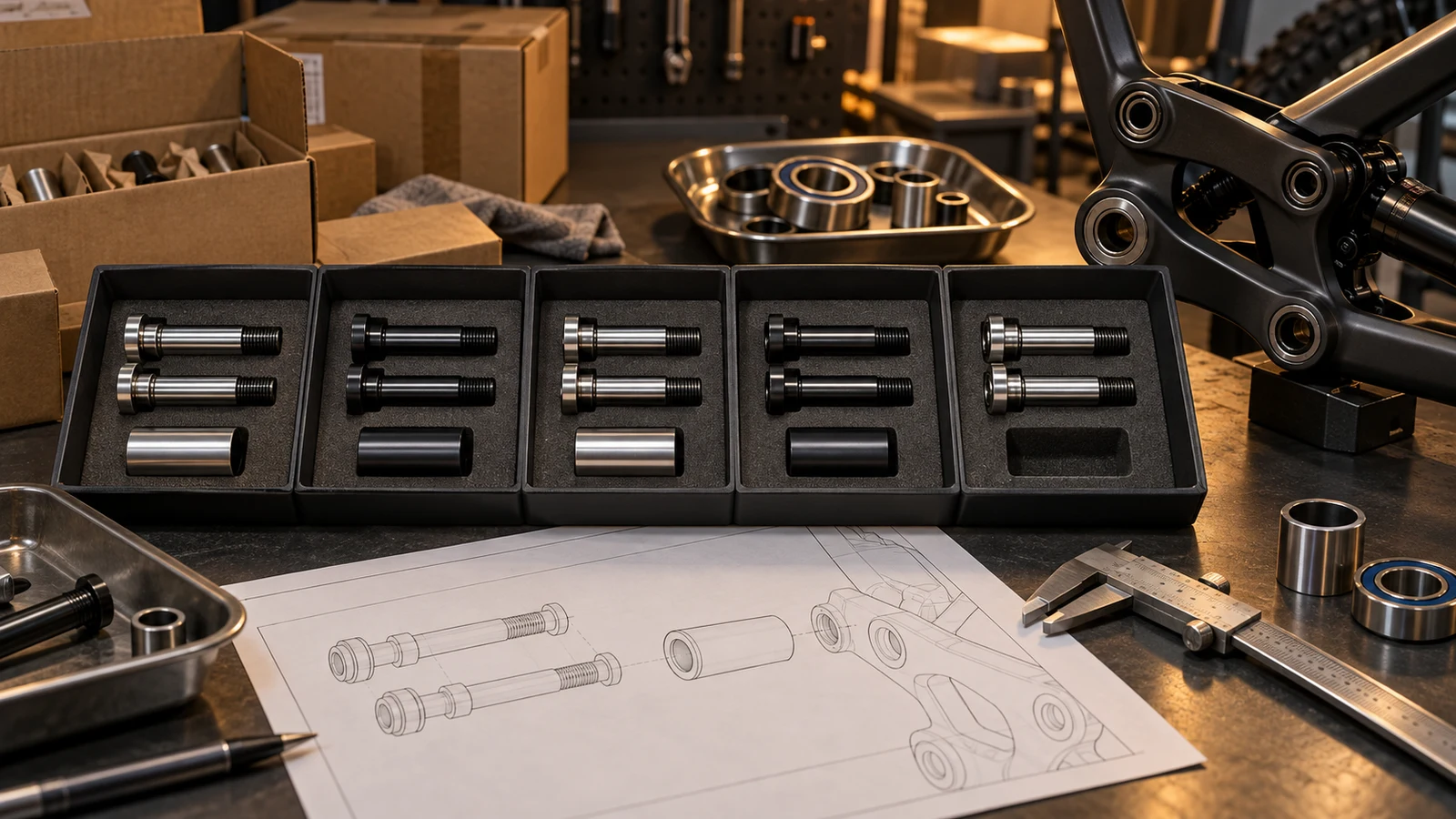
Hero: concept illustration of example hardware and its application. It is not a factory photograph, tested component or approved production geometry.
Choose the decision before calculating the percentage
For each metric, name the question, counted population and information source. The arrival of a carton, its recorded receipt and release for assembly can be different events. Pick the event the decision needs, then keep that definition consistent through the reporting period.
NIST's supplier-scorecard discussion recommends relevant quality and delivery measures, clear communication and vendor-specific interpretation. This guide develops original pivot-program definitions; it does not prescribe a standard scoring formula or industry target.
Keep quality, delivery, responsiveness and price visible separately. Weighting can support an agreed review, but an overall score should not cancel a critical unresolved interface with a low price. Show which scope and decision each component measure actually represents.
Separate conforming units from counted defects and inspected samples
Identify what qualifies as a nonconforming unit against the applicable requirement. One bolt with several issues can be one nonconforming unit and several defect observations. ASQ's quality glossary distinguishes the defective unit from its underlying defects. Do not switch those counts mid-series.
State whether the denominator is all received units or the evaluated sample. Sample results do not become an observed whole-shipment defect count simply by changing a spreadsheet label. Report the selected coverage, relevant characteristics and supplied process state alongside the finding.
Separate initial acceptance from later disposition. If sorting or rework makes parts usable, preserve the original nonconformity and identify the recovered supply separately. Otherwise the scorecard can hide the effort that protected the assembly line. Tie the evidence to the agreed inspection scope.
| Metric | Count and denominator | Common distortion | Verification or action |
|---|---|---|---|
| Nonconforming units | Identified nonconforming units / evaluated population | Multiple defects become multiple defective pieces | Retain unit identity and coverage |
| Complete-kit availability | Usable complete kits / kits required at milestone | High piece coverage hides missing sleeves | Reconcile all BOM positions and revisions |
| On-time complete delivery | Complete qualifying deliveries / deliveries due | Dispatch or partial supply replaces receipt | Name event, date basis and completeness |
| Technical responsiveness | Elapsed time to defined response milestone | Acknowledgment is counted as implemented closure | Review actual answer and active requirement |
| Price comparability | Cost for the same supplied configuration | Omitted work appears as better performance | Compare scope and commitments |
| Improvement trend | Same defined metric over comparable periods | Changed denominator creates apparent progress | Show counts, mix and definition changes |
Count usable kits separately from pieces arriving on time
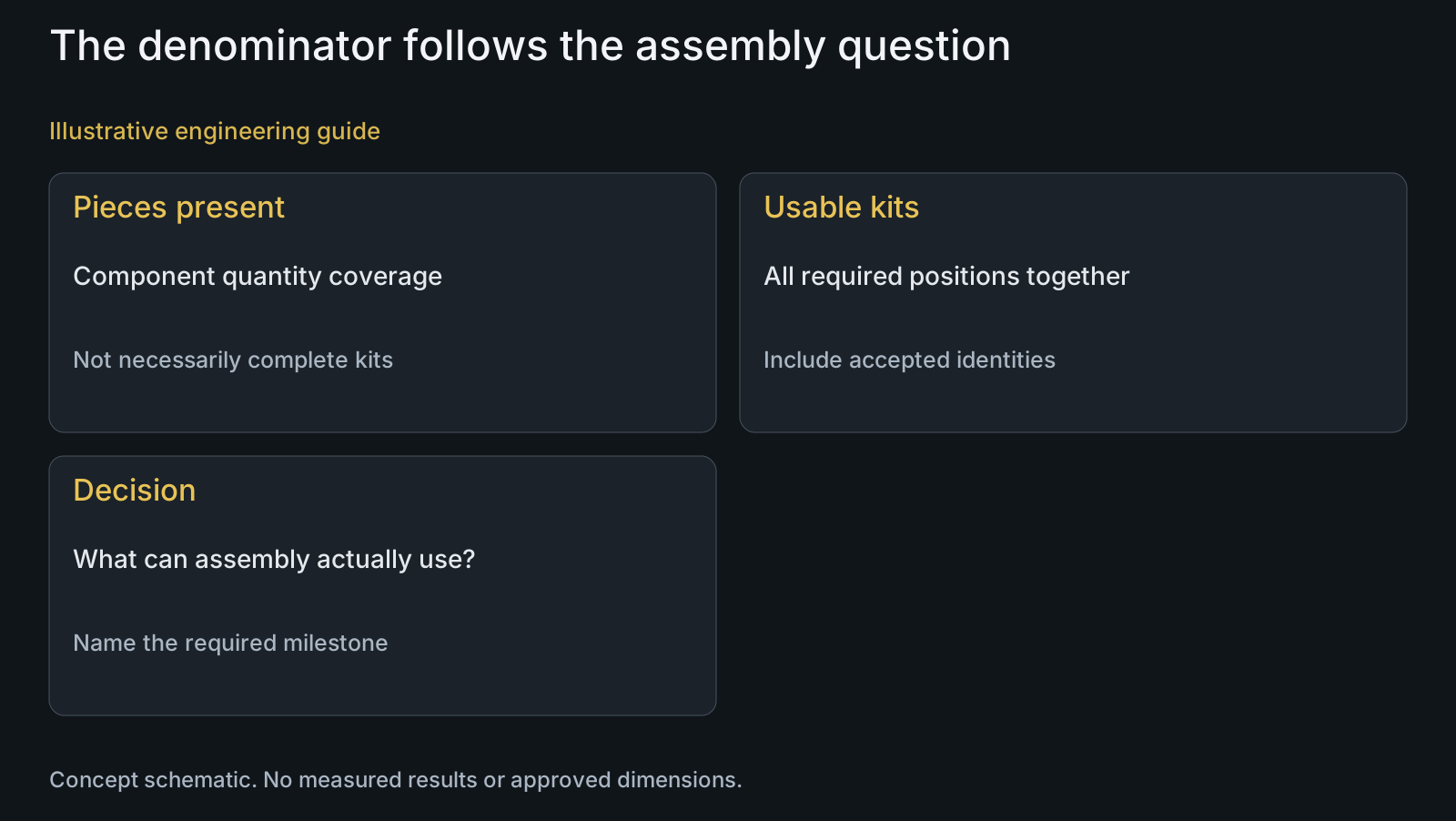
A pivot kit may require two bolt positions and a specific sleeve. Piece delivery measures coverage of those component quantities; complete-kit delivery asks whether all required positions and accepted revisions are available together. Both metrics can be useful, but they answer different questions.
Identify the applicable delivery milestone: dispatch, receipt at a named place or availability after required receiving checks. State whether an on-time order line must also be complete. A partial shipment can be on time as a transport event but insufficient for the planned assembly quantity.
Retain original and mutually revised promises with reasons for the change. Separate customer-requested changes from supplier-caused delay using an agreed classification, not automatic exclusions. The JIT supply guide explains why piece balances and forecast alone do not establish usable replenishment.
Measure response closure and price on an identified basis
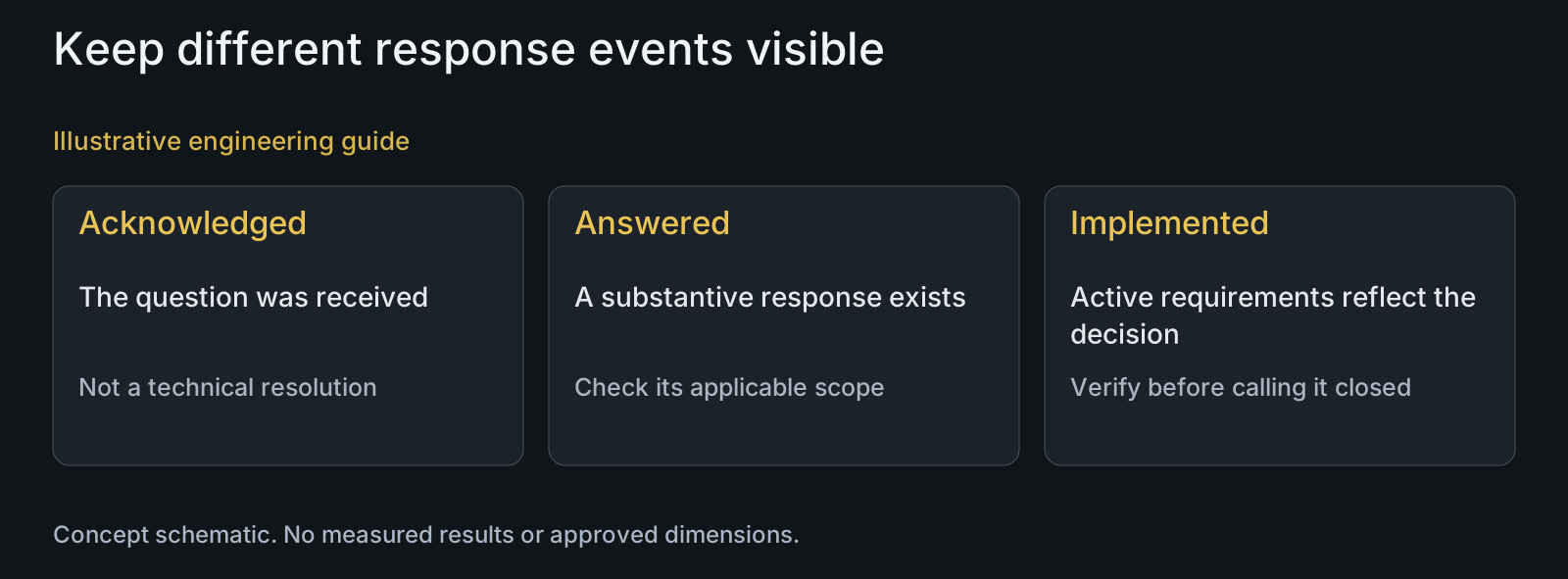
Define when a technical-response clock starts and what stops it. First acknowledgment, a substantive answer and implementation in the active requirement are different milestones. Specify working calendar and treatment of waiting for essential customer information when those details affect the measure.
For price competitiveness, compare the same finished kit, revision, material, treatment, evidence, quantities and delivery boundary. A removed report or changed commitment is not automatically a favorable price-performance result. Use the price-negotiation guide to name the actual exchange.
Report the affected part or program scope and the number of observations. An average response time across unrelated requests can conceal an unresolved critical interface. Likewise, a supplier serving a different product mix may not be directly comparable until that mix and its requirements are visible.
Calculate an illustrative shortage on two denominators
Illustrative engineering example: assume 100 scheduled kits, each containing two bolts and one sleeve. At the required receipt milestone, all 200 bolts and 90 sleeves are present in the correct identified condition. Ten sleeves are missing; no real shipment or supplier performance is assumed.
The piece-quantity coverage is 290 divided by 300, approximately 96.7 percent. Complete-kit coverage is 90 divided by 100, or 90 percent. These are assumed quantity-availability calculations, not measured quality yields or statistical predictions. They show why the assembly planner cannot use the first percentage as kit availability.
The team investigates the missing sleeve supply rather than the bolt quantity, identifies the represented order and reviews its causes. A general average score would not name that constraint. The correct denominator helps select the action without inventing a benchmark or declaring a supplier unsuitable on a single hypothetical event.
Use trends for targeted action without hiding definition changes
Present counts and percentages together, especially when volumes are small or the part mix changes. Distinguish a change in performance from a change in measurement definition. If reporting rules change, mark the boundary rather than implying the entire earlier series was calculated the new way.
Assign a review action to the represented issue: investigate a recurring shortage, examine the final-state evidence or resolve the technical-response handoff. The supplier audit guide addresses executed-control evidence; the scorecard identifies where that investigation may be useful.
PremFixer's manufacturing discussion should relate a requested metric to the actual drawings, BOM and supplied scope. Agree customer targets and evidence access for that program. No universal quality percentage, delivery guarantee or historical supplier ranking is claimed here.
Questions buyers need to confirm
Can a piece-delivery percentage be reported as complete-kit delivery?
No. Reconcile every required BOM position and accepted revision at the named milestone. Missing a sleeve can limit usable kits even when nearly all individual pieces have arrived.
Is one bolt with two defects counted as two nonconforming units?
Not for a unit-based metric. Preserve the bolt's identity and count defect observations separately. State the counted subject so comparisons do not mix units and defects.
Can a sampled result describe the observed defect rate of the entire shipment?
Not without stating what is actually observed and how any inference is made. Keep sample coverage and inspected characteristics visible; a label change cannot turn sampled units into full-shipment inspection.
Should a revised delivery date replace the original promise in the dashboard?
Keep both visible with the change reason and agreed reporting basis. Otherwise a late order can appear on time simply because the promise moved. Treat customer-driven changes separately without hiding the underlying event.
Does a fast acknowledgment demonstrate technical responsiveness?
It demonstrates receipt of the question, not necessarily a substantive answer or implemented resolution. Define the clock and stopping event, then track critical unresolved scope separately from averages.
What should we provide to agree supplier-performance reporting?
Provide the drawing and BOM scope, reporting period, required delivery events, inspection coverage and response milestones. Include current counting rules and exclusions so purchasing, SQE and the supplier can compare the same represented population.
Technical references and scope
NIST supplier-scorecard discussion. General use of relevant quality and delivery KPIs, communication and interpretation; no numerical industry targets or PremFixer performance inferred.
ASQ quality glossary. Distinction between a nonconforming/defective unit and counted defect observations. Original program-specific definitions and illustrative quantity arithmetic are explained separately.
Explore related component, material and sourcing decisions in the customer decision knowledge center. For a drawing review, use the Drawing/BOM RFQ path.
Agree performance definitions for the supplied pivot program
Share the drawings, BOM, supplied condition, required delivery event, inspection coverage and proposed KPI definitions. Include reporting periods and change classifications. The review will connect each measure to the actual kit or component decision and clarify what evidence and counts are needed.
Discuss the drawing and BOM