
A mechanical pivot bolt does not acquire a universal standalone RoHS certificate requirement merely because it is fitted to an e-bike. The OEM must first identify the actual equipment scope and the component information required for that program. Where RoHS applies, mechanical materials can matter even though the bolt has no electrical function. Specify the substrate, coating and other supplied materials rather than asking for an undefined RoHS 3 approval. Keep supplier statements and laboratory evidence tied to those materials. The finished-equipment assessment remains a separate responsibility; a bolt document cannot settle vehicle classification or declare the complete bicycle compliant.
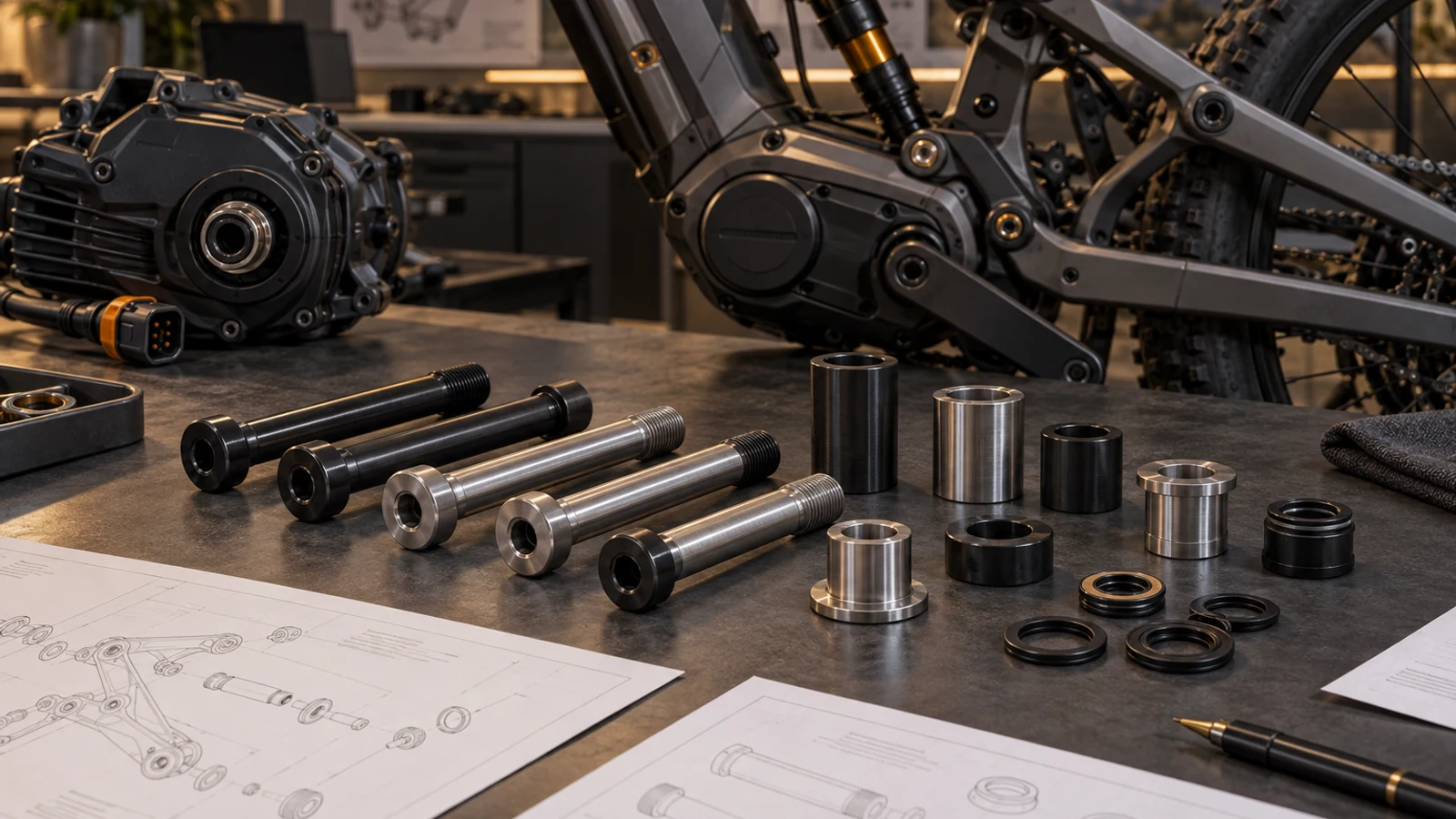
Hero: concept illustration of example hardware and its application. It is not a factory photograph, tested component or approved production geometry.
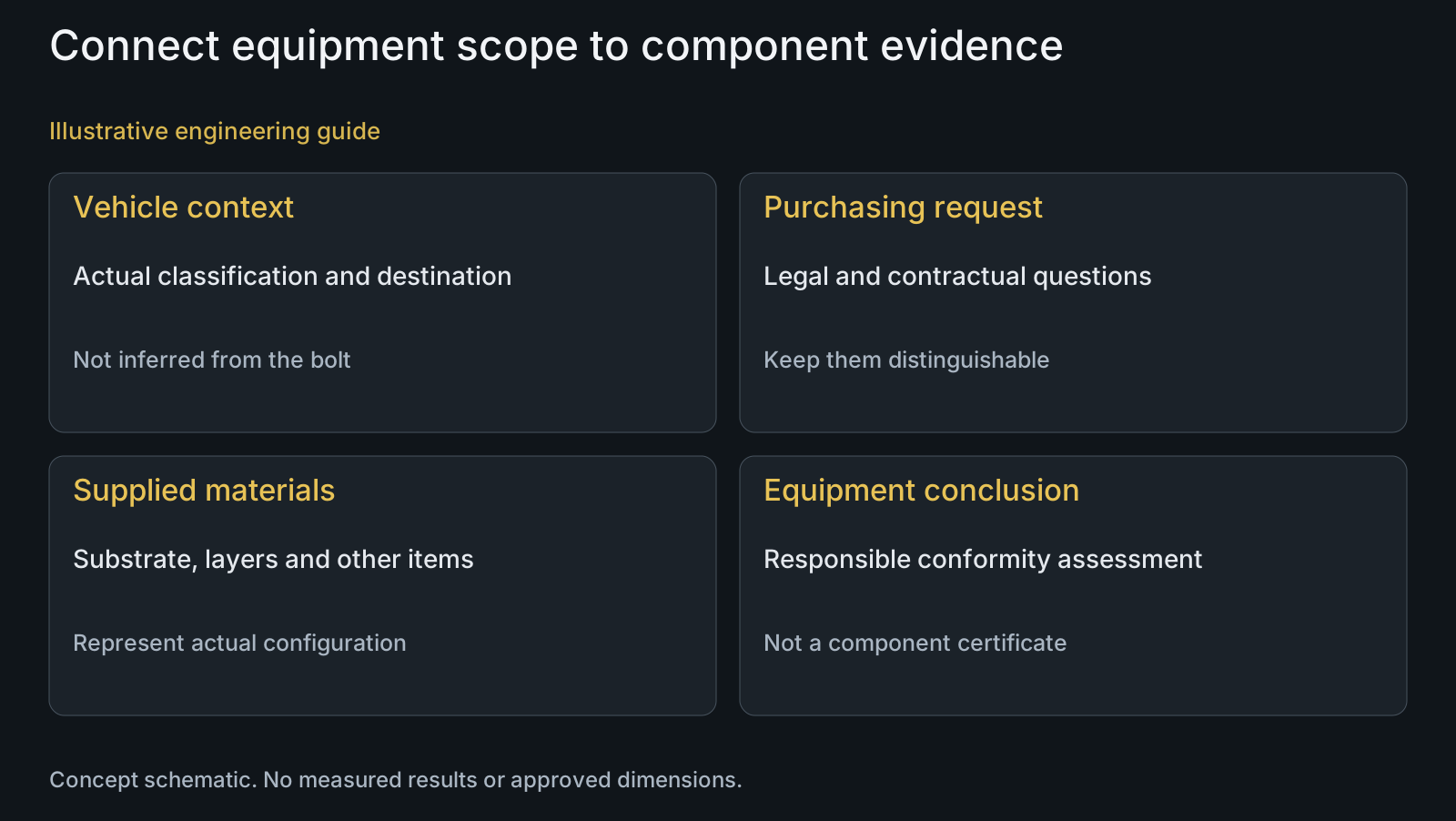
Classify the actual equipment before assigning the bolt requirement
The RoHS Directive's consolidated text excludes means of transport with an exception for electric two-wheel vehicles that are not type-approved. That distinction prevents the phrase e-bike from settling every product's position by itself.
Request the equipment identity, intended market and relevant classification from the responsible team. Do not guess type-approval status from the bolt, frame appearance or motor's advertised power. A different vehicle program may require a different legal assessment while using similar-looking mechanical hardware.
Keep legal applicability separate from purchasing policy. A customer may require substance information for its components even where a different scope conclusion applies to the final equipment. State that contractual request rather than describing it as universal bolt certification.
Explain why non-electrical components can still need information
For equipment within scope, a metal fastener can contribute material information to the equipment's substance assessment. The bolt's mechanical function is therefore not a reason to leave it out of an applicable component-data request. Conversely, that contribution does not turn the bolt into a separately approved electrical product.
Ask which supplied materials are represented: the base alloy, retained surface layers, locking patch and other included components. An uncoated material statement cannot automatically describe a coated or patched variant. A component family statement needs a defensible relationship to the actual purchased configuration.
Use the e-MTB hardware guide for the separate engineering load question. Strength, fit and chemical information serve different decisions, so neither a fatigue assessment nor a restricted-substance statement replaces the other.
| Decision | Inputs that matter | Wrong shortcut | Evidence or responsibility |
|---|---|---|---|
| Equipment scope | Actual vehicle and type-approval context | Every e-bike has identical obligations | Responsible equipment classification review |
| Component requirement | Contractual request and supplied materials | Mechanical means irrelevant | Defined hardware information scope |
| Report adequacy | Material units and specimen identity | Whole-kit pass label is enough | Methods and represented materials |
| Exemption claim | Application, provision and relevant date | Old letter grants permanent coverage | Current responsible assessment |
| Finished-product conclusion | Complete equipment evidence | Bolt statement declares bicycle compliance | Equipment manufacturer and market duties |
Specify the assessment basis instead of requesting a whole-kit average
RoHS uses a homogeneous-material basis, not the complete kit's average composition. Identify how the supplied materials and any relevant surface layers are represented in the evidence. Combining multiple components in one sample can obscure what the reported result applies to.
The surface-finish information guide explains that material-unit distinction in depth. For procurement, require enough specimen identity and method context to understand whether the report answers the selected requirement. Do not decide an analysis is adequate from a pass label alone.
A mill chemistry document, finish supplier statement and targeted test report have different subjects. Organize them by the materials they represent rather than attach every available file to the quotation. Missing coverage should be named, not hidden by a large document package.
Use exact requirements instead of the informal RoHS 3 label
The European Commission overview links Directive 2011/65/EU and amendments, including the Annex II change in Directive (EU) 2015/863. Use the actual applicable requirements in the purchase request instead of treating an informal RoHS 3 label as a complete specification.
Do not translate restrictions into a statement that every listed substance must be absolutely absent. The Commission's implementation guidance explains that exemptions are conditional and time-limited. Any claimed exemption needs a specific application and current assessment; none is granted to this hardware by this article.
Name any customer-specific reporting requirement, evidence date and permitted reliance on supplier information. If the specification deliberately goes beyond the legal requirement, make that visible. This prevents a supplier from answering a narrower legal question while purchasing expects a broader contractual deliverable.
Distinguish component evidence from the equipment declaration
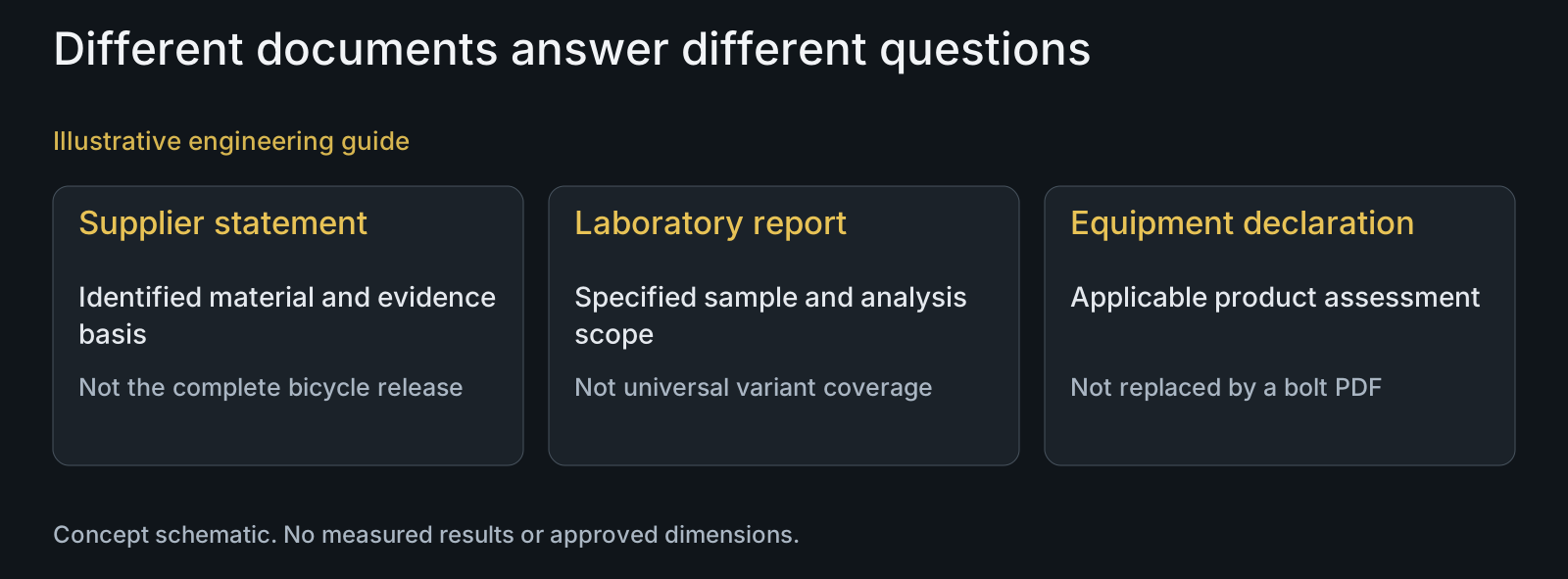
A component supplier's statement can identify the supplied hardware and evidence basis. A laboratory report can address a represented specimen. Neither is automatically the equipment manufacturer's declaration or a release of the entire bicycle configuration.
Keep the conformity decision with the responsible equipment and market parties. If a drawing requests a mark or a declaration without identifying the legal basis, resolve that request before adding anything to the part. Do not decorate a bolt with an approval implication to compensate for missing evidence.
PremFixer can discuss drawing-based manufacturing and the material or surface information available for the specified order. No all-finish RoHS guarantee, owned chemical laboratory, blanket exemption or included testing package is asserted. Evidence and reporting scope belong in the actual quotation.
Illustrative request for two electrically assisted vehicle programs
Illustrative engineering example: assume a buyer uses a similar pivot drawing in two programs, one described as a non-type-approved electric two-wheel product and another with a different vehicle classification. Both request a dark supplied surface system. No classification approval, substance result or customer case is assumed.
The buyer does not infer identical legal duties from the shared bolt drawing. The responsible compliance team reviews each equipment scope, while purchasing asks the supplier what material and treatment evidence represents the delivered hardware. A contractual information request can be stated for either program without changing its legal classification.
The useful handoff separates classification, material evidence and final declaration. Send the actual program context and component requirement through the RFQ-input guide. A shared part number does not remove the need to identify which conclusion each document supports.
Questions buyers need to confirm
Does a mechanical bolt's lack of electrical function remove every RoHS information need?
No. Component material information can still support the assessment of equipment within scope. Identify what the customer actually needs for the purchased hardware. That supporting role does not make the bolt a separately certified electrical product.
Does the name e-bike establish product applicability?
No. The actual vehicle classification and relevant exclusions must be reviewed. The transport provision treats non-type-approved electric two-wheel vehicles differently from its general exclusion. Ask the responsible product team rather than infer classification from the pivot design.
Is RoHS 3 a sufficient RFQ specification?
No. Name the applicable directive requirements, amendments, represented materials and requested evidence. An informal label does not identify the equipment scope, specimen basis, any claimed exemption or additional customer reporting requirement.
Can a single mixed kit sample settle every material question?
Not without an adequate representation and interpretation basis. RoHS concerns homogeneous materials, not a whole-kit average. Ask which substrate, coating and other materials the report represents, and identify any coverage gap before accepting its conclusion.
Does an old exemption letter permit every new hardware variant?
No automatic coverage follows. The exemption's application, conditions and relevant validity need review against the actual requirement. A supplier letter cannot grant a new or broader exemption. Keep that interpretation with the responsible compliance team.
What information should accompany a component-data request?
Send the destination and equipment context, BOM and revisions, material and complete supplied treatment, required evidence and any existing reports. Identify the responsible scope reviewer and whether the request is legal or contractual. This defines what the hardware supplier can actually provide.
Technical references and scope
RoHS Directive consolidated text, 1 July 2026. Relevant equipment transport scope, homogeneous-material basis and component/equipment responsibility distinction; consolidation is a documentation tool, not a product approval.
European Commission RoHS overview. Directive and Annex II amendment references; no automatic separate pivot certification or supplier conformity asserted.
European Commission RoHS implementation. Conditional and time-dependent exemptions; no specific exemption entitlement or expiry claimed for the hardware.
Explore related component, material and sourcing decisions in the customer decision knowledge center. For a drawing review, use the Drawing/BOM RFQ path.
Define the RoHS component-data scope for the actual program
Provide the equipment context, destination, BOM, drawing and material/finish specification, requested directive basis and evidence format. PremFixer can discuss documentation for the supplied pivot hardware. Keep vehicle classification and finished-equipment conformity with the responsible program team, and identify any unresolved component information separately.
Discuss the drawing and BOM