
ASTM references do not all perform the same job in a bicycle pivot specification. F2043 describes bicycle usage classification; B348/B348M concerns titanium bars and billets; a laboratory method addresses a defined test. For an OEM buyer, the decision is which evidence is needed for the intended use, supplied material and finished joint. Name each reference's subject and edition, then state the required output and acceptance basis. A usage category cannot establish a bolt's strength, and a titanium material record cannot validate the linkage. Avoid a generic ASTM certified request that leaves these different questions unanswered.
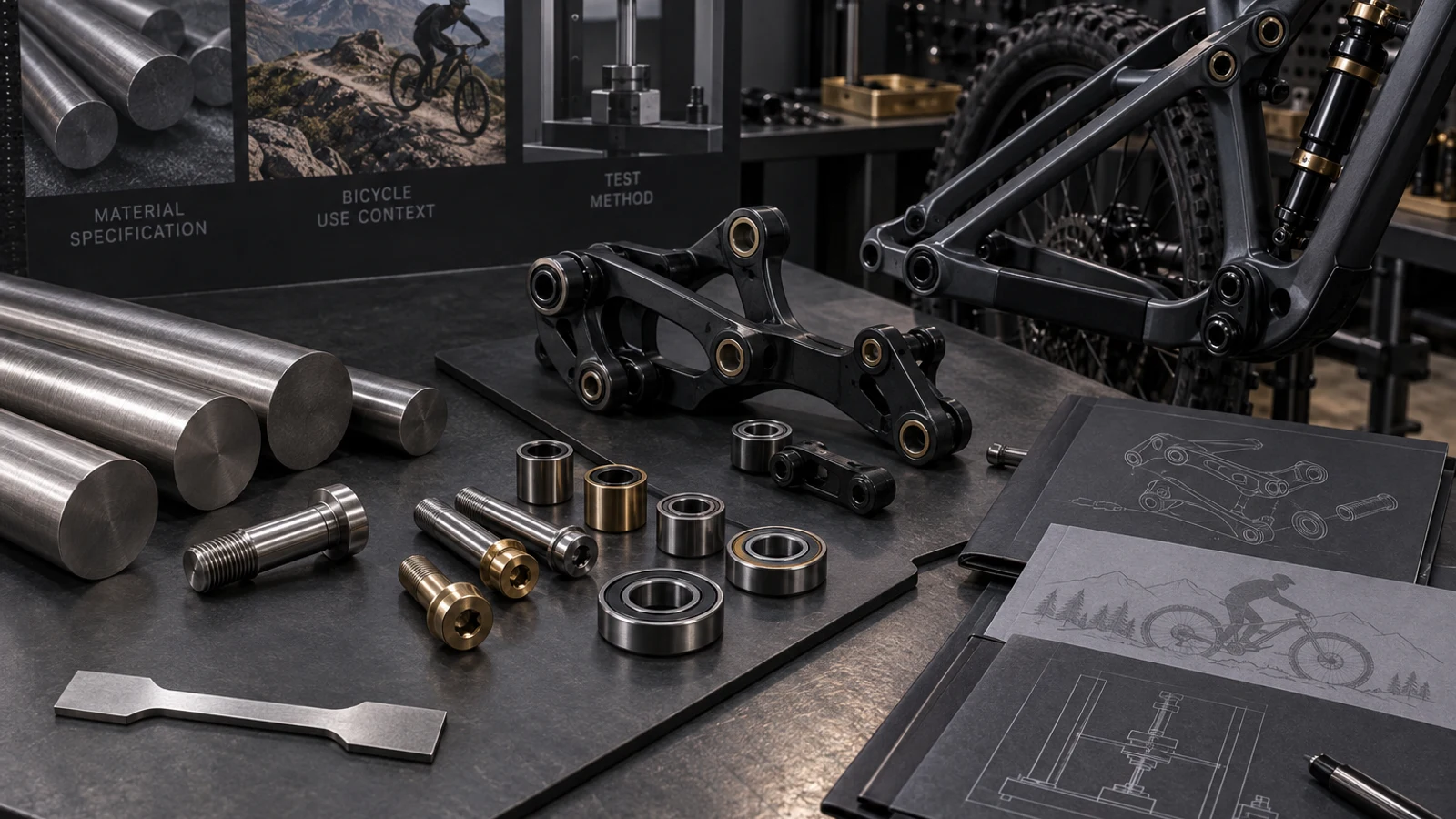
Hero: concept illustration of example hardware and its application. It is not a factory photograph, tested component or approved production geometry.
Read the document's function before its familiar number
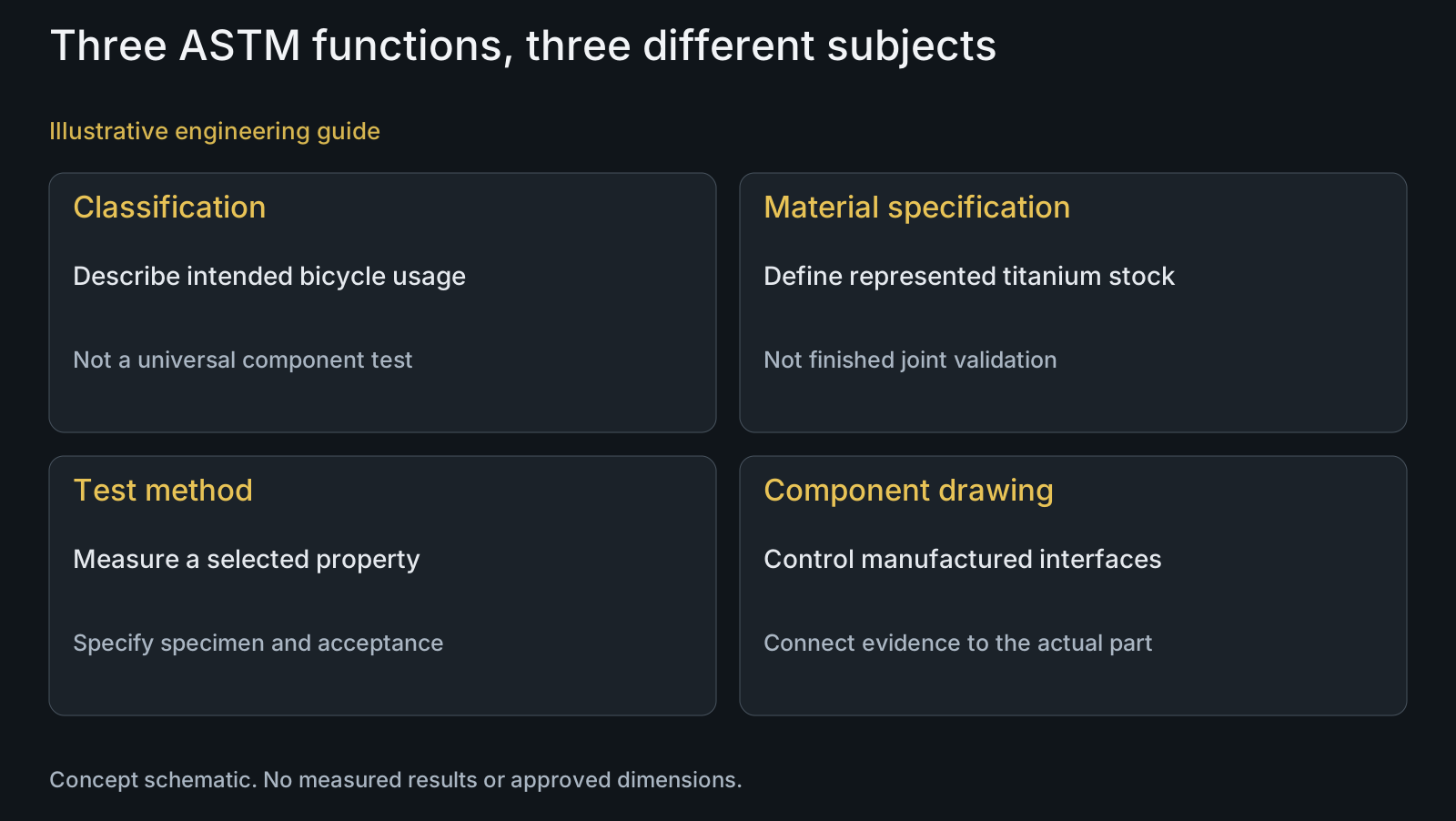
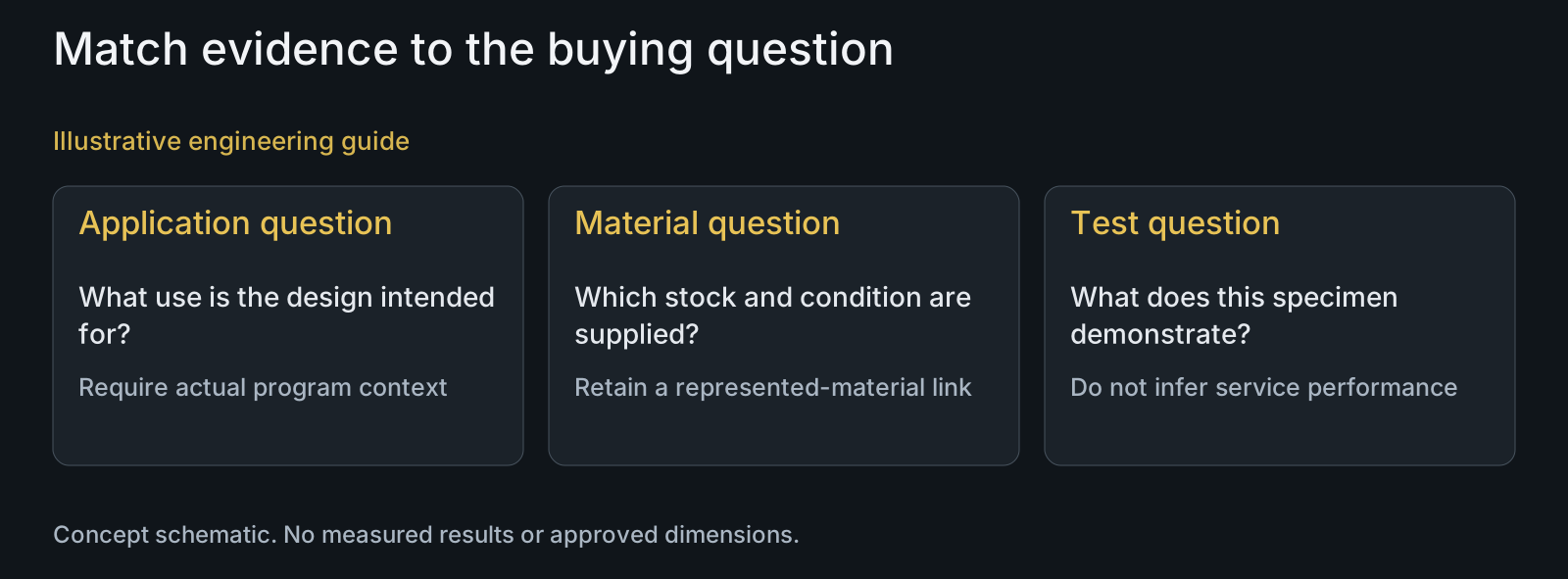
Start by distinguishing classification, specification and test method. These functions can coexist in a project without replacing one another. An RFQ should make clear whether a reference identifies the intended application, controls a supplied product or defines how an evidence output is produced.
For a custom stepped pivot, assign the material reference to the purchased material form and the drawing to the manufactured geometry. Assign assembly evidence to the actual joint question. Do not describe a dimensional report as a material qualification, or a material qualification as a use-category assessment.
The ISO applicability guide addresses which references belong to which interfaces. Here the distinction is what kind of statement an ASTM document can support. Both reviews prevent a recognizable number from doing work beyond its scope.
Use F2043 for intended-use classification, not a universal bolt test
ASTM's current public listing names F2043-13(2026) as Standard Classification for Bicycle Usage. Its scope concerns usage conditions and identifying bicycles and components within that system. The original safety shorthand should therefore not become a claim that F2043 supplies every pivot test or acceptance limit.
An intended-use description is useful context for the engineering team. A product meant for a different use can require a different joint evaluation, but the category name alone does not specify the pivot's load history, contact arrangement or failure criterion. Those inputs must come from the actual design and validation plan.
Do not apply a category label to an unassessed replacement kit simply because the donor bicycle carries it. Describe the actual application and proposed changes. Use the system failure map to distinguish joint mechanisms that an intended-use label does not diagnose.
| Reference type | Question answered | What it does not establish | Required connection |
|---|---|---|---|
| F2043 classification | What usage system is intended? | Universal bolt test or strength limit | Actual application and assessment |
| B348/B348M specification | What titanium bar or billet is required? | Finished pivot geometry or joint life | Grade, form, condition and stock evidence |
| E8/E8M test method | How is represented tensile behavior tested? | Every service or assembled-joint property | Specimen and acceptance basis |
| Custom component drawing | What geometry must be supplied? | Complete bicycle market conformity | Functional features and inspection |
| Product market requirements | What applies to the actual bicycle? | Automatic clearance from an ASTM list | Responsible product-scope review |
Keep B348/B348M connected to titanium feedstock
The official B348/B348M-25 listing covers annealed titanium and titanium-alloy bars and billets. The material form and condition matter; a bare B348 note is not a complete finished-bolt specification. Name the required grade and agreed material condition rather than let titanium stand for one universal alloy.
A supplied material record should relate to the feedstock used for the order. Machining then creates the shoulder, drive, thread and transitions that the joint uses. Compliance of represented stock does not independently establish those features or their behavior when assembled.
The titanium reference comparison develops material callouts in more detail. Keep that material decision separate from CNC turning requirements for the final component. Do not substitute a different material form's standard merely because its alloy name sounds similar.
A test method needs a specimen and an acceptance question
ASTM describes E8/E8M-25 as tension-testing methods for metallic materials. Its public guidance cautions that a machined standardized specimen may not fully represent the entire product or its service behavior. A valid material test therefore needs an accurate statement of what it represents.
Define whether the requested evidence concerns stock, a machined coupon or the supplied fastener. A small pivot may not provide the same specimen geometry as a material coupon. Agree the suitable method and reporting basis with the qualified testing provider rather than call every axial or destructive test E8.
Separate method from acceptance. Knowing how a property was measured does not tell purchasing which result the project requires. Specify the contractual limit or receiving requirement independently, with its source, and use the mechanical-test comparison to select the relevant output.
Do not mistake an ASTM reference list for US market clearance
The CPSC bicycle business guidance identifies bicycle requirements in 16 CFR Part 1512. A list of ASTM documents is not, by itself, the applicable US regulatory assessment. Have the responsible product team establish coverage for the actual product and market.
Keep contractual requests visible alongside legal requirements. A customer can ask for a particular material record or test method for its own design program. That request must be explicit, but it should not be presented as a universal legal duty for every standalone pivot bolt.
PremFixer can discuss the drawing, material requirement and evidence requested with the manufacturing quotation. Do not assume every ASTM test is available in-house, included in the part price or already completed. Testing scope, specimen supply and reporting arrangements need order-specific agreement.
Illustrative correction of an ASTM certified RFQ
Illustrative engineering example: assume an OEM proposes a titanium shoulder pivot for an off-road linkage and asks for ASTM certified hardware with F2043, B348 and E8 listed together. No category assignment, load value, test result or actual customer case is assumed.
The review turns that single phrase into three questions. The OEM supplies intended-use context without pretending it is a bolt test. The material request identifies the titanium stock requirement. The test request states what specimen and property it is meant to address, with an agreed acceptance source rather than an invented universal threshold.
The finished drawing still needs shoulder fit, thread and contact requirements. The team sends the resolved references and geometry through the drawing-review guide. This produces a quotation with identifiable deliverables; it does not claim the bicycle or pivot has passed validation.
Questions buyers need to confirm
Is ASTM F2043 a general safety test for every bicycle bolt?
No. Its title and public scope identify a bicycle usage classification. Use it for its intended context, not as a substitute for the pivot's specific test or acceptance requirement. The application team must connect that context to the actual design.
Does B348/B348M define a complete titanium pivot bolt?
No. It addresses titanium bars and billets in its stated scope. Specify the selected grade, stock form and material condition, then define machined geometry separately. A material record does not confirm thread fit, contact surfaces or assembled performance.
Can an E8/E8M coupon report prove the joint's service life?
No. It describes represented tensile behavior under the selected method, not every service condition. Identify the specimen source and what it represents. A linkage's contact, retention and cyclic behavior require their own appropriate evidence.
Is a list of ASTM numbers enough for a US-market RFQ?
No. Separate actual product-market requirements from customer specifications and test requests. CPSC identifies bicycle requirements in 16 CFR Part 1512; the responsible product team must establish applicability. No generic ASTM list grants market clearance.
Can we replace an older edition automatically?
Do not change a contractual reference silently. Identify the cited edition, applicable differences and receiving authority's acceptance. A current public catalogue entry helps locate the document, but it does not authorize substitution for an agreed requirement.
Which inputs make the quotation useful?
Send the pivot drawing, titanium grade and condition if relevant, intended use, exact references and editions, and requested specimen or reports. State the acceptance source and who receives the evidence. This distinguishes stock procurement, finished geometry and any separately agreed testing.
Technical references and scope
ASTM F2043-13(2026) public scope. Bicycle usage classification purpose; no full category definitions, component assignment or normative testing limits reproduced.
ASTM B348/B348M-25 public scope. Annealed titanium bar and billet material scope; no complete finished-fastener qualification asserted.
ASTM E8/E8M-25 public scope. Metallic material tension-testing method and representation limits; no numeric acceptance criterion or test result claimed.
CPSC bicycle business guidance. Identifies 16 CFR Part 1512 bicycle requirements; no program-specific legal applicability determined.
Explore related component, material and sourcing decisions in the customer decision knowledge center. For a drawing review, use the Drawing/BOM RFQ path.
Turn the ASTM request into defined pivot deliverables
Share your drawing or STEP, BOM role, intended use and exact ASTM references with editions. Include material form and condition, requested evidence and the acceptance basis. PremFixer can review the manufacturing scope and identify which documents concern stock, the finished component or a separately agreed test.
Discuss the drawing and BOM