
A custom bicycle pivot needs a requirement map, not a collection of ISO numbers. Select each reference for the feature, material or assembly decision it actually covers. Bicycle safety requirements do not replace a shoulder drawing, and a standard socket-head shape does not establish bearing fit or service torque. Start with the intended bicycle application, the supplied part geometry and the receiving interface. Then assign applicable standards, drawing-specific requirements and assembly evidence separately. This prevents a supplier from quoting a familiar standard bolt while the OEM expects a stepped pivot with controlled contact surfaces and a validated locking arrangement.
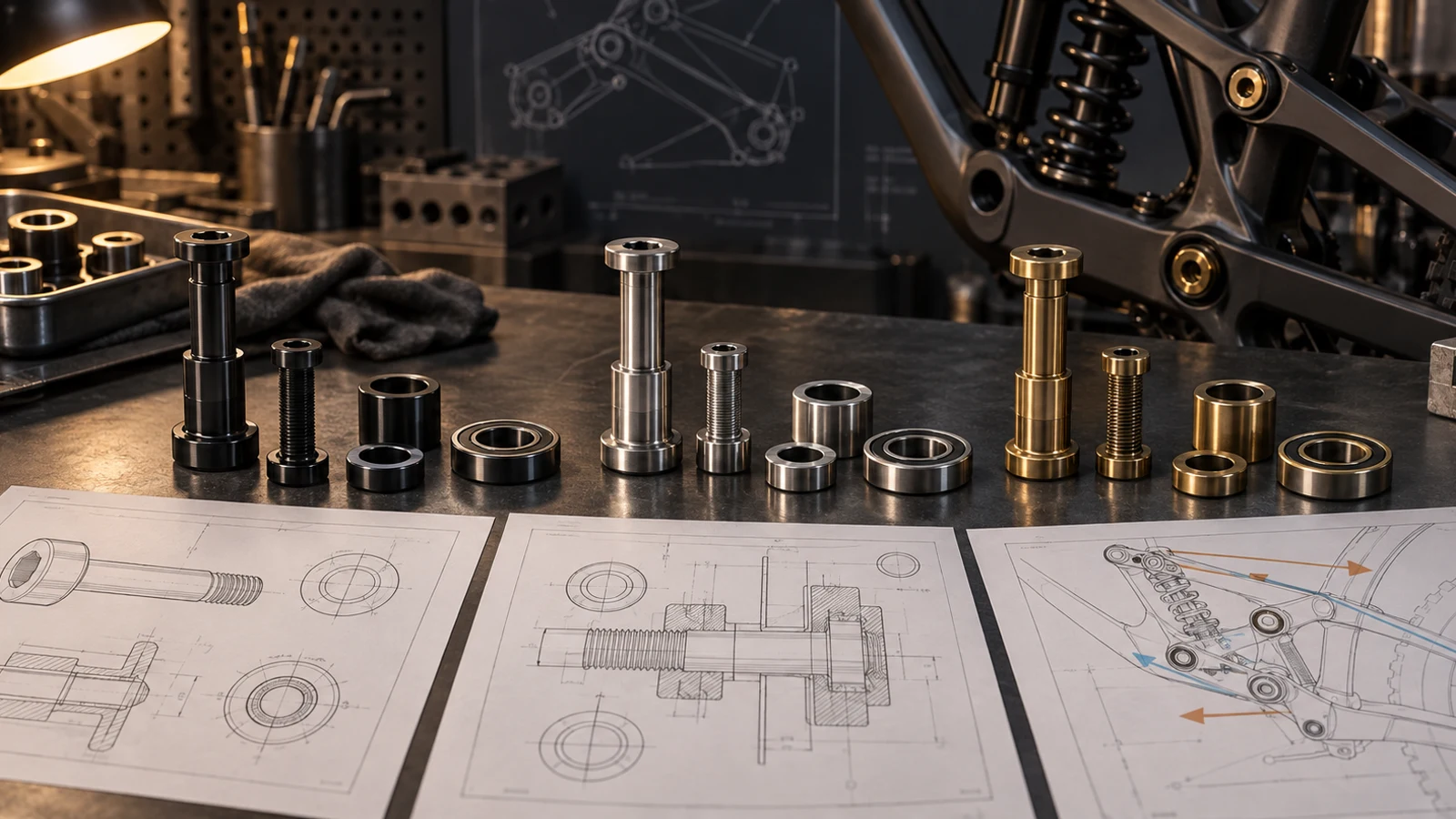
Hero: concept illustration of example hardware and its application. It is not a factory photograph, tested component or approved production geometry.
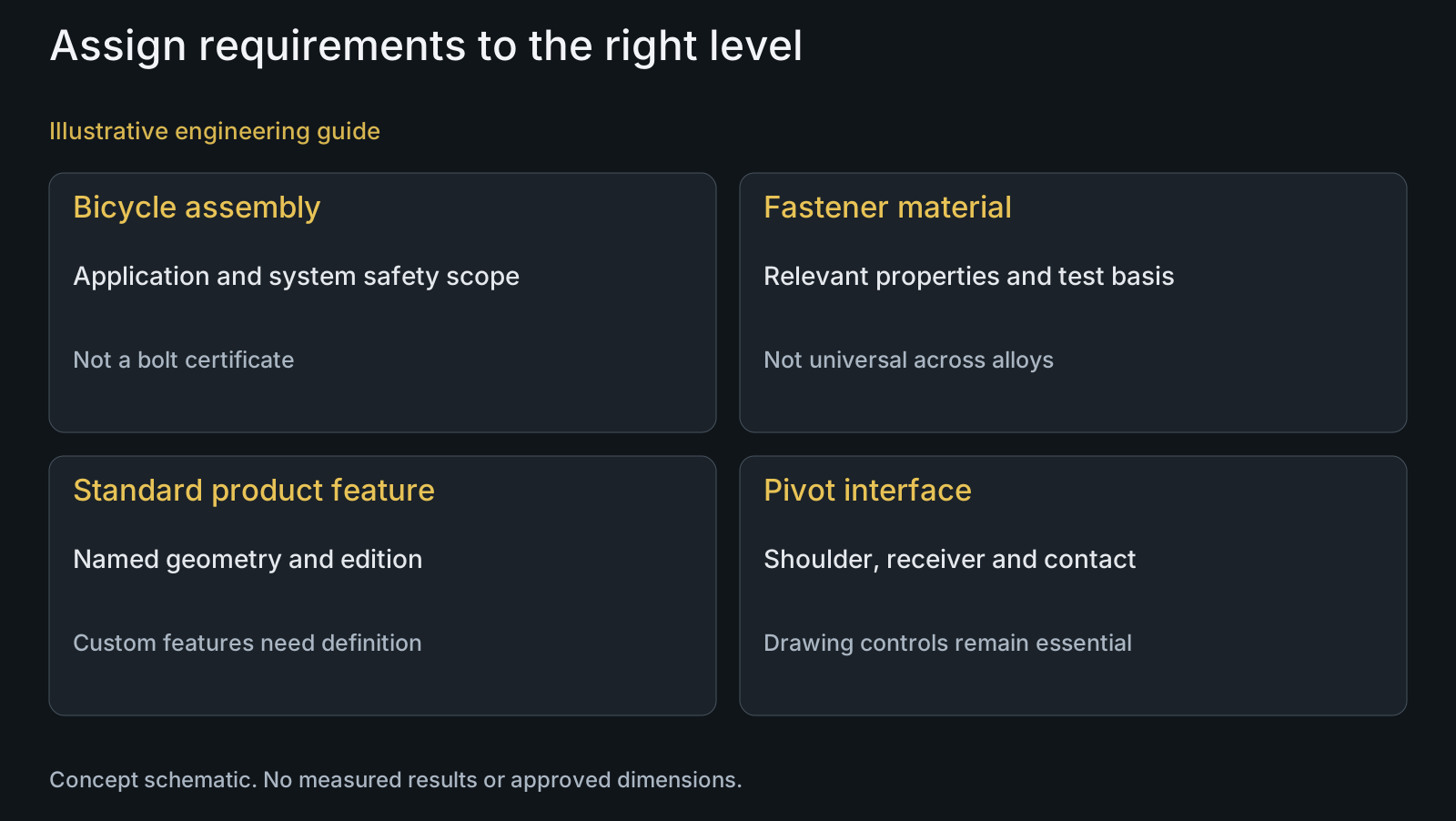
Separate bicycle safety from purchased-part conformity
The public scope of ISO 4210-2:2023 concerns bicycle and subassembly safety and performance, with defined application coverage and exclusions. Check that coverage against the actual bicycle category. Do not assume every cargo, competition or specialized design falls within the same scope.
For the RFQ, identify what the pivot supplier must deliver and what the bicycle team must demonstrate. A component inspection report can describe the purchased hardware. It cannot, by itself, establish the safety of the frame, bearings, linkage, assembly method and intended use together.
The ISO 4210 stainless-pivot guide develops that component-to-assembly boundary. Here the decision is which references belong in the contract and what each reference is supposed to control.
Use a product standard only for geometry it describes
ISO 4762:2004 addresses hexagon socket head cap screws. Wurth's DIN 912 comparison identifies ISO 4762 as the replacement reference and distinguishes fine-pitch variants. That relationship helps resolve legacy callouts, not approve every custom substitution.
A stepped bearing shoulder, flange, internal bore or unusual under-head transition can need drawing-specific controls beyond a standard cap screw. State whether the reference governs the complete product or selected features. Otherwise a quotation can silently omit the surfaces that make the part a pivot.
Compare the actual head envelope, drive access and available diameters before changing a legacy designation. Do not infer interchangeability from similar names. Use the drawing DFM review to identify which geometry remains custom.
| Reference or requirement | Applicable decision | Risk if misused | Verification needed |
|---|---|---|---|
| Bicycle safety standard | Covered bicycle or subassembly application | Part report mistaken for complete bicycle compliance | Application scope and assembly evidence |
| Cap-screw product geometry | Features actually defined as standard | Custom shoulder omitted from quotation | Drawing feature-by-feature comparison |
| Material-dependent property standard | Compatible material and fastener geometry | Wrong property system or unsupported performance claim | Material scope and specified tests |
| Bottom-bracket or freewheel thread standard | Only that named interface | Unrelated limits imposed on pivot receiver | Identify the actual mating components |
| Custom drawing requirements | Bearing fit, contact and special features | Undefined pivot behavior despite standard head | Defined limits, datums and inspection basis |
Match mechanical-property references to the material
ISO 898-1:2013 addresses specified mechanical and physical properties of carbon-steel and alloy-steel fasteners within its stated scope. It does not supply a universal property designation for stainless steel, titanium or aluminum pivots.
Its public scope also excludes fatigue resistance, corrosion resistance and torque/clamp-force performance from the properties it specifies. Consequently, a property-class callout cannot answer all three questions. Define those additional requirements where they matter to the actual joint.
If head or body geometry differs from a standard tensile fastener, clarify which requirements can be demonstrated on the supplied part. The mechanical-test guide distinguishes test outputs; the material-selection guide addresses choosing the material before assigning a suitable property requirement.
Remove standards for unrelated bicycle interfaces
ISO 6696:1989 concerns bottom-bracket cup threads. ISO 6698:1989 concerns freewheel-to-hub assembly threads. Neither becomes a pivot-thread requirement simply because both concern bicycles.
Keep an unrelated reference only if the supplied component genuinely includes that interface. For a dedicated pivot receiver, specify the actual thread system, diameter, pitch, tolerance class and engagement geometry. The metric thread-class article explains why a thread label is different from a bearing fit.
Use the complete designation and edition, rather than a bare number copied from an older BOM. If two documents appear inconsistent, identify the affected feature and ask for a disposition. Do not let the manufacturer decide which contractual obligation to ignore.
State document precedence at the point of conflict
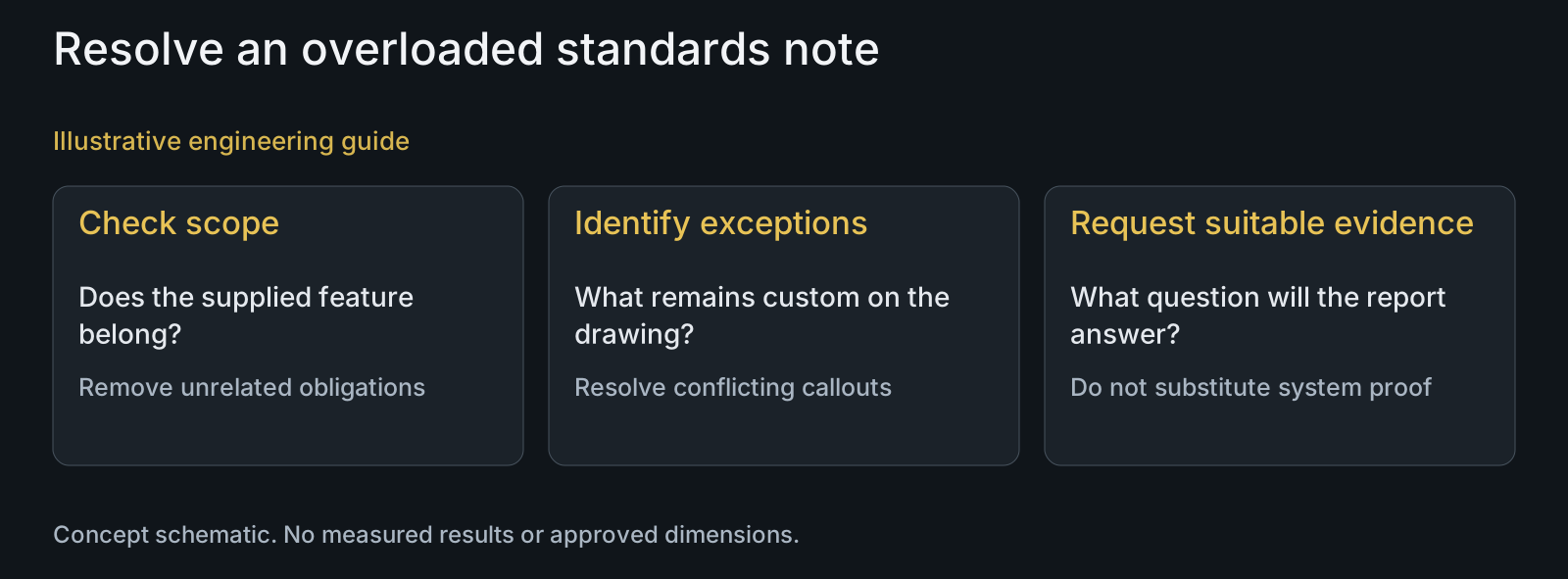
A drawing may deliberately override one standard dimension while retaining other standard features. Identify that exception explicitly. A general note reading comply with all applicable standards does not say whether a custom shoulder, supplied coating or inspection method takes precedence.
For each required document, record the edition, controlled feature, acceptance basis and expected evidence. This is not paperwork for its own sake: an unspecified test method or ambiguous feature can produce a report that is genuine but answers a different question.
Agree deviations before manufacture. A supplier's material certificate, an inspection result and a bicycle validation report have different scopes. PremFixer's manufacturing overview describes drawing-based production; it is not a claim that every possible standards test is performed in-house or included in every order.
Review a standards list against the actual pivot drawing
Illustrative engineering example: assume an alloy-steel stepped pivot drawing lists ISO 4210, DIN 912, ISO 6696 and ISO 6698 without explaining their roles. The shoulder locates a bearing, while a separate threaded receiver provides retention. No customer, test result or approved dimensions are assumed.
The review separates bicycle validation from bolt procurement, checks which standard head features are intended, and removes bottom-bracket and freewheel references from the dedicated pivot interface. It adds explicit drawing controls for the shoulder and receiver rather than pretending that another generic standard supplies those limits.
The outcome is a clearer purchasing specification, not a compliance certificate. The bicycle team still determines applicable system requirements and validation; the supplier quotes the defined part and evidence. Send the marked-up drawing through the RFQ-input guide so the quotation reflects that separation.
Questions buyers need to confirm
Does ISO 4210 certify an individual pivot bolt?
No component certification is established merely by quoting that number. Check the relevant bicycle and subassembly scope, then identify what part evidence and assembled-system validation are required. The bolt drawing, bicycle category and tested configuration determine what a report can support.
Can DIN 912 be changed to ISO 4762 without reviewing the part?
No. Resolve the legacy product reference and compare the actual features. Head dimensions, thread variant, special shoulder and drawing exceptions can change the purchasing decision. A named replacement reference is not approval for an unidentified custom pivot.
Can an ISO 898-1 property class be assigned to a titanium pivot?
Not as though that standard covers titanium. Its stated material scope is carbon steel and alloy steel. Identify the titanium material condition and suitable requirements separately; do not borrow a steel designation to imply tested titanium properties.
Why should bottom-bracket and freewheel standards be removed?
Remove them when the supplied pivot has neither interface. ISO 6696 and ISO 6698 address those named connections, not all bicycle threads. Specify the pivot receiver's actual diameter, pitch, class and engagement instead of leaving an unrelated contractual reference.
Which document controls when the drawing differs from a product standard?
The agreed specification must resolve that conflict explicitly. Identify the feature, intended exception and applicable edition before quoting or producing it. Neither the drawing label nor a generic standards note tells the supplier how to reconcile every contradiction.
What should an OEM send for an applicability review?
Send the drawing revision, referenced editions, material requirement, mating interfaces, bicycle application and requested evidence. Include the assembly configuration where system claims are expected. These inputs separate manufacturable part requirements from questions that the bicycle design and validation team must answer.
Technical references and scope
ISO 4210-2:2023 public scope. Bicycle and subassembly coverage and application exclusions; not full normative clauses or component certification.
ISO 4762:2004 public scope. Named hexagon socket head cap screw product geometry scope; no custom pivot substitution approval.
Wurth DIN 912 and ISO 4762 comparison. Manufacturer explanation of legacy product reference relationship; no blanket interchangeability adopted.
ISO 898-1:2013 public scope. Carbon/alloy steel applicability and explicit excluded properties; no numerical mechanical limits reproduced.
ISO 6696:1989 public scope. Bottom-bracket cup interface, distinguished from pivot receiver threads.
ISO 6698:1989 public scope. Freewheel-to-hub interface, distinguished from pivot receiver threads.
Explore related component, material and sourcing decisions in the customer decision knowledge center. For a drawing review, use the Drawing/BOM RFQ path.
Send a pivot specification with its standards references
Provide the drawing and STEP file, material callout, mating-interface details, BOM and referenced standard editions. PremFixer's review can identify custom manufacturing features, ambiguous obligations and evidence to discuss before quotation. Bicycle-system applicability and release remain with the responsible design and validation teams.
Discuss the drawing and BOM