
You can request deferred payment for a custom pivot program, but the proposal must define the transaction rather than assume an advertised number of credit days. Identify the amount and currency, the event that starts the payment period, the required documents and who authorises the terms. Then examine material, tooling and work-in-progress commitments that arise before payment is due. A longer period can help the buyer's cash timing while leaving the supplier with greater exposure. PremFixer payment arrangements require an agreed project review; no automatic account credit or universal bank-instrument acceptance is established here. This is a commercial discussion guide, not financial or legal advice.
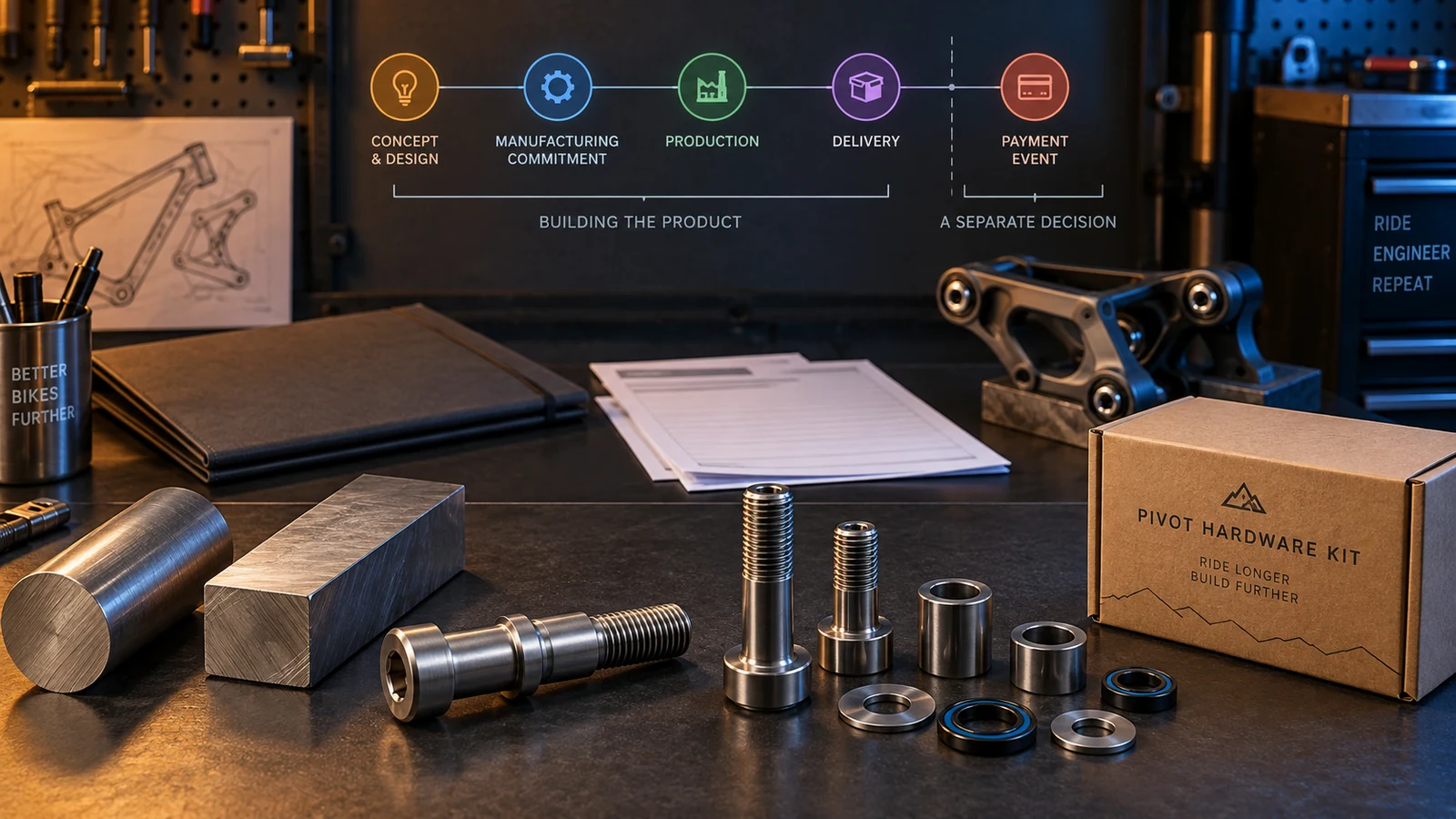
Hero: concept illustration of example hardware and its application. It is not a factory photograph, tested component or approved production geometry.
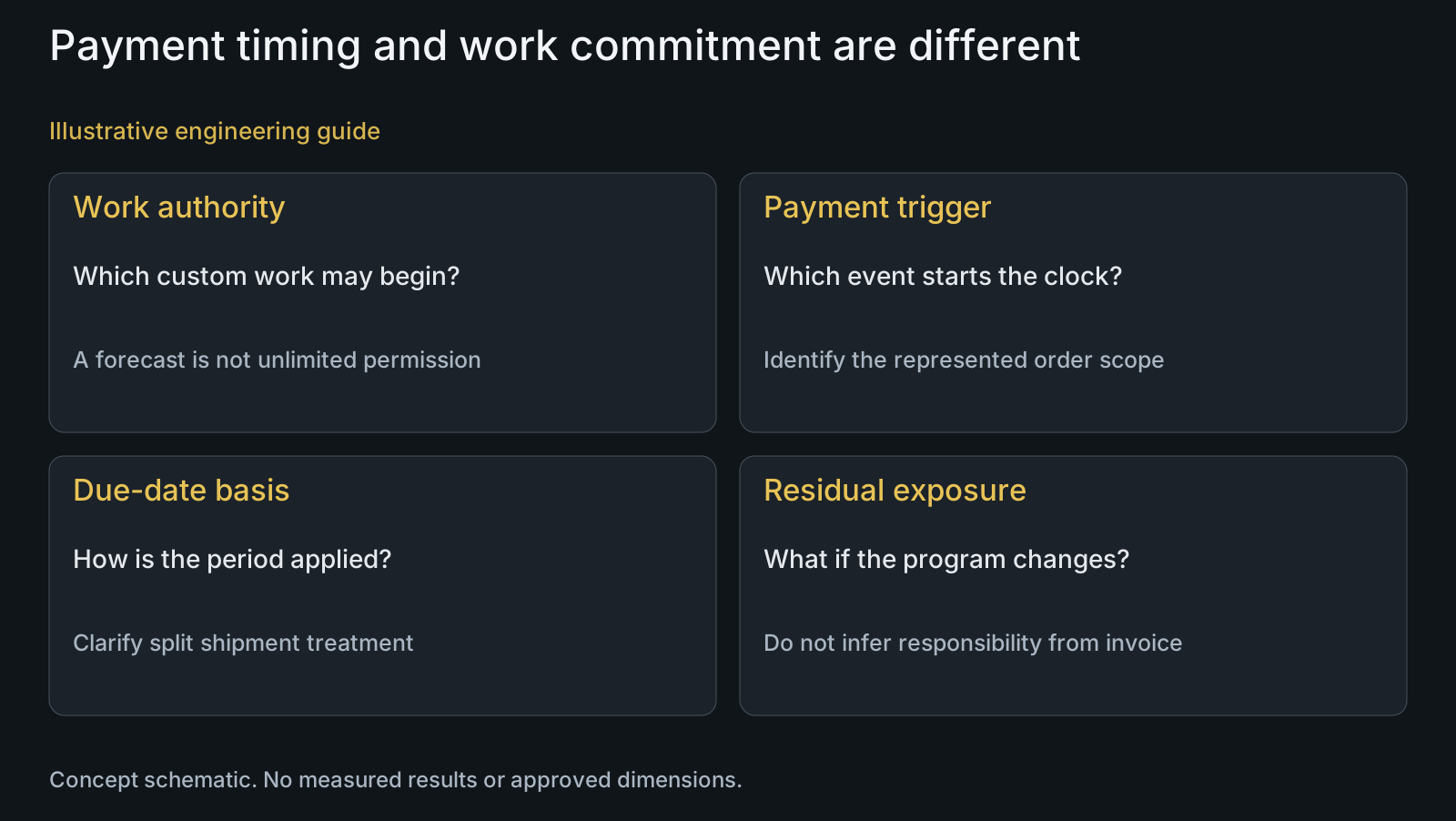
Define the starting event, not just the number of days
An offer stating payment after a period is incomplete unless it identifies the starting event. Invoice issue, dispatch, receipt and agreed acceptance are different milestones. Use an identifiable event and represented order scope so both parties can understand the proposed due date.
For split deliveries, decide whether each shipment has its own payment event or whether the whole order controls the clock. Identify the amount basis, currency and any separately priced tooling or sample work. A partial delivery must not silently become either full invoicing authority or an indefinite delay of every payment.
Keep delivery and payment milestones distinct. The supply-contract guide covers broader responsibilities and document relationships. Here the buyer's task is to make the cash-timing proposal interpretable before it is assessed or agreed.
Separate requested credit from authority to commit production
A request for deferred payment is a proposal, not an approved credit facility. Clarify the customer entity, order scope and commercial authorisation needed. An indicative forecast cannot establish that every later release has the same credit approval or that the supplier should purchase unrestricted material.
Define which event authorises material, tooling or production work. It may be separate from the later payment trigger. Custom pivot stock can have limited alternative use, so a payment period alone does not answer what happens to committed work after cancellation or a geometry revision.
Review the drawing, quantities and manufacturing route alongside the proposal. This does not require the buyer to disclose private banking details in a public form. Any sensitive credit-review information should use an agreed secure commercial channel, not the article's open discussion path.
| Decision | Definition needed | Risk of vague wording | Appropriate review |
|---|---|---|---|
| Payment-period start | Named event and represented shipment scope | The same days mean different due dates | Invoice, dispatch, receipt or agreed acceptance basis |
| Split deliveries | Per-shipment or whole-order payment treatment | Partial delivery silently changes the cash obligation | Amounts, contents and trigger for each applicable release |
| Deferred credit request | Entity, order scope and authorisation | A request treated as an approved credit facility | Commercial credit decision through an agreed secure channel |
| Bank instrument | Bank, conditions, documents, timing and fees | Instrument mistaken for unconditional approval | Qualified bank review and transaction-specific legal advice |
| Custom-work commitment | Authorised material, tooling and processing scope | Payment timing hides cancellation or revision exposure | Committed work and proposed residual responsibility |
| Offer comparison | Price plus scope, timing and applicable costs | Unit price conceals a different commercial boundary | Comparable complete offers without assumed finance rates |
Compare payment approaches by their actual conditions
The International Trade Administration's payment-method guide describes the different cash-timing and nonpayment risks of advance payment and open-account trade. Its general examples do not establish which approach PremFixer accepts or make any published period an approved customer term.
A letter of credit introduces a bank and specified documentary conditions. The ITA explanation of letters of credit notes the required-document review and potential fees or discrepancies. Ask the relevant bank to assess the proposed instrument, bank acceptability, documents and timing rather than assuming that a larger order automatically qualifies.
A payment instrument should not be mistaken for the project's dimensional or application acceptance basis. Identify the actual engineering evidence required for the supplied hardware separately. Have qualified advisers review the binding terms and bank conditions; no universally safest approach or guaranteed payment outcome is recommended here.
Make custom inventory exposure visible beside the cash timeline
Compare the proposal with when the supplier commits material and when the parts become configuration-specific. Raw material, partly machined components and finished kits can have different alternative-use possibilities. The value exposed before the payment event can change even if the nominal payment period stays the same.
Define the proposed treatment of cancelled releases, changed quantities and superseded revisions. State which work was authorised and what responsibility remains unresolved. Do not infer ownership, cancellation charges or remedies solely from whether an invoice has been issued.
The safety-stock guide addresses why a buffer is held. Payment timing is a different decision: who commits the cash and inventory exposure while that buffer exists? Use the materials overview to identify the represented supply form instead of calling every stage finished stock.
Review a split delivery and pending revision together
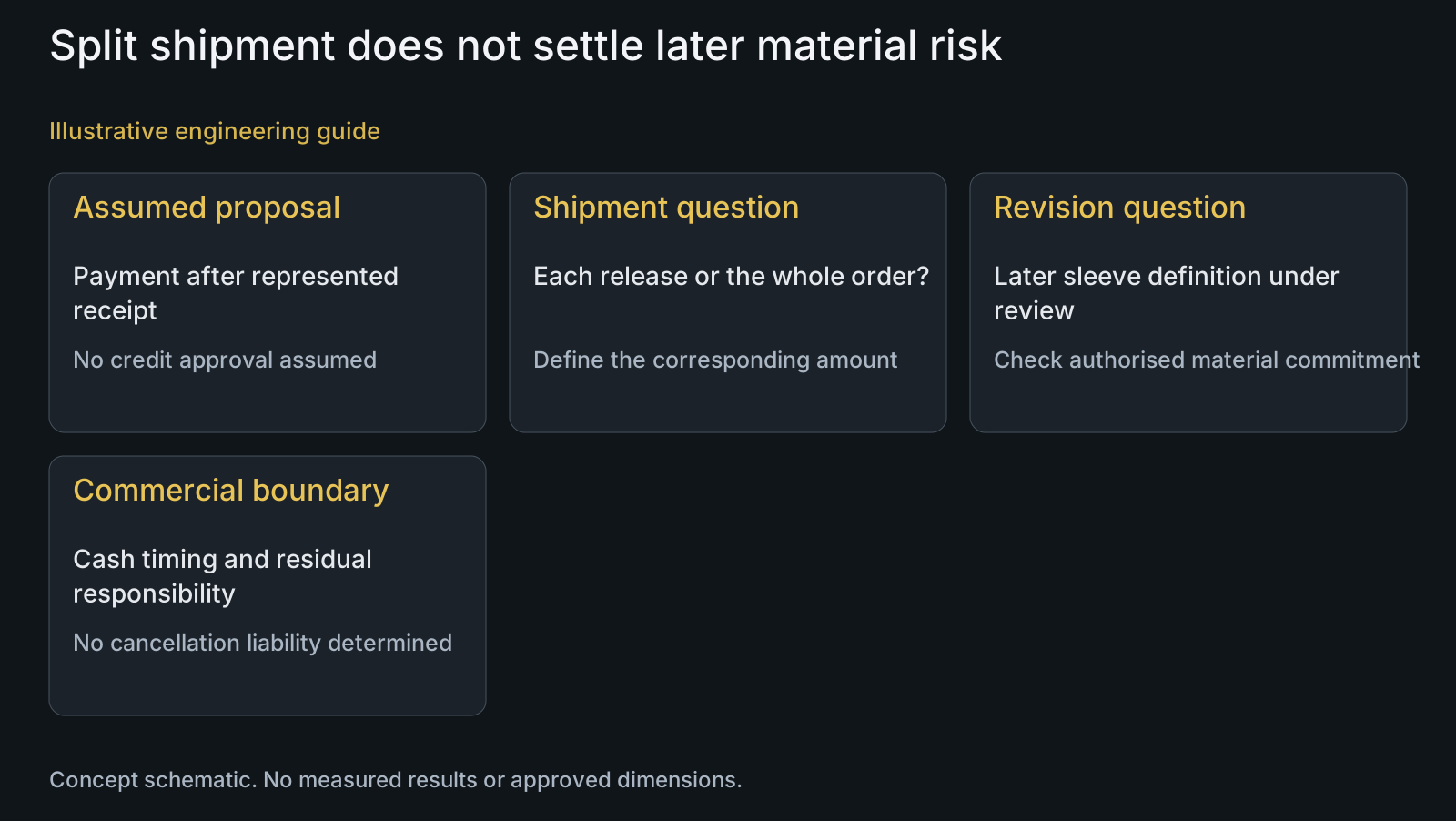
Illustrative engineering example: assume a buyer requests deferred payment after receipt while the order permits split kit deliveries. Material has been proposed for a later release, and a sleeve revision is being discussed. No actual amount, credit period, bank approval or signed contract is assumed.
The parties identify whether the payment clock is per shipment and which contents each event represents. They separately identify whether the later material commitment is authorised for the current configuration. Receiving the first shipment does not answer how the unshipped work should be treated after a revision.
The proposal therefore needs a cash-timing definition and an inventory-exposure decision, followed by appropriate commercial and legal review. The example assumes neither credit acceptance nor liability for cancellation. It shows why simply extending the number of days cannot settle the whole transaction.
Compare the complete commercial offer and preserve open decisions
Keep price, quoted scope, payment timing, bank-related costs where applicable and inventory responsibilities visible in the same comparison. A lower unit price with a different commitment or payment boundary is not automatically the better overall offer. Do not invent a financing rate or assume that every longer period changes price by a fixed amount.
Identify the proposed conditions that are agreed and those still under review. Reconcile the quotation, order and any bank instrument with qualified reviewers before relying on an obligation. A website discussion is not a binding credit approval, and a supplier's willingness to discuss terms is not a promise to accept every requested arrangement.
Use the price-negotiation guide for scope-based commercial comparisons and the knowledge center for related decisions. PremFixer's relevant contribution is to discuss a defined manufacturing purchase with the customer, not to claim an unverified financing service or prescribe a customer's funding strategy.
Questions buyers need to confirm
Can I request deferred payment for pivot hardware?
Yes, as a commercial proposal for review, not automatic approval. Identify the entity, order scope, amount, currency, trigger and requested period. Actual terms require agreement; this article does not establish universal PremFixer credit days or approved limits.
When should the payment clock start?
Use the event the actual arrangement defines and make it identifiable. Invoice, dispatch, receipt and agreed acceptance are different choices. State represented scope and how split deliveries are treated rather than assuming that a period alone answers the due date.
Does a longer payment period authorise more stock production?
No. Production and material commitment need their own defined authority. Identify releases, revisions and quantities, then address change or cancellation exposure. A cash-timing concession does not silently convert an indicative forecast into unrestricted manufacturing permission.
Is a letter of credit automatically suitable for a large order?
No. Ask the relevant bank to review the transaction, bank acceptability, documentary conditions, timing and fees. A proposed instrument is not an approved arrangement or a dimensional acceptance result. Obtain qualified advice for binding terms.
Should payment terms be compared with unit price?
Yes, within a comparable complete offer. Keep scope, timing, applicable bank costs and inventory responsibilities visible. A longer period can change exposure, but no universal financing rate or fixed price adjustment follows from this guide.
What should the initial terms discussion include?
Send the represented drawings and BOM, quantities, release pattern, required delivery event and proposed payment trigger. Identify separately priced work and expected revision changes. Agree a secure channel for any sensitive credit information instead of putting private banking details in a public RFQ.
Technical references and scope
International Trade Administration payment-method overview. General international-trade payment timing and nonpayment-risk context from a US exporter guide. Not PremFixer policy, a universal credit period or transaction-specific financial advice.
International Trade Administration letter-of-credit explanation. General documentary conditions, bank review and potential cost/discrepancy context. No prescribed instrument, guaranteed outcome or approved bank arrangement inferred.
Explore related component, material and sourcing decisions in the customer decision knowledge center. For a drawing review, use the Drawing/BOM RFQ path.
Discuss payment milestones for a defined pivot purchase
Send the drawing, STEP file or sample, BOM revisions, quantities, release pattern and delivery milestone through the Drawing/BOM RFQ path. State the proposed payment event and period, separately priced tooling or sample work and known change exposure. PremFixer can discuss the commercial scope; sensitive credit details and any bank instrument require an agreed secure review, not automatic website approval.
Discuss the drawing and BOM