
Arrange a certificate of origin for a pivot shipment by first confirming what the importer needs it to establish and which issuing and delivery route is accepted. Then connect the supported goods description to the actual invoice and packed items. A non-preferential document and a proof used for a preference claim are not interchangeable, and not every international transaction needs an identical certificate. Checking that a document is genuine is useful, but it does not independently show that it represents this shipment or satisfies the intended import treatment. For a mixed hardware order, reconcile kits and separately supplied components before agreeing the document handoff.
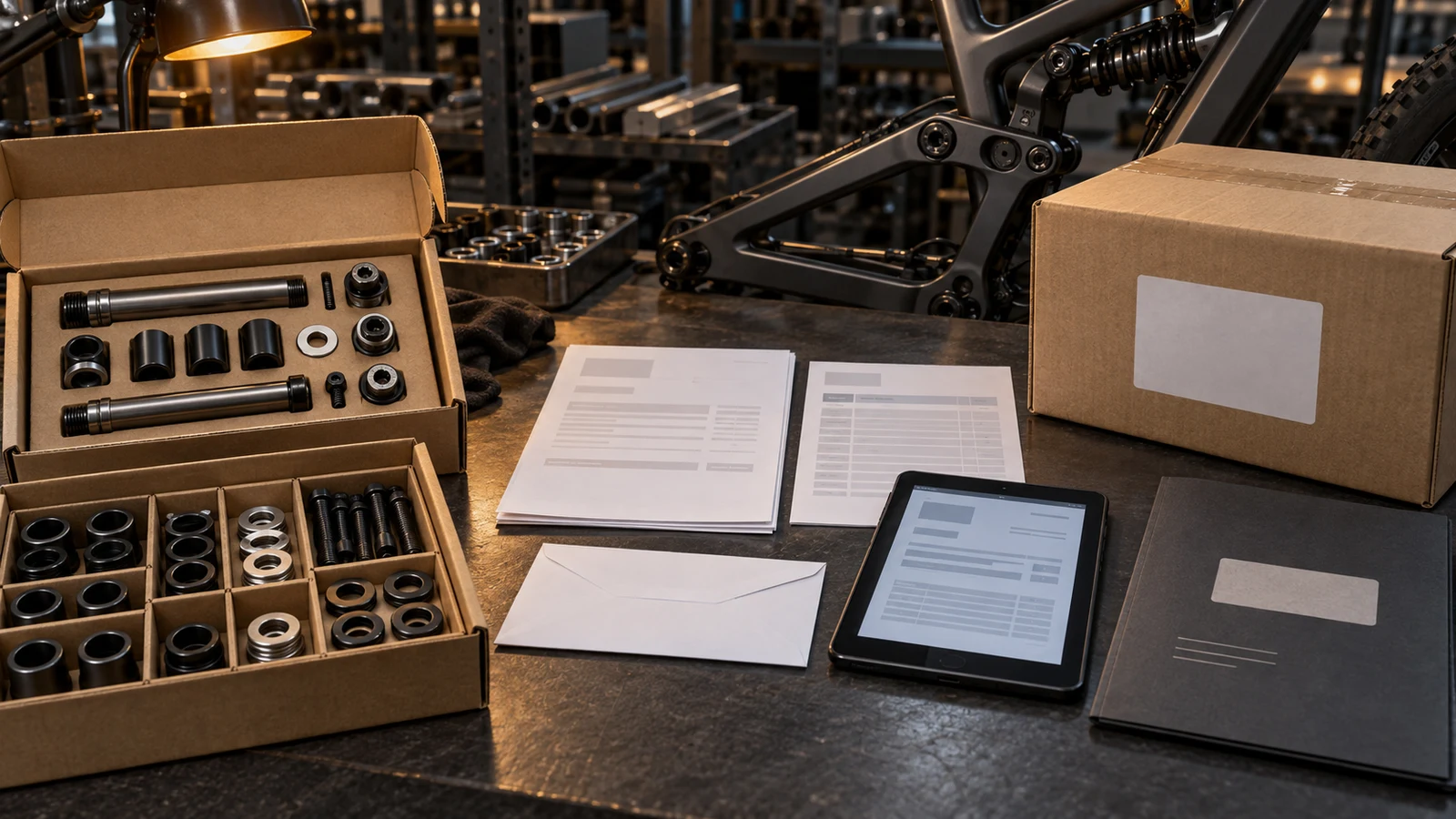
Hero: concept illustration of example hardware and its application. It is not a factory photograph, tested component or approved production geometry.
State the document purpose before arranging issuance
Ask the importer to state the destination, intended use of the origin information and required evidence. A request from customs, a commercial buyer or a bank can have a different document purpose. Keep those instructions explicit instead of assuming that one familiar certificate satisfies every party.
ICC distinguishes non-preferential and preferential certificates in its public overview. The preferential-origin guide discusses choosing an applicable preference route. This article concerns the subsequent goods-and-document handoff, not a new tariff entitlement or an individual origin determination.
Resolve who supplies the origin facts, who applies through the accepted issuing route and who checks the importer instructions. Do not promise a particular issuer, processing time or acceptance result before those arrangements are confirmed.
Describe the goods at a useful component and shipment level
Identify whether the shipment consists of pivot kits, individual axles, receivers, spacers or a combination. The commercial description should let the importer relate the documents to the goods. A single phrase such as bicycle accessories can hide the item scope the reviewer needs.
A kit contains components, but it does not automatically give every item the same material or origin. Supply the relevant item-level information for the responsible assessment. Do not replace that work with a photo, one stock certificate or an assumption based on the dispatch address.
The customs-classification guide addresses another part of the import description. Classification and origin remain separate questions; assigning a product code does not independently establish where the goods originate.
| Review situation | Question to resolve | Risk of overreading | Useful action |
|---|---|---|---|
| Importer asks for origin evidence | What purpose and accepted route apply? | Any CO is assumed to create a preference | Obtain destination-specific instructions |
| Kits and loose parts share an invoice | Which goods does the document represent? | Only the kit description is reviewed | Reconcile both item groups and packing identities |
| Invoice and packing use different units | How do kits, parts and cartons relate? | Matching numbers conceal different subjects | Document the actual unit relationship |
| Issuer authenticity can be checked | Does the relevant issuer record exist? | Authenticity is treated as import acceptance | Use the applicable verification route and retain scope review |
| Electronic copy is offered | What delivery format is accepted for this purpose? | A scan is assumed equivalent to electronic issuance | Confirm recipient and required record format |
| Goods change after issuance | How must the supported document be corrected? | An old certificate or manual edit is reused | Follow issuer and importer instructions |
Reconcile invoices and packing units without changing the meaning
Check the invoice reference, named parties, item descriptions and represented quantities against the certificate request and actual packing information. If purchasing uses kits while packing uses component compartments or cartons, make the relationship clear. Different units need an explained mapping, not forced identical numbers.
Keep separately supplied service parts visible. A certificate request describing only complete kits can leave loose replacement receivers outside its stated goods scope. Conversely, listing only one component can underdescribe a packed assembly containing other items.
When the commercial shipment changes, send the revised information through the agreed issuing process. Do not manually alter an issued document or assume an earlier version remains applicable. Ask how the issuer and importer want a correction, replacement or other permitted treatment handled.
Confirm paper, electronic and verification arrangements separately
Ask what must be delivered, to whom and at what stage: an accepted electronic record, a paper document or another specified arrangement. A scanned copy is not automatically equivalent to an accepted electronic issuance. Do not infer destination acceptance from the presence of a digital signature or a download link.
ICC's verification platform serves certificates issued through participating accredited chambers and uses the relevant certificate and accreditation identifiers. Its existence does not mean every certificate from every issuer is available on that platform. Use the issuer's actual verification route rather than treating a missing platform result as conclusive evidence of fraud.
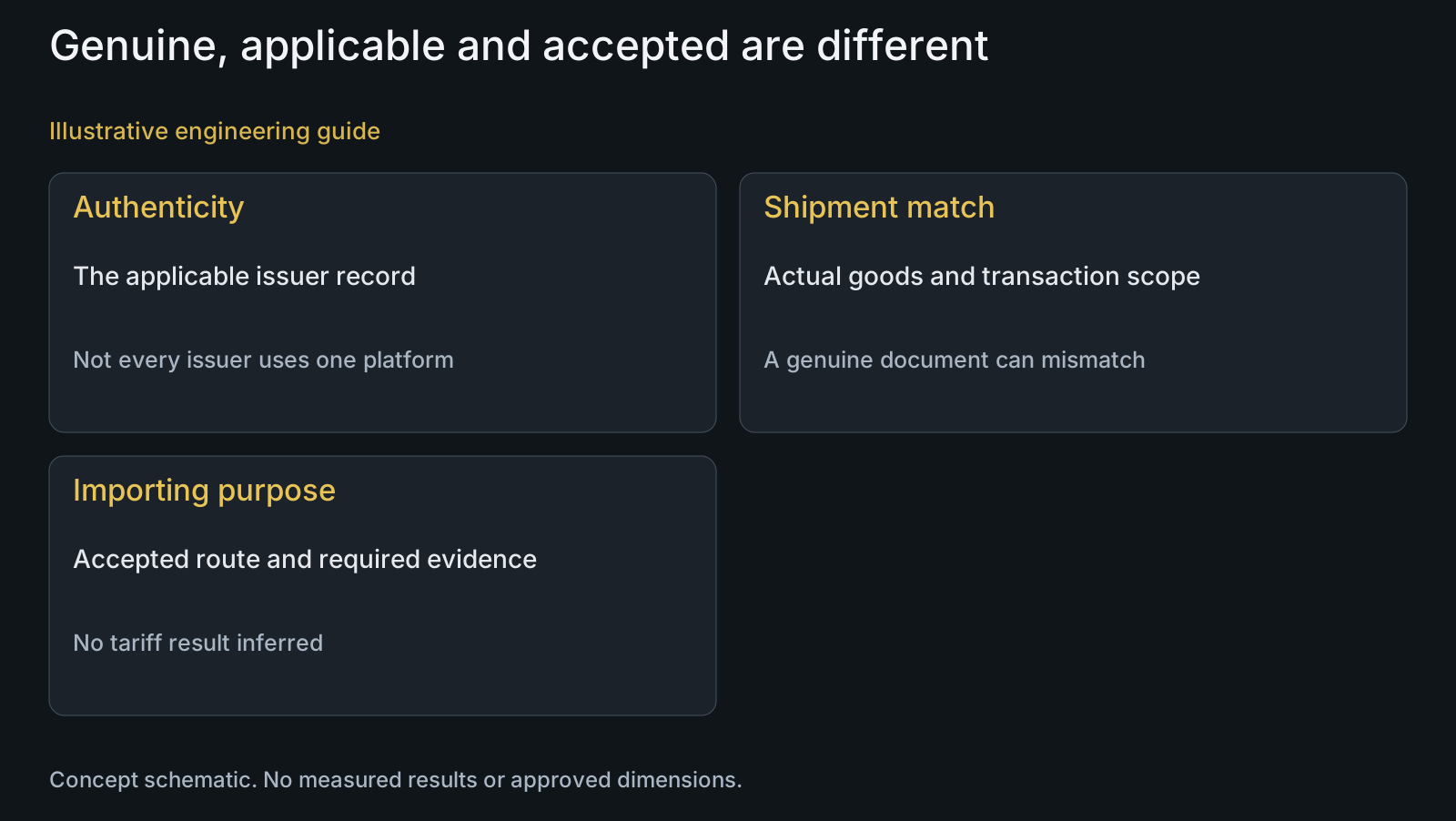
Keep authentication distinct from applicability. A positive identity check can support that the issuer record exists; the importer still needs to review the represented goods, required purpose and relevant entry treatment. No platform query or real certificate verification has been performed for this illustrative discussion.
Illustrative engineering example: kits and loose receivers share one order
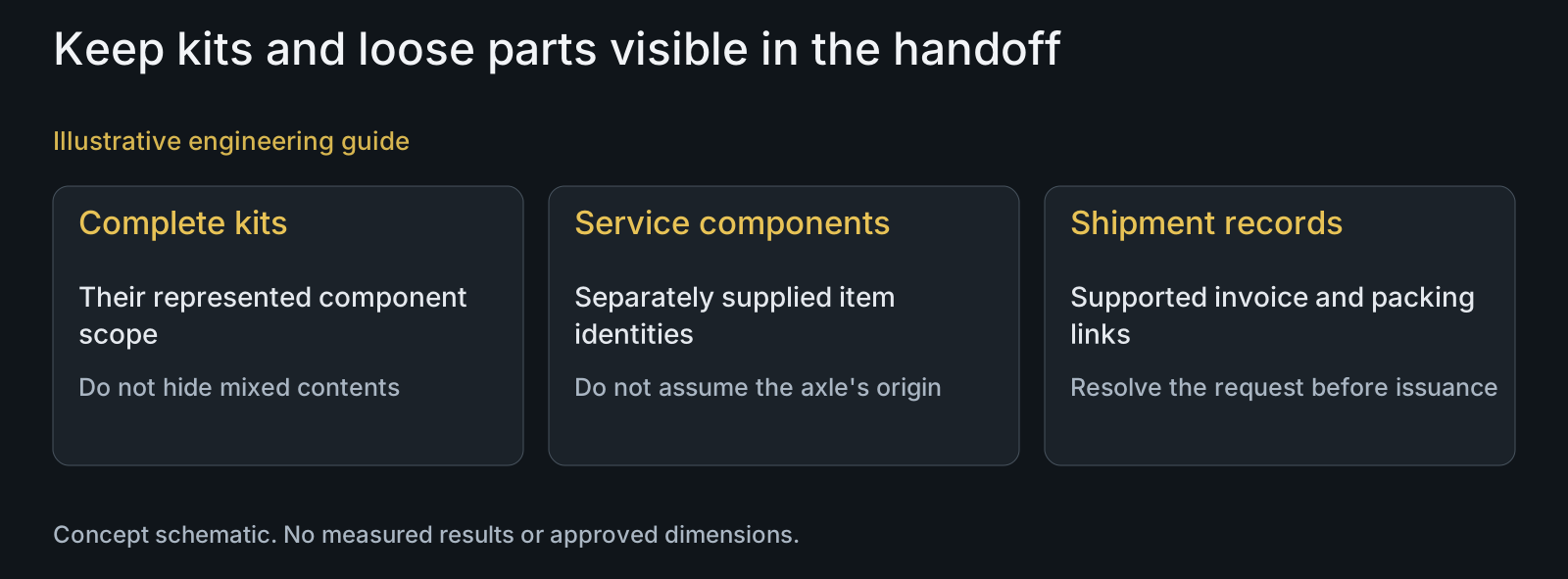
Illustrative engineering example: assume an OEM order includes complete pivot kits and separately packed replacement receivers. The initial origin-document request describes only the kits, while the final invoice and packing list include both item groups. No actual certificate, origin result or customs delay is assumed.
The reviewer finds a scope mismatch before requesting issuance. It does not add the loose receivers by guessing that their origin must equal the axle's. Instead, the responsible parties establish the required item information, reconcile the commercial description and send the supported request through the agreed route.
If a genuine document had already been issued for the earlier goods scope, authenticity alone would not close the mismatch. The next action would follow the issuer's and importer's correction instructions. The example illustrates shipment applicability, not successful clearance or a demonstrated duty saving.
Make the document handoff part of the shipment agreement
Identify the document owner, importer contact, accepted delivery format and information needed before the shipment is finalized. Describe what changes require another review of the document request. This makes the expected service visible without claiming that every order includes the same certificate.
PremFixer can discuss component manufacturing and the supported shipment information within the agreed supply scope. The manufacturing page is not evidence of universal certificate issuance or customs acceptance. Confirm the actual documentary work and responsible issuing route for the transaction.
Use the custom-order document guide to distinguish origin information from material and dimensional evidence. The customer decision knowledge center retains those adjacent questions. The handoff should answer the importer's defined purpose, not simply add another PDF to the box.
Questions buyers need to confirm
Does every pivot shipment need the same certificate of origin?
No identical-document rule is asserted here. Confirm the destination, transaction purpose and accepted evidence with the importer. A buyer's familiar template does not independently determine the required document.
Is a non-preferential certificate interchangeable with preference proof?
No. They serve different purposes. Identify the requested treatment and applicable proof route before issuance; do not present a normal origin document as a universal reduced-duty entitlement.
Does certificate authenticity prove the current shipment is covered?
No. Reconcile its represented goods and transaction with the final invoice and packing records. A genuine earlier document can omit added components or refer to a different shipment scope.
Must every certificate appear on the ICC verification platform?
No. ICC describes a participating accredited-chamber route. Confirm the actual issuer's verification method; absence from one platform does not independently establish fraud or invalidate every document.
Can an electronic scan replace the requested original?
Do not assume that. Confirm the accepted format and recipient requirements for the transaction. A scanned paper record and electronic issuance can be different arrangements; obtain specific importer instructions.
What should accompany an origin-document request to PremFixer?
Provide the destination, importer contact and instructions, item-level BOM, supported goods information and draft invoice or packing structure. State the requested purpose, issuing route and delivery format so the documentary scope can be discussed.
Technical references and scope
ICC: Certificates of Origin overview. Public origin-document purposes and preferential/non-preferential distinction. No universal issuance requirement or actual origin determination.
ICC: Certificates of Origin verification website. Public participating accredited-chamber verification route and identifier context. No actual verification query, universal issuer coverage or customs acceptance asserted.
Explore related component, material and sourcing decisions in the customer decision knowledge center. For a drawing review, use the Drawing/BOM RFQ path.
Align the origin-document request with your actual shipment
Share the drawings or item-level BOM, destination and importer instructions, together with the proposed invoice and packing structure. PremFixer can discuss the supported goods information, document responsibilities and handoff needed for the requested origin-evidence route.
Discuss the drawing and BOM