
An instant estimate for a custom pivot bolt can help compare early options when its modeled geometry, material, quantity and included work are explicit. It is not enough to enter a nominal diameter and receive a number. Bearing-seat requirements, final treatment, inspection and matching sleeves can change the manufacturing scope beyond the visible CAD shape. Check the estimate's eligibility, assumptions, exclusions and next review before relying on it. PremFixer's inquiry path supports customer-defined manufacturing discussions; no universal automatic pricing engine or fixed response time is established here. A useful estimate makes its boundaries clear rather than hiding them behind speed.
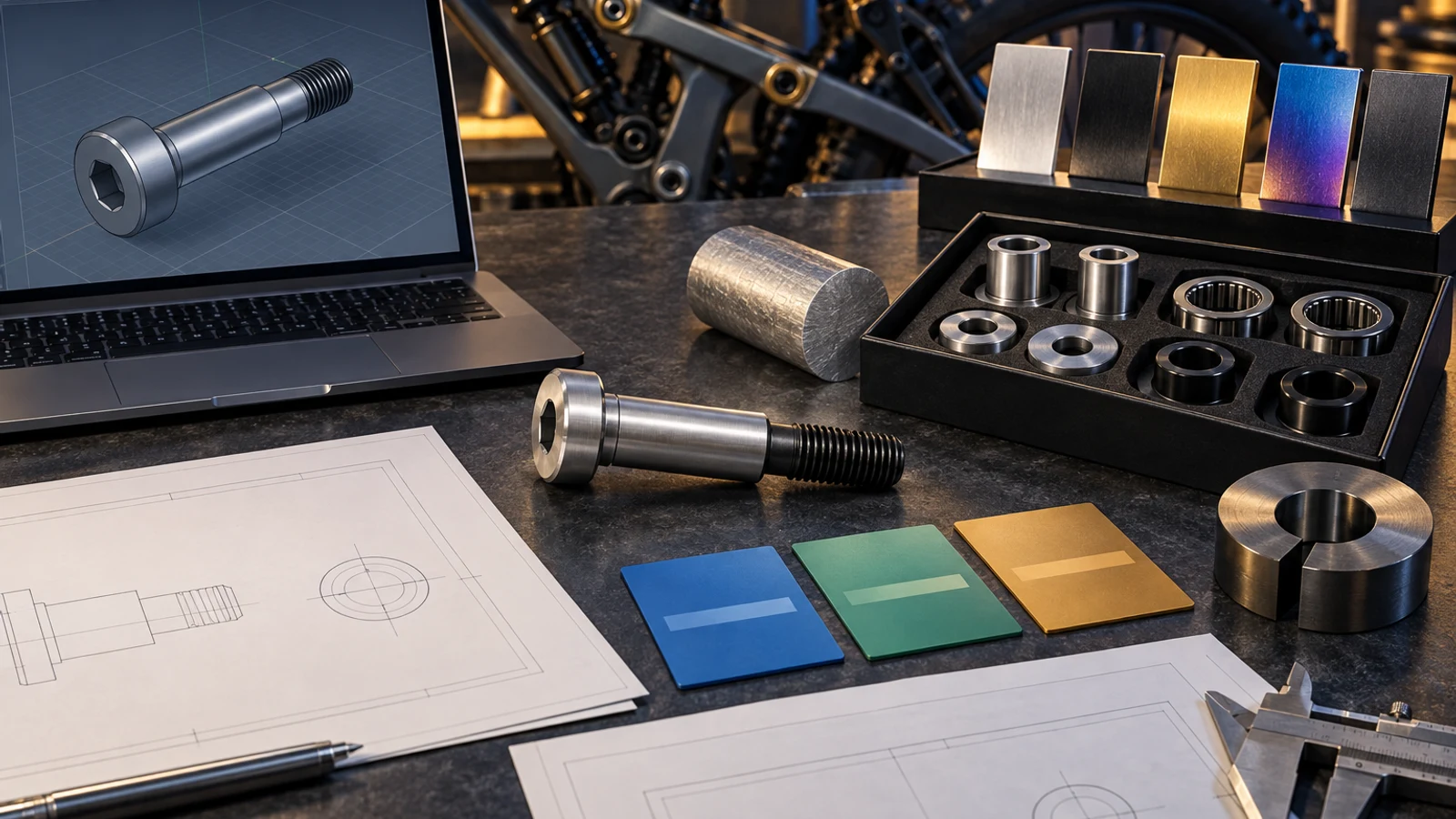
Hero: concept illustration of example hardware and its application. It is not a factory photograph, tested component or approved production geometry.
Ask what the estimate actually analyzes
A geometry-based system may identify shape features and evaluate them within a defined service envelope. That does not mean every drawing note, material condition or assembly relationship is represented. Identify which inputs were analyzed and which were entered as selections or left unresolved.
Protolabs' public quoting guide describes CAD upload, configuration of material and secondary operations, manufacturing analysis and required design changes in its own platform. This is an example of defined input and review stages, not a transfer of its service capabilities, prices or response timing to PremFixer.
An early estimate is useful when its stated basis answers the current question, such as comparing two geometry alternatives. Do not promote that bounded comparison into a promise for a complete finished production kit.
Identify geometry and requirements that need further review
A nominal cylindrical seat does not define its acceptable finished variation, measurement basis or mating relationship. A visible thread shape does not replace the required designation and engagement definition. Supply the authoritative drawing information rather than expect appearance to establish those requirements.
Tool access, slender features or additional operations may need discussion under the proposed route. A system warning can identify a manufacturing issue without deciding whether a suggested change remains compatible with the assembly. Keep proposed geometry separate from the customer's accepted requirement.
The drawing-file guide explains complementary models and requirement files. A file that opens successfully can still omit the material condition, finished-state definition or evidence scope needed for a meaningful offer.
| Estimate basis | Useful decision | Limit or risk | Next clarification |
|---|---|---|---|
| Nominal size and material | Very early scope discussion | Functional geometry omitted | Provide model and drawing requirements |
| Modeled machined bolt | Compare defined geometry options | Final treatment or evidence absent | Identify supplied condition and included work |
| Drawing-linked finished component | Review a defined component offer | Kit positions still excluded | Add BOM and component quantity basis |
| Complete kit scope | Compare equivalent supply proposals | Commercial assumptions may differ | Check validity and delivery endpoint |
| Revised design estimate | Evaluate a proposed alternative | Change treated as automatically approved | Assess mating and acceptance consequences |
Expose included work before comparing the number
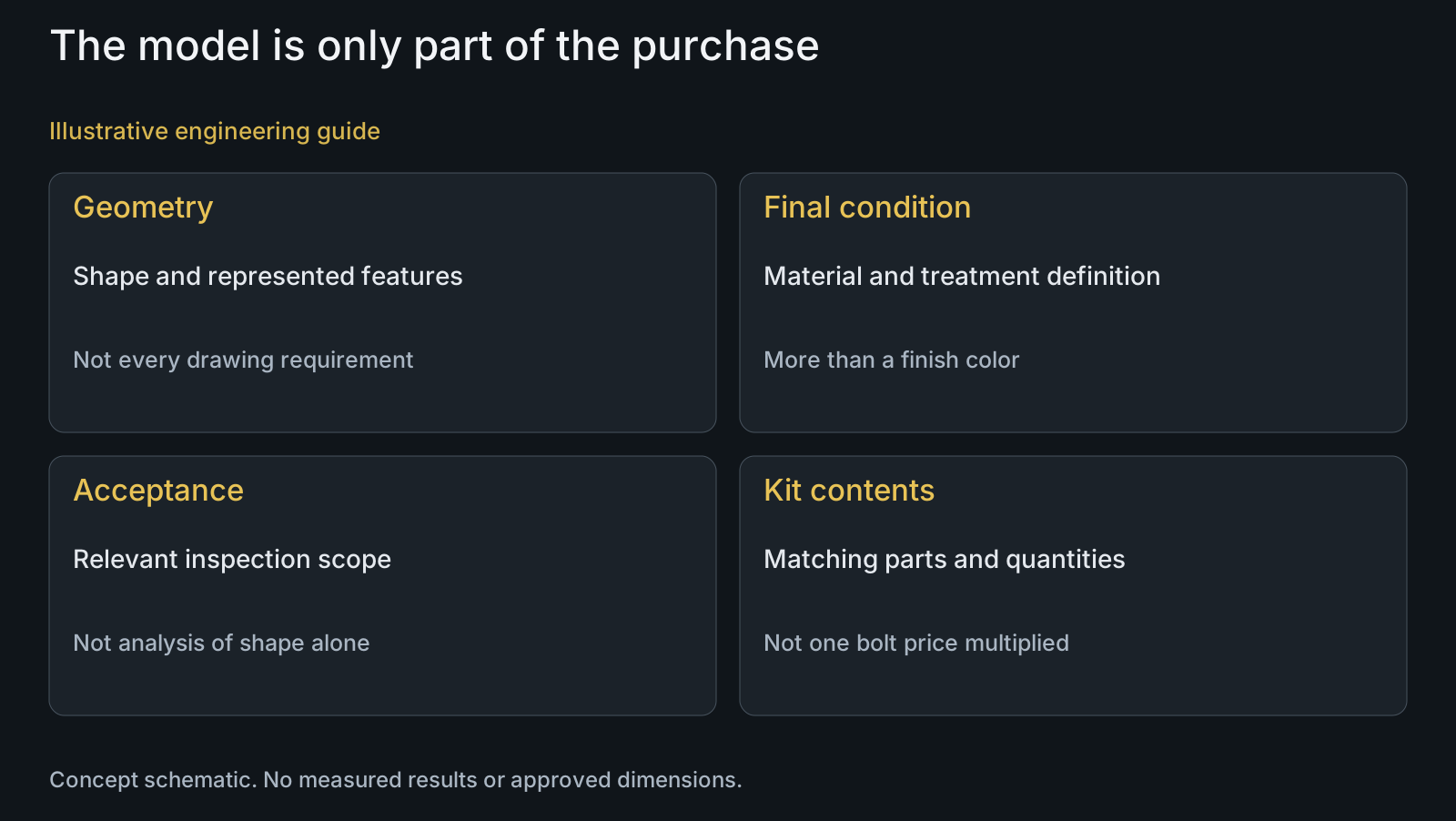
Identify whether the estimate covers raw material, machining, threads, treatment, inspection, documents and packing. For a kit, distinguish the bolt from sleeves, washers and customer-provided items. A single-component estimate cannot automatically price everything visible in an assembly model.
Check which condition is priced. A machined part and a finished treated part are different supplied states. If a final bearing seat requires a particular treatment boundary or verification, clarify that scope rather than treating finishing as an interchangeable color selection.
Use the cost breakdown guide and surface-treatment scope to identify work rather than invent its share of price. Missing scope can explain a later difference without establishing that either number was deliberately misleading.
Understand what makes an estimate usable as an offer
Confirm the represented configuration, quantity basis, supplied state and remaining assumptions with the responsible manufacturer. If the response is provisional, preserve that status. Do not treat a populated price or completed geometry analysis as automatic order acceptance.
Commercial validity and delivery scope also need their actual meaning. A price displayed for an early model does not necessarily remain valid for another quantity, finish or period. The quotation-validity discussion covers those boundaries without assigning a universal quote duration.
Ask what information or review is preventing a defined offer and whether a narrower estimate would still be useful. The response time depends on the actual unresolved work; this article gives no hourly service guarantee. A clearer requirement package can remove ambiguity without promising an immediate manufacturing commitment.
Review a shoulder bolt with an unrepresented final condition
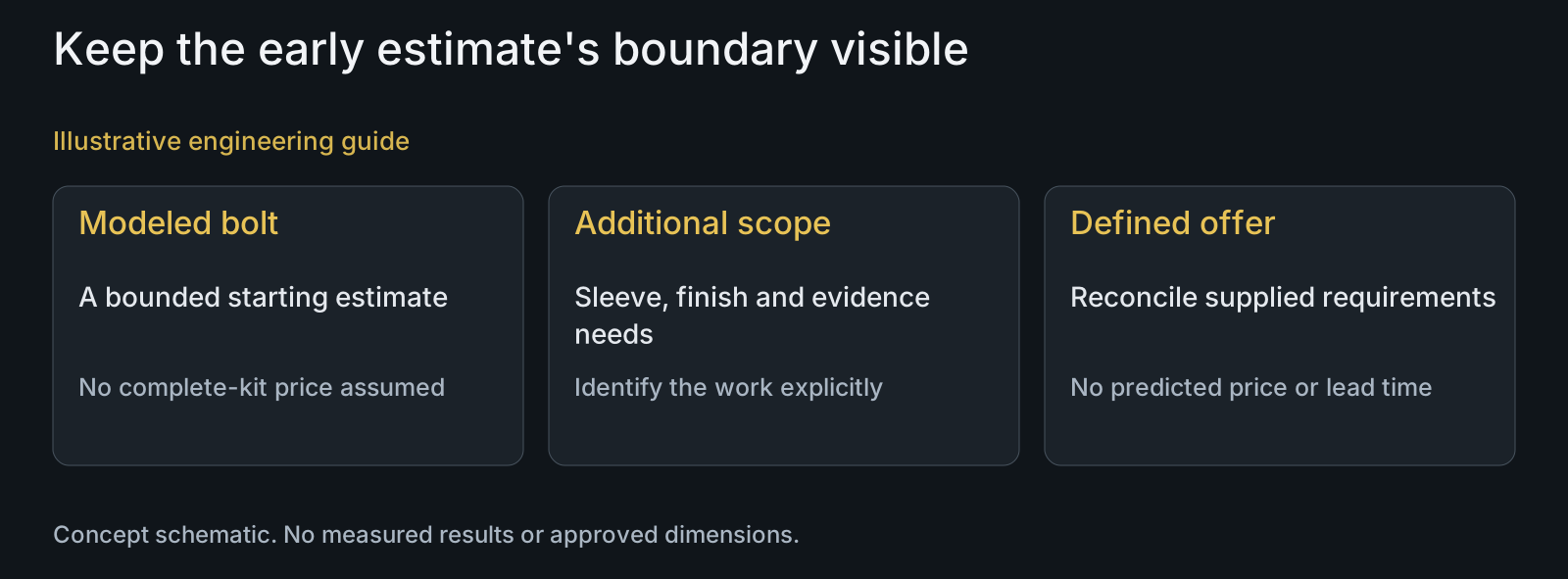
Illustrative engineering example: assume a buyer uploads a shoulder-bolt model for an early estimate. The intended assembly also needs an aluminium sleeve, a specified final surface condition and identified bearing-seat evidence. Those requirements are not represented in the estimate's stated scope. No actual price, software result or approved design is assumed.
The reviewer uses the number only for the modeled bolt basis and identifies the missing supplied work. It asks whether the final treatment changes manufacturing or verification needs, and adds the sleeve's definition and kit quantity before seeking an equivalent complete offer.
A later complete-kit quotation should not be described as an increase on an identical purchase without reconciling the scope. The example demonstrates a comparison boundary, not a predicted price difference, passing inspection or completed negotiation.
Provide a scoped request rather than chasing a faster unexplained number
Send the model's role, matching drawing revision, material condition, finish, quantities and kit BOM. Mark open choices as questions. If comparing variants, identify them separately so a manufacturer can respond to each basis without guessing which geometry is intended.
PremFixer's CNC-turning discussion and materials information support a manufacturing review. The RFQ automation article concerns capture and response states; this article concerns whether a specific estimate represents the purchased work.
Use the knowledge center for adjacent interface and sourcing decisions. The desired outcome is a price with understandable scope and remaining conditions, not the appearance of certainty from an instant number.
Questions buyers need to confirm
Can PremFixer price every pivot bolt instantly?
No universal automatic service is established here. Provide the drawing, model, material condition, quantity and supplied scope. The relevant manufacturing response and timing depend on the actual questions that need clarification.
Is an estimate from a STEP model a complete quotation?
Not automatically. Check what requirements and work it represents. Geometry may omit finished variation, material condition, treatment, inspection and mating context needed for the actual purchase.
Can a fast estimate still be useful?
Yes, for a defined early comparison when its assumptions and exclusions are visible. Do not use it as a firm complete-kit offer if required components or final-condition work remain outside its basis.
Why might a later offer differ from the first number?
The supplied scope, quantity or assumptions may have changed. Compare the original modeled work with added treatment, evidence, kit contents and commercial conditions before calling the difference an increase on an identical purchase.
Does an automated design suggestion approve the changed interface?
No. Assess the proposed change against the mating relationship and acceptance requirements with the responsible design owner. A manufacturing suggestion does not automatically authorize a new shoulder or sleeve configuration.
What should be shown beside an instant number?
The configuration analyzed, quantity basis, included work, exclusions, response status and next required review. Its validity and commercial meaning also need clarification; a number alone cannot support a reliable supplier comparison.
Technical references and scope
Protolabs ProDesk quoting guide. Provider-specific CAD/configuration/manufacturing-analysis stages and distinction between recommended and required changes; no service timing, capability or platform claim transferred to PremFixer.
Explore related component, material and sourcing decisions in the customer decision knowledge center. For a drawing review, use the Drawing/BOM RFQ path.
Clarify what the requested price must include
Send the drawing revision, STEP, material condition, finish, quantities, inspection requirements and complete kit BOM through the Drawing/BOM RFQ path. Identify any early estimate assumptions so PremFixer can discuss the represented manufacturing work and open scope without an unverified instant-pricing promise.
Discuss the drawing and BOM