
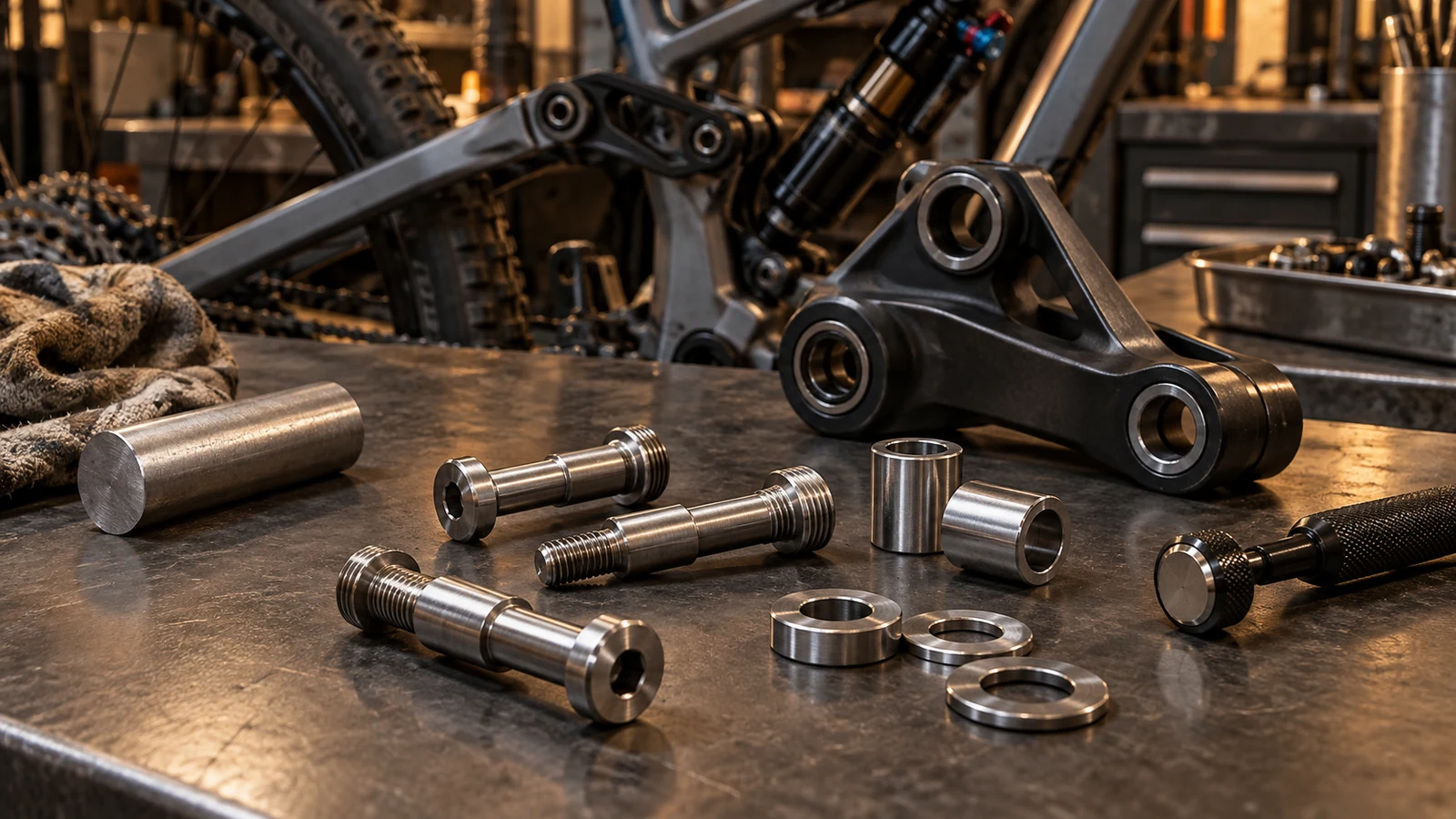
A 304 or 316 stainless pivot bolt should not be accepted or rejected solely because a handheld magnet attracts it. Austenitic stainless response can change with processing and local structure, so attraction is not a complete grade-identification result. Record where the response occurs and compare the supplied material and manufacturing history with the order. Then use an appropriate identification method for the elements or condition that the requirement needs to distinguish. If low magnetic response is itself a functional requirement, define that requirement separately. A correctly identified stainless grade is not automatically proof of a specified magnetic acceptance limit.
Hero: concept illustration of example hardware and its application. It is not a factory photograph, tested component or approved production geometry.
Decide which question the magnet is supposed to answer
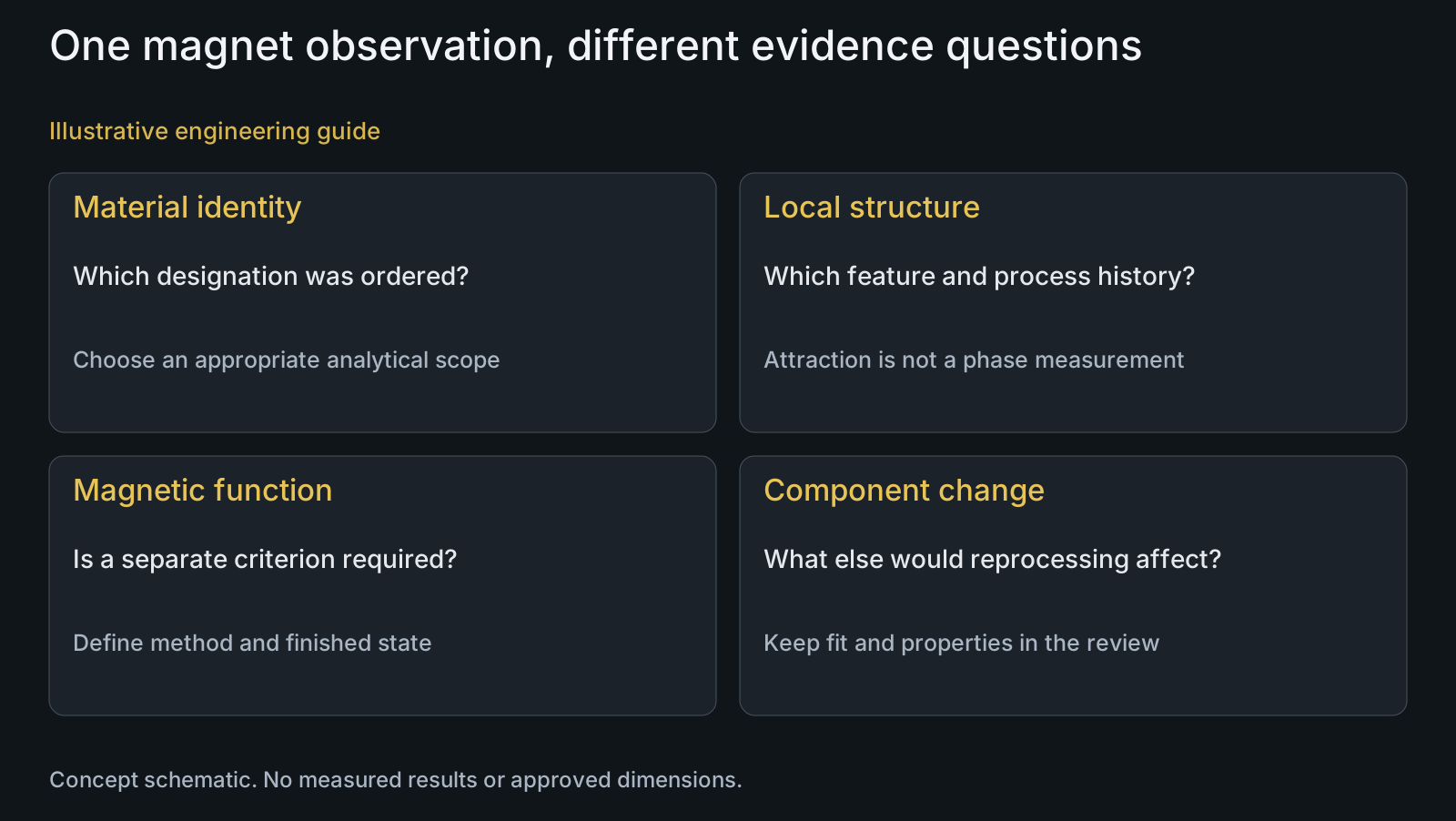
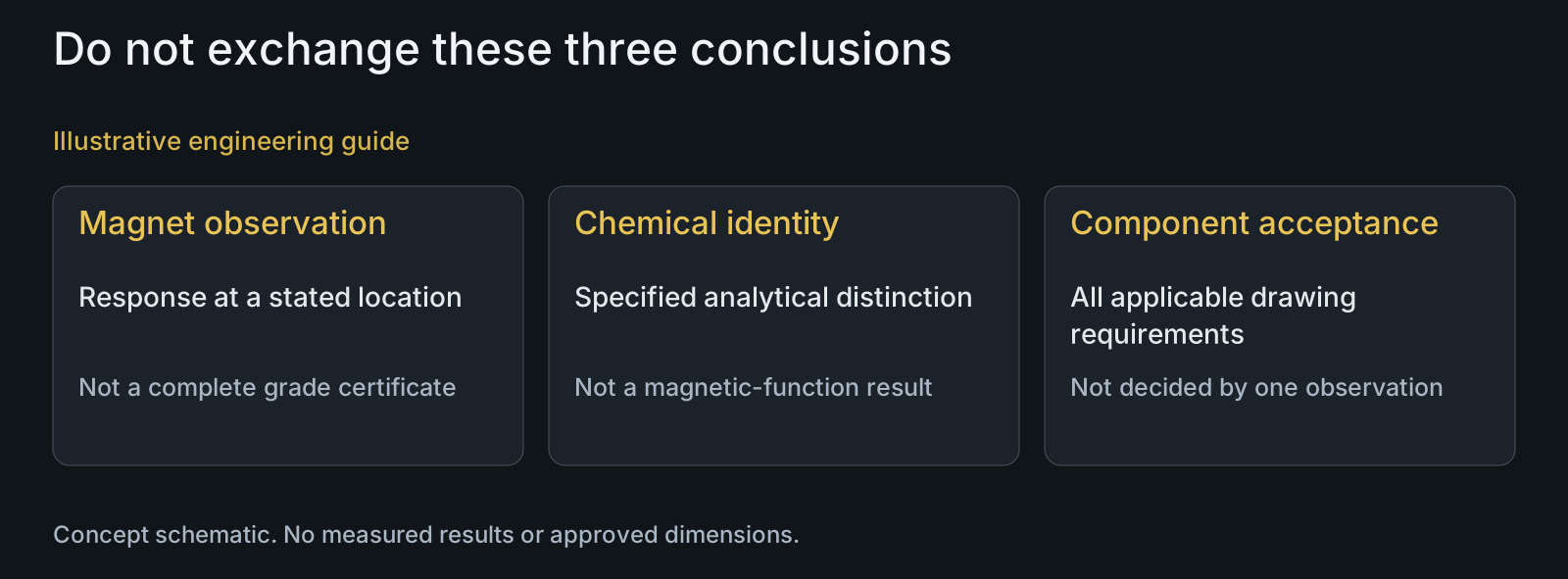
A magnet observation can prompt three different inquiries: whether the alloy identity matches the drawing, whether processing changed the local material structure, or whether the component satisfies a functional magnetic requirement. These are not interchangeable. A part that attracts a magnet is not automatically counterfeit, and a part that does not attract it is not automatically the ordered grade.
Handheld comparisons also depend on the magnet, spacing, feature geometry and observation method. A stronger pull from one part does not establish a numeric permeability or a mechanical-property difference. Record the observation without turning it into an improvised acceptance threshold. If the existing order contains no magnetic criterion, do not create a retrospective rejection rule from an informal comparison.
Read the material requirement before selecting further evidence. 304 pivot specification explains the purchasing fields, while markings and receiving evidence explains the connection between documents and delivered parts. Neither replaces a defined investigation of the observed response.
Account for structure and processing without diagnosing by attraction
BSSA describes how cold work can partly transform austenitic structure into ferromagnetic martensite. The response depends on composition and processing history. This provides a mechanism by which an austenitic stainless component can show attraction; it is not proof that a particular bolt experienced a specific operation or transformation amount.
Look for differences between features that had different manufacturing histories. Stock preparation, head forming and thread formation may not affect the same regions in the same way. A reported difference between a shoulder and a formed thread is therefore worth documenting rather than being averaged into a single genuine-or-fake label. Establish the actual route before assigning a cause.
Do not infer a universal 304-versus-316 magnetic ranking for all supplied parts. Compare the specified material and condition, not nominal grade names under unknown processing. Cold-work consistency addresses the broader manufacturing-condition question; here the purpose is to interpret the magnetic observation and select evidence that answers it.
| Question | Relevant input | Useful evidence | What not to infer |
|---|---|---|---|
| Is the alloy correct? | Ordered designation and supplied lot | Appropriate material identification and record connection | Attraction proves a wrong grade |
| Did processing affect response? | Stock condition and feature-specific route | Manufacturing history and appropriate structural assessment | One pull measures cold-work amount |
| Is magnetic function specified? | Measure, location and acceptance criterion | Agreed finished-state magnetic assessment | Correct chemistry proves magnetic conformity |
| Should the part be reprocessed? | All affected component requirements | Design review of the proposed change | Less attraction automatically means better hardware |
Choose identification evidence for the required distinction
If the question is alloy identity, specify which chemical or material distinction must be resolved. Ask the testing provider whether its proposed method can measure the relevant elements in the component's size and surface condition. A general statement that an instrument recognizes stainless is insufficient when the order requires a more specific designation.
Surface coatings, preparation and measurement location can matter to the method. Provide the finished part, material specification and any coating description rather than requesting an unexplained pass certificate. If distinguishing a low-carbon designation is necessary, confirm that the proposed analytical method can address that requirement; do not assume every handheld identification tool can resolve it.
Keep the identified sample connected to the questioned lot. A correct result on an unrelated loose bolt does not establish the material of every part in the delivery. Agree the investigation or sampling scope with the responsible quality team. No particular instrument, universal sample count or lab result is implied by the concept image.
Specify magnetic performance only when the application needs it
Some assemblies may have a separately defined magnetic-function requirement. In that case, provide the required measure, method, location, finished state and acceptance criterion. A description such as nonmagnetic needs an agreed technical meaning rather than a casual magnet demonstration. BSSA's magnetic-property guidance distinguishes low-permeability applications from ordinary material-family descriptions.
Do not heat-treat or otherwise reprocess a finished bolt simply to reduce observed attraction. A proposed structural change can affect dimensions, surface state and mechanical requirements. The design owner must assess the full consequence; fixing an informal magnetic observation is not a sufficient basis for changing a qualified component route.
PremFixer's manufacturing review can connect the customer's material requirement and requested partner-testing scope with the actual hardware route. A magnetic report, chemical analysis or special low-permeability supply requirement must be confirmed for the order. This article does not claim that every PremFixer pivot bolt comes with a magnetic test report.
Illustrative review of attraction at a formed thread
Illustrative engineering example: assume incoming stainless pivot bolts show noticeable attraction near a formed threaded section, with a different response at the shoulder. The drawing specifies a named stainless material and finished features, but no magnetic acceptance requirement. The stock and manufacturing records have not yet been reviewed.
The receiving team records the observation and asks for the supplied condition and thread route. It connects the material document to the questioned delivery and selects identification evidence appropriate to the ordered grade if that identity remains in doubt. If a separate application requires low permeability, that requirement is evaluated through an agreed method rather than inferred from the alloy certificate.
The example does not identify a phase fraction, prove a cold-working cause or accept the lot. It shows why one observation can lead to different evidence requests. Correct chemical identity, documented forming history and functional magnetic conformity each answer their own question; none should be invented from the feel of a magnet.
Questions buyers need to confirm
Can genuine 304 or 316 show magnetic attraction?
Yes, response can depend on processing and local structure as well as composition. Review the supplied condition and manufacturing history before rejecting the part. Attraction alone does not identify the grade or prove a cause.
Does no attraction prove that the bolt is 316?
No. A handheld magnet is not an alloy-identification method. Use the ordered designation and appropriate analytical evidence, connected to the supplied lot, for the required chemical distinction.
Can I compare strength by comparing magnet pull?
No. Magnetic response is not a finished-bolt mechanical-property test. State the applicable material condition and component requirements separately, with their agreed evidence.
Will every material-identification instrument distinguish low-carbon grades?
Do not assume so. Identify the elements or designation distinction that must be resolved and confirm the proposed method's capability with the testing provider, including specimen and surface conditions.
What is needed for a special magnetic acceptance requirement?
Provide the functional purpose, required measure, method, feature location, finished state and acceptance criterion. Confirm the testing and documentation scope before ordering rather than relying on an informal magnet demonstration.
Technical references and scope
BSSA: cold work and magnetic permeability. Conditional structural mechanism; no phase amount or specific component cause is inferred.
BSSA: magnetic properties of austenitic stainless steels. Distinguishes magnetic response and low-permeability requirements; no numeric limit is transferred to a pivot.
Explore related component, material and sourcing decisions in the customer decision knowledge center. For a drawing review, use the Drawing/BOM RFQ path.
Define the material question behind the magnet observation
Send the drawing's material requirement, delivery-lot records, observed response locations and known process history. Include any actual magnetic-function criterion so PremFixer can review the manufacturing record and requested partner-identification scope.
Discuss the drawing and BOM