
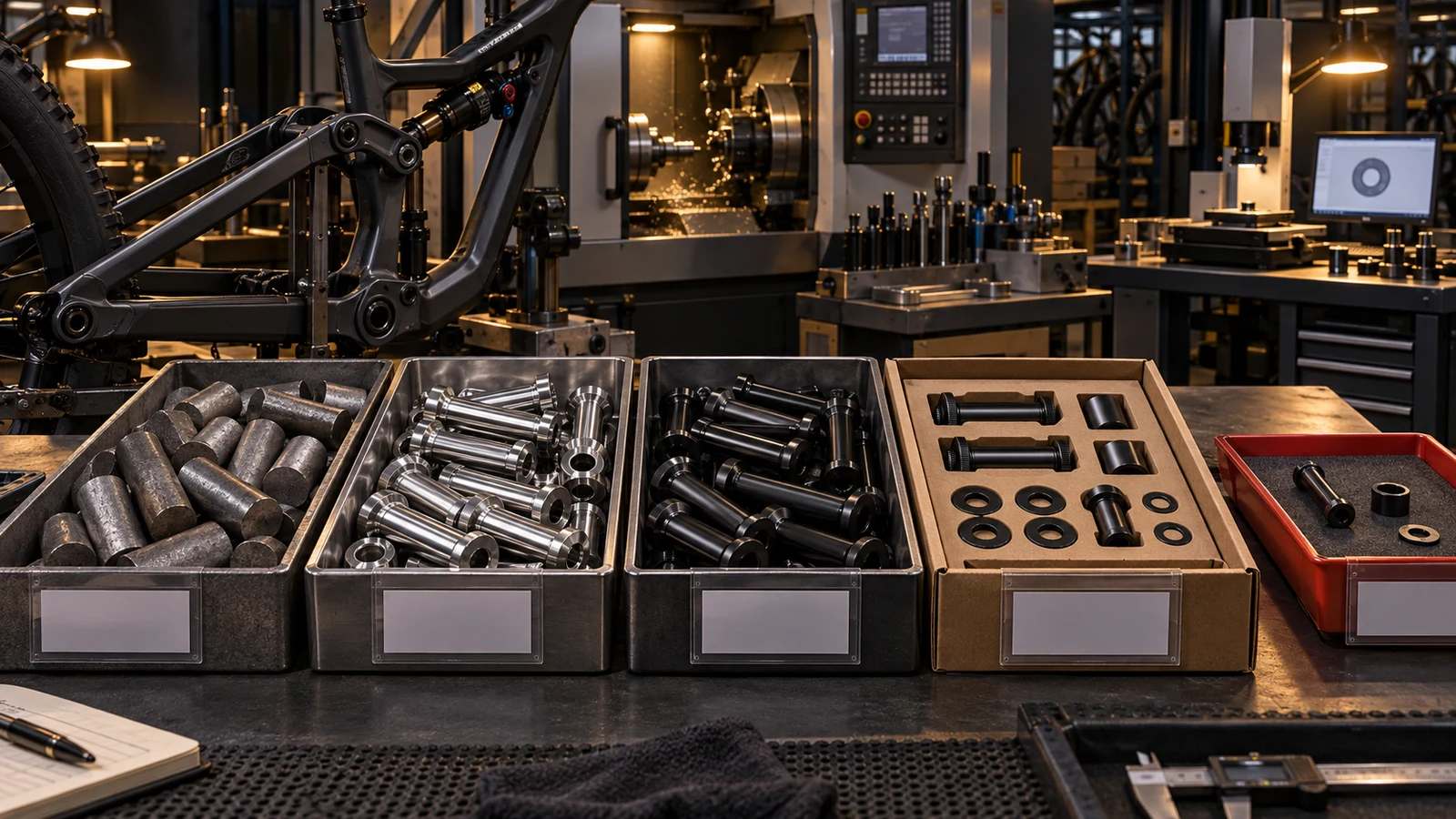
A useful pivot hardware factory walkthrough follows an authorised order or representative exercise through the actual producing route. At each handoff, compare the parts and container in front of you with their identity, applicable requirements, processing state and next permitted action. Pay particular attention when a lot is split, sent to a partner, returned for review or held before packing. An order number alone may not distinguish those states. Record what was observed and what remained inaccessible; a polished showroom or unrelated machine tour cannot supply the missing evidence. This approach supports a scoped process discussion, not an automatic factory approval or a claim that every future lot is controlled.
Hero: concept illustration of example hardware and its application. It is not a factory photograph, tested component or approved production geometry.
Agree the route and access before walking the floor
Choose a part whose material, interfaces and final condition represent the proposed work. Agree which records may be shown, whether photographs are permitted and which partner operations are outside the visit. Do not demand another customer's drawings or treat restricted access as an invented manufacturing failure.
Use the twenty-point supplier review to identify the qualification subjects that matter. This walkthrough focuses more narrowly on physical handoffs and exceptions. The fifteen-question audit guide addresses how to formulate broader evidence-based audit questions.
The physical route may not follow a neat departmental sequence. Material can be split, returned, queued or sent outside. Map the actual movements represented by the selected exercise rather than assume that every labelled station performs the next operation.
At material storage, follow identity after the stock is split
Ask which stock supplies the selected part and what the material record represents. Compare the required grade, condition and product form with the identified stock. Appearance and an alloy family name are insufficient to identify the specified supply.
Then ask what happens after bar is cut or a stock lot is divided between jobs. The question is whether the represented material connection follows the actual pieces and remainder, not whether one original certificate is available at the receiving desk.
GS1's traceability explanation connects products, actors and locations with captured records and information during physical flow. This is useful general context, not evidence that PremFixer runs a particular GS1 system. The digital lot-traceability guide separately discusses information links.
| Where to observe | Question at the handoff | Risk to expose | Relevant confirmation |
|---|---|---|---|
| Stock split | Which pieces retain this material link? | Remainder loses represented identity | Stock, pieces and record connection |
| Machining transfer | What state may the next operation use? | Shared part number hides unfinished work | Container and applicable instruction |
| Partner dispatch | What was sent for which operation? | Different revisions share a shipment label | Identified parts and requested state |
| Partner return | What remains before acceptance? | Arrival is treated as release | Return identity and remaining review |
| Hold or rework | Who permits which next action? | Held items mix with usable stock | Physical separation and disposition |
| Packing | Do these permitted parts form the kit? | Accepted components form wrong contents | BOM, identities and packing basis |
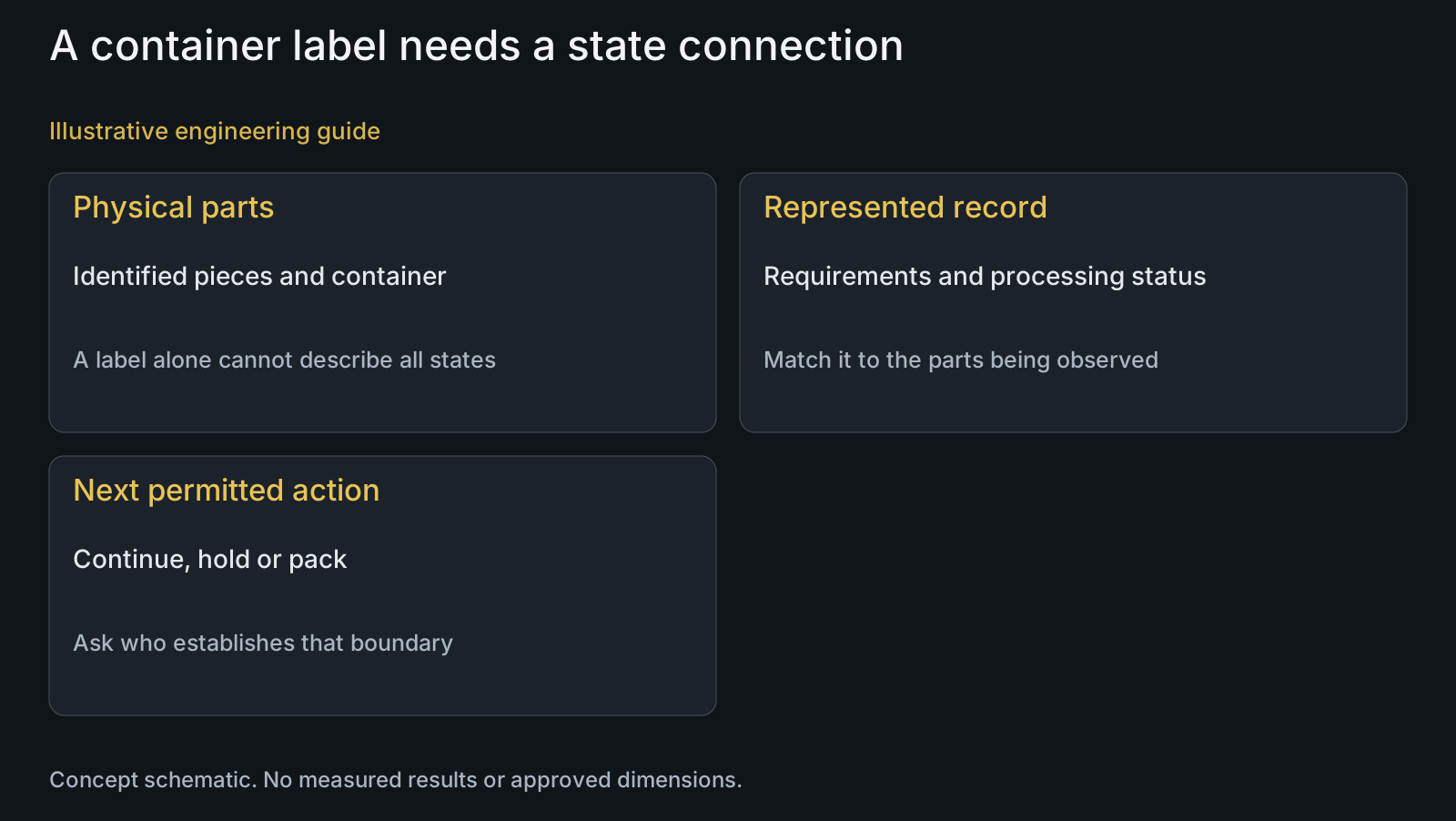
At machining, compare the container with its actual state
Identify which features have been produced and which operations remain. Parts on a tray may share a part number but not the same manufacturing state. Ask how the receiving operation distinguishes ready work from unfinished, interrupted or held pieces.
Review the applicable instruction against the selected physical parts. If a setup or tool change is relevant to a required relationship, ask what check permits that work to continue. A general process sheet does not explain whether it applies to the container in front of you.
At a split or transfer, ask how quantities and identities remain reconciled. Moving components into a clean new tray should not silently merge different revisions or processing states. The CNC-turning page frames relevant manufacturing operations without supplying an actual walkthrough result.
At partner returns, distinguish arrival from acceptance
A treatment return is a physical event, not necessarily permission to pack. Identify the represented parts, partner operation and final-state requirements, then ask what review establishes the next permitted action. A partner delivery note alone does not evaluate the drawing's treated bearing interface.
The surface-treatment overview identifies finishing as a relevant route subject. The visit should make that external boundary visible: who sent the parts, what returned, which records relate to them and which checks remain.
For inspection, ask what the method and result represent: characteristic, datum, instrument status, selected coverage and processing state. An instrument calibration label does not by itself show that the selected setup answers the finished drawing requirement. Do not invent measured values when the basis or records are unavailable.
At hold and rework, test whether status controls use
Ask how physically held parts remain distinguishable from usable stock. Location, container identification and recorded status should answer the same practical question: may these pieces proceed? A coloured tray without an understood decision link is not proof of disposition control.
For a permitted exception example, identify who can authorise the next action and what that action covers. Parts awaiting investigation, authorised for specified rework and accepted after relevant review are different states. Returning from rework does not automatically settle every original requirement.
If no real exception can be disclosed, agree a representative exercise and state that it is an exercise. Do not stage it as a genuine historical nonconformity. Record the demonstrated handoff and its limits without claiming that one explanation proves all exceptions are controlled.
Illustrative walkthrough: a split treatment return at the packing bench
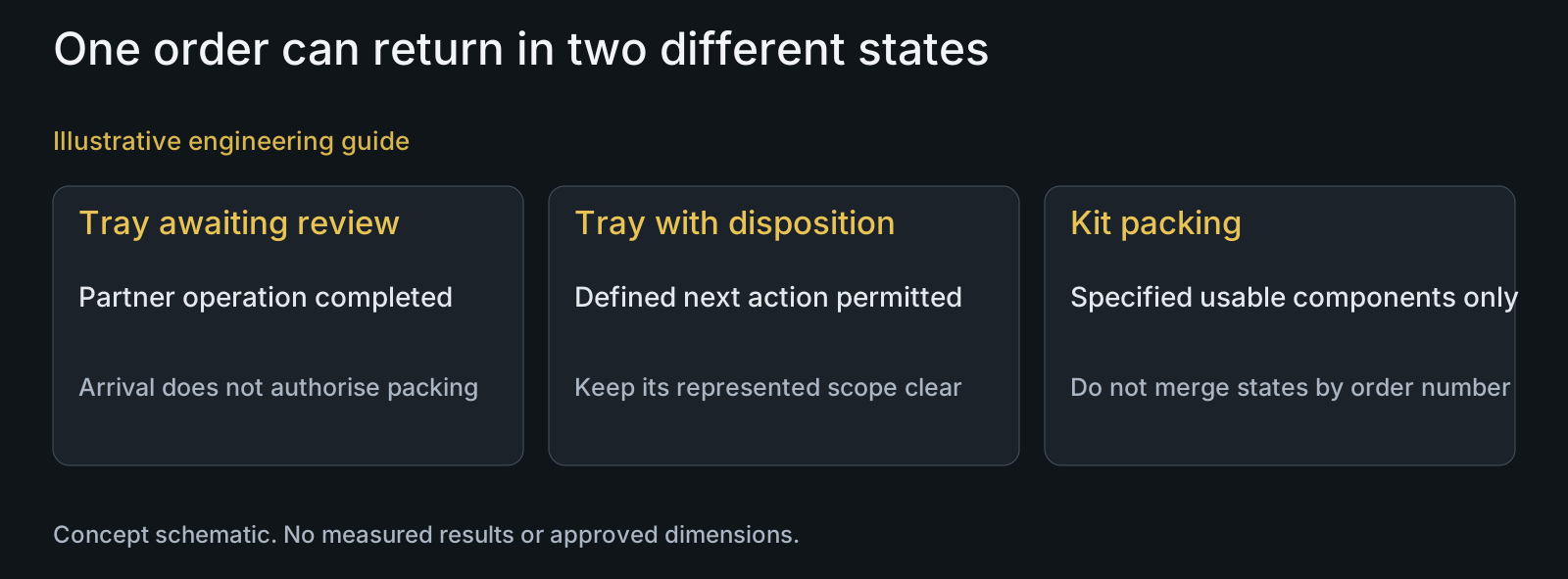
Illustrative engineering example: assume a pivot order returns from treatment in two trays. Both show the same order number, but one is awaiting a required final-state review while the other has a documented disposition permitting packing. No actual supplier, defect or measured result is assumed.
At the packing bench, the reviewer asks how the operator distinguishes those trays and connects each to its permitted action. It does not assume that identical colour or a shared order label means both are usable. The follow-up concerns the specific state-to-container link, not an unsupported accusation that defective parts were shipped.
Finally compare the permitted kit contents with the packed bolts, sleeves and washers. The kit-labeling guide develops shipment identity separately. The walkthrough conclusion should state the observed handoffs, unobserved partner work and any unresolved packing boundary, rather than approve the entire factory from one tour.
Questions buyers need to confirm
Should the visit follow the actual order of departments?
Follow the selected parts' actual route, including splits and external operations. A departmental tour may omit the handoffs that matter. Identify which movements are observed and which remain represented only by explanation or records.
Is the same order number enough to identify usable parts?
Not always. Parts may share an order while occupying different revisions or processing and release states. Ask how each container connects to its represented parts and next permitted action, particularly after a split or return.
Does a partner return mean the parts can be packed?
No automatic conclusion follows. Identify the returned parts, operation and required final state, then establish which reviews remain. A receipt or delivery note describes a movement; it is not itself the finished-feature acceptance evidence.
What should be examined around a hold tray?
Ask how held pieces are identified, kept apart from usable supply and connected to a permitted disposition. Determine who may authorise which action. Do not infer a failed dimension from the tray colour or claim a real historical incident without evidence.
Can confidential order records be replaced with an exercise?
Yes, if the visit scope permits it and the limitation is explicit. Use an agreed representative part or handoff exercise without presenting it as a real customer case. State what was demonstrated and what actual execution remains unobserved.
What information helps arrange a focused walkthrough?
Provide the proposed drawings, BOM, material and finish, critical interfaces and expected supply route. Identify the handoffs you need to understand and agree record access and photography limits. Clarify whether the visit concerns a real authorised order or representative exercise.
Technical references and scope
GS1: How traceability works. Official public explanation of identification, record capture and information sharing during physical flow; no implemented GS1 system or full standard conformance is claimed.
Explore related component, material and sourcing decisions in the customer decision knowledge center. For a drawing review, use the Drawing/BOM RFQ path.
Plan the visit around a representative physical route
Send the representative drawings or STEP files, kit BOM and proposed manufacturing scope through the Drawing/BOM RFQ path. Name the material, partner-return, inspection or packing handoffs you want to review. The discussion will define relevant access and observations without promising a completed audit or unrestricted qualification.
Discuss the drawing and BOM