
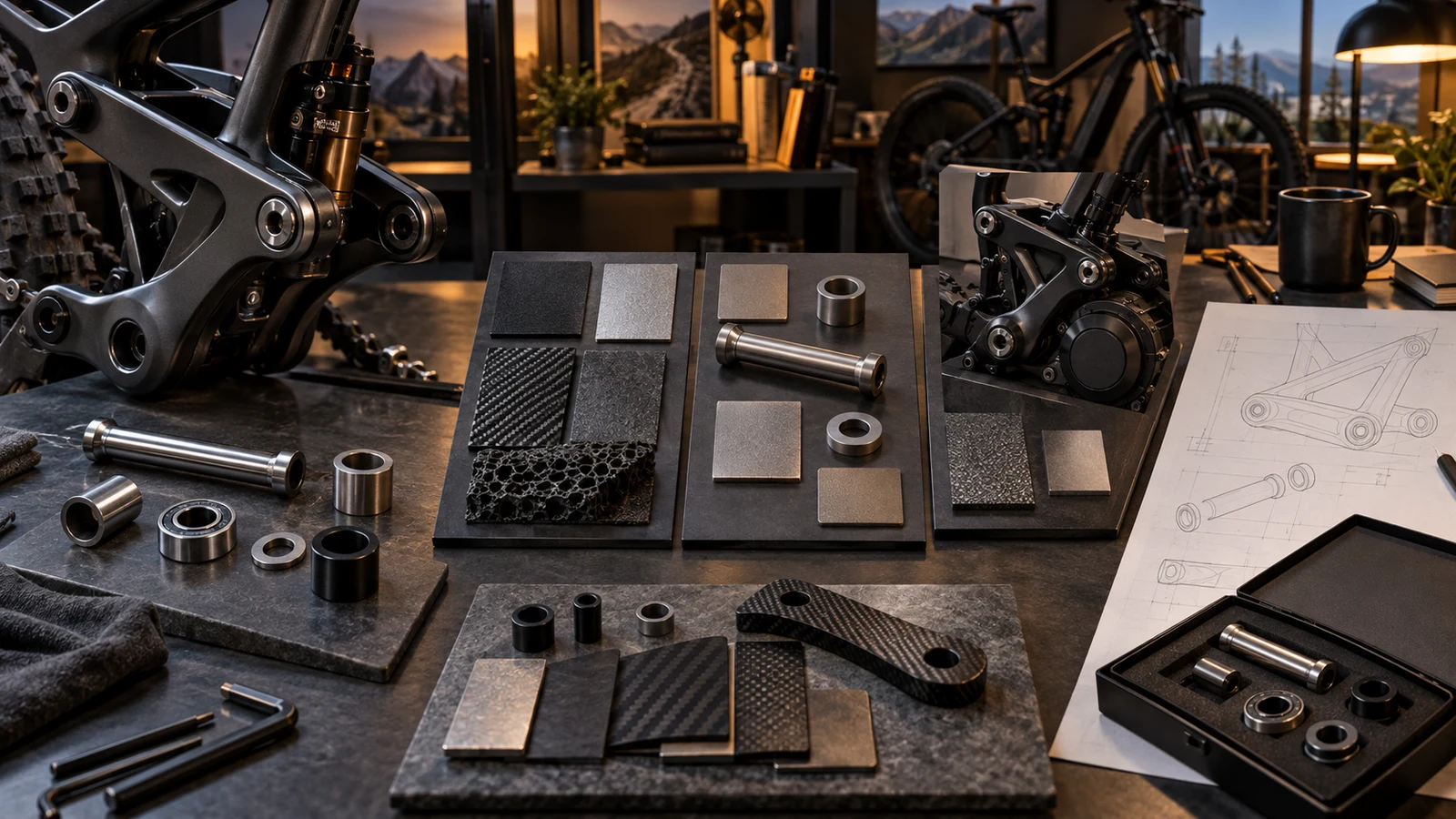
Use a pivot technology roadmap to discuss an unresolved application problem, not as proof that a new material or process is ready to order. A bicycle OEM considering carbon-frame interfaces, a titanium surface option or a new e-bike linkage needs to know what is available for its current drawing and what remains a development proposal. Ask which dependency the proposal would remove, what decision comes next and what baseline remains usable if development does not meet the project's timing. PremFixer can discuss drawing-led manufacturing requirements; no new technology release, investment schedule or guaranteed industrialization date is established by this guide.
Hero: concept illustration of example hardware and its application. It is not a factory photograph, tested component or approved production geometry.
Start with the dependency that matters to your project
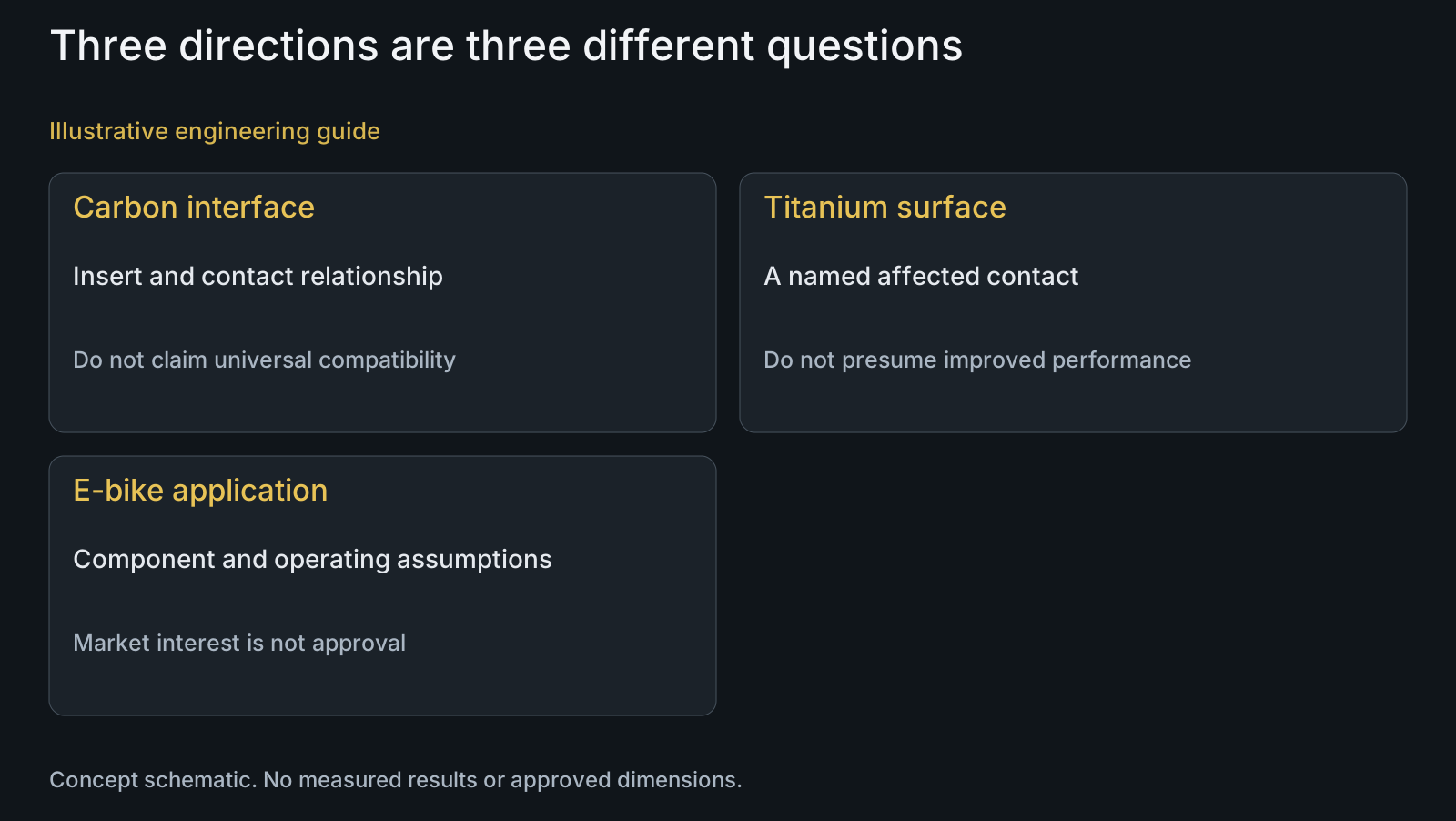
A future direction is useful only when it connects to a buyer's unresolved requirement. 'Carbon-compatible hardware' could mean a particular insert interface, isolation detail or clamp relationship. Those are different questions, and the phrase alone does not identify a qualified universal solution.
For a titanium surface option, name the affected contact and the concern it is intended to address. For an e-bike application, identify the actual component and changed operating assumptions. Entering a market does not, by itself, establish the suitability of a pivot for every design in that market.
Use the bicycle application context and material-selection guide to frame the question. The roadmap discussion should identify the missing decision, rather than list fashionable materials without a relevant part.
Separate current scope from a future option
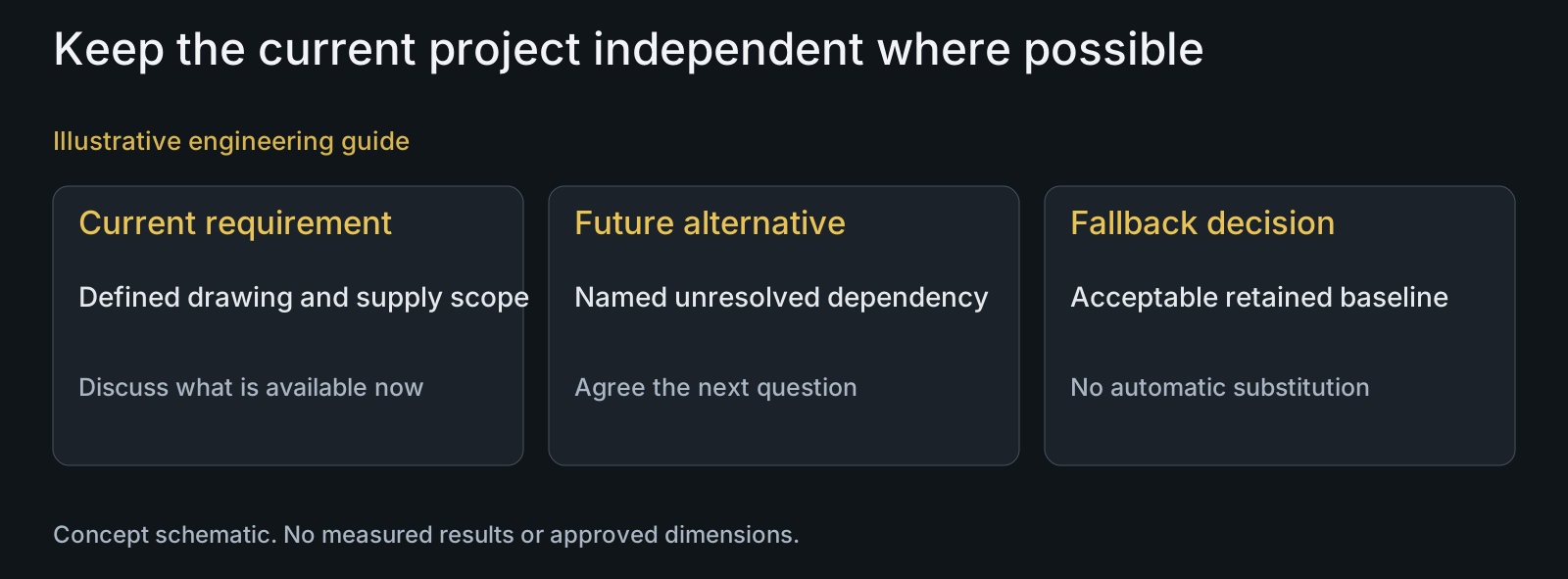
Ask for the manufacturing scope applicable to the current drawing separately from an exploratory proposal. A supplier may be able to quote an existing configuration while a different material or process remains under discussion. Do not combine both into one implied production commitment.
The NASA technology-readiness explanation distinguishes early research from later demonstrated technology. That supports the general need to state maturity; its space-system levels are not bicycle acceptance criteria or a rating assigned to PremFixer.
The process-research guide addresses what specific evidence represents. This article addresses the purchasing consequence: what can support the current project, what is conditional and which decision must not depend on an unavailable option.
| Statement or option | Useful buyer question | Risk if assumed available | Relevant next decision |
|---|---|---|---|
| Carbon-interface direction | Which insert or contact dependency changes? | Universal compatibility inferred | Identify affected interfaces and baseline |
| Titanium surface option | Which specific concern is being investigated? | Performance assumed from a process name | Scope the proposed comparison |
| New e-bike application | Which component and use assumptions differ? | Market participation treated as approval | Define the actual application question |
| Target development milestone | What answer is expected at that point? | Target date used as delivery commitment | Separate dependencies and offered scope |
| Current production offer | Which drawing and supplied state are covered? | Future option mixed into current order | Confirm the applicable configuration |
| Fallback configuration | Is the retained baseline acceptable? | Unapproved substitution after delay | OEM design and supply decision |
Ask for a decision milestone, not an unsupported launch date
A useful next milestone describes an answer, such as whether a proposed surface can be evaluated on the required component or whether an interface alternative is worth developing. It should not be a vague promise to deliver 'better performance' after an unspecified investment.
Separate technical dependencies from timing assumptions. A trial that depends on an unresolved material specification cannot provide the same scheduling confidence as an agreed current supply scope. Identify who owns that requirement and which later purchasing decision depends on it.
Do not interpret a target date as an accepted order date. If a development deliverable is actually offered, its scope, responsibilities and commercial terms need their own agreement. No universal development service, prototype entitlement or future capacity reservation is implied here.
Keep a usable baseline while exploring an alternative
For a time-bound project, ask whether the current configuration remains usable if the candidate option is delayed or unsuitable. That is a design and supply question, not an instruction to substitute an unapproved material. The responsible OEM team decides whether the baseline meets its requirements.
If the alternative changes a sleeve, insert, finish or mating component, identify the affected items before assuming the two options share one BOM. A common bolt appearance does not guarantee that the associated interfaces or supply scope remain unchanged.
The engineering-support discussion helps connect coupled questions. Keep the exploratory alternative visible beside the baseline so that technical interest does not silently change the requirement being quoted.
Review a proposed carbon-interface direction
Illustrative engineering example: assume an OEM has an existing pivot arrangement and is considering a different carbon-frame insert interface for a future model. The new interface could affect the sleeve and contact arrangement. No actual PremFixer program, approved dimension, test result or launch date is assumed.
For the current model, the team requests the existing drawing-led supply scope. For the future option, it supplies the intended interface context and asks which unresolved relationship needs evaluation. The two requests have different purposes even if some hardware items look similar.
If the new interface is not ready at the intended decision date, the team must decide whether to retain its acceptable baseline, change the model plan or undertake further development. It cannot infer interchangeability from a concept image or turn a supplier's interest into a released design.
Make participation useful without promising a result
Provide the current drawing or concept, the problem being considered, relevant mating information and the boundary of any proposed change. Explain whether the discussion concerns a current quotation, an exploratory review or a future model option. That distinction helps avoid pricing the wrong request.
PremFixer coordinates drawing-led manufacturing, including relevant partner operations within an agreed scope. The surface-finishing acceptance guide explains why a process name is not a complete delivered-condition commitment.
No published launch calendar, new carbon-specific product family, proprietary titanium treatment or market-entry milestone is confirmed here. Discuss the actual available option directly rather than plan a purchase around an unverified future service. The buyer retains responsibility for the application's design and validation decisions.
Questions buyers need to confirm
Are future roadmap directions available to order now?
Not automatically. Ask for the current offered scope for your drawing separately from any proposed development. A direction or target milestone is not evidence that a process, material or component has been released for your application.
Does carbon-compatible mean suitable for every carbon frame?
No. Identify the insert, contact and clamp relationships involved in the specific design. A different mating arrangement can change the question even when the bolt looks similar. The OEM must define the applicable requirements.
How should we discuss a new titanium surface option?
Name the affected surface and problem, then keep the exploratory scope separate from current supply. Do not assume an improvement, service life or availability from the treatment's name. The represented evidence and remaining dependencies need clarification.
Does an e-bike roadmap establish approval for our linkage?
No. Supply the actual component, interface and operating assumptions. Market interest does not define those inputs or complete your application review; it can only help frame a relevant discussion.
Can we plan a production order around a target development date?
Only an applicable agreed offer can establish a supply commitment. A development target may depend on unresolved technical questions. Identify what the date represents and retain a separately acceptable baseline where the project requires one.
What should an OEM provide for a future-option discussion?
Provide the current geometry or concept, the unresolved application problem, mating context and intended change. Explain the decision timing and whether you need current supply or exploration. Keep the baseline and proposed alternative distinguishable.
Technical references and scope
NASA: Technology Readiness Levels. General distinction between early research and demonstrated technology; not a bicycle qualification requirement or a PremFixer rating.
Explore related component, material and sourcing decisions in the customer decision knowledge center. For a drawing review, use the Drawing/BOM RFQ path.
Discuss the future option without obscuring today's requirement
Share the current drawing, STEP or concept and relevant BOM, then identify the carbon interface, surface or application question you want to address. State your baseline and decision timing so PremFixer can distinguish current manufacturing scope from a proposed development discussion.
Discuss the drawing and BOM