
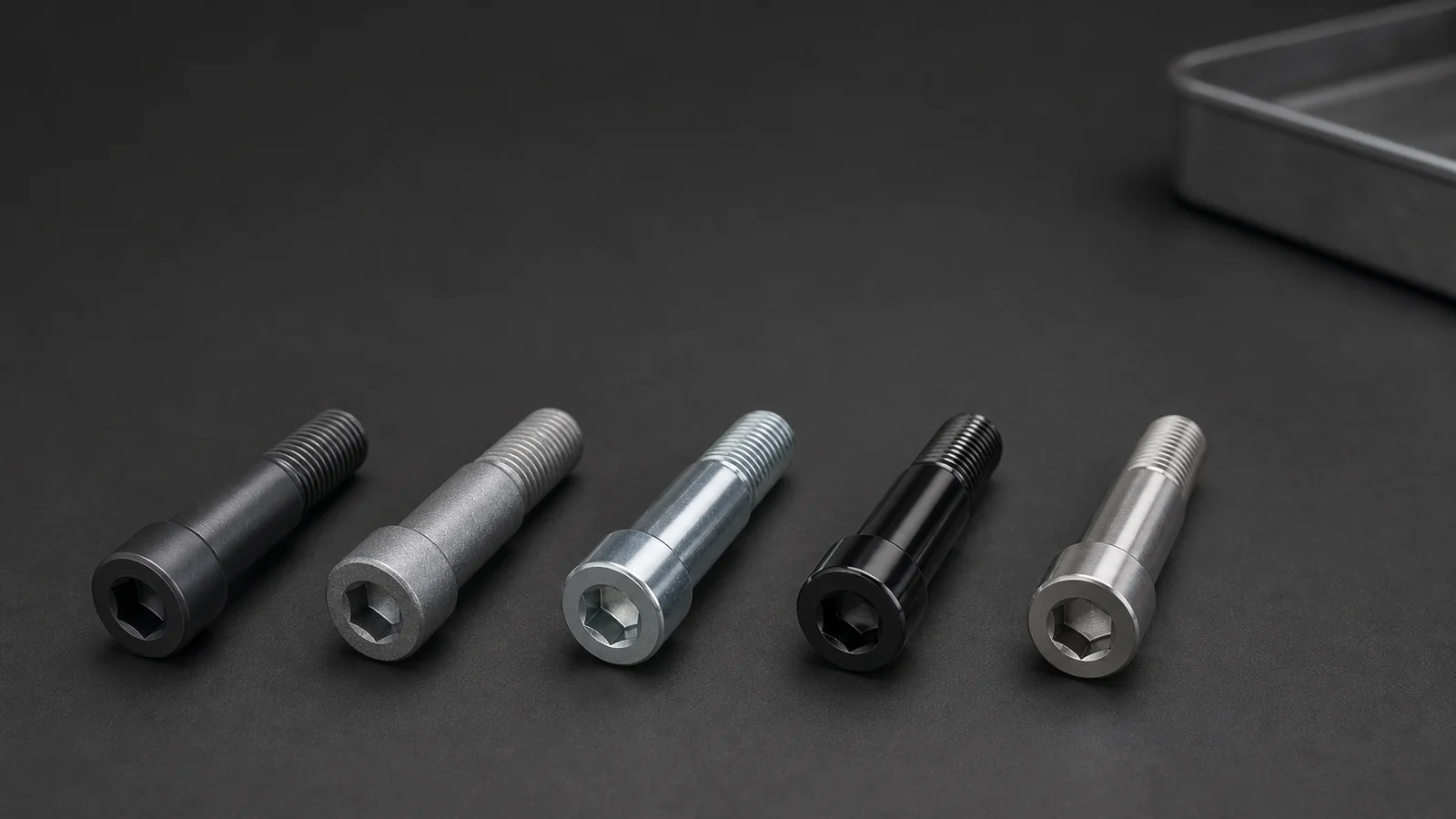
Overview
Fastener surface treatment is not a cosmetic choice — it's an engineering specification that determines corrosion life, assembly torque reliability, and galvanic compatibility. A bolt with the right material but the wrong coating can fail in months. A bolt with the right coating can outlast the frame.
This hub covers the six coating systems PremFixer operates in-house, with test data from our own salt spray chamber and torque-testing lab. Each section links to the full engineering deep dive.
Quick Navigation
1. Coating Comparison at a Glance
| Coating | Salt Spray (h) | Torque Retention (%) | Thickness (μm) | Friction Coefficient (μ) | RoHS | Relative Cost |
|---|---|---|---|---|---|---|
| Dacromet | 720+ | 92% | 5-8 | 0.13-0.18 | Yes | $$ |
| Zn-Ni Alloy | 600 | 88% | 2-5 | 0.16-0.22 | Yes | $$ |
| ED Black Zinc | 480 | 82% | 10-20 | 0.12-0.16 | Yes | $ |
| DLC (Diamond-Like Carbon) | 500+ | 96% | 1-3 | 0.05-0.10 | Yes | $$$$ |
| TiN (Titanium Nitride) | 400 | 70% | 2-4 | 0.40-0.60 | Yes | $$$ |
| Passivation (316SS only) | 1,000+ | N/A (bare) | 0 | 0.20-0.30 | Yes | — |
Torque retention measured after 500 thermal cycles (-30°C to +80°C) with M8 × 25 12.9 steel bolts. Salt spray per ASTM B117.
Read the complete guide: Understanding Fastener Coatings (full torque retention test data for 6 coatings) →2. Dacromet — The Gold Standard for Outdoor Fasteners
Dacromet (also called Geomet or zinc flake coating) is the most widely used high-performance coating on bicycle fasteners — and for good reason:
Why Dacromet Dominates
- 720+ hours salt spray resistance — outperforms conventional zinc plating by 3x
- 92% torque retention after 500 thermal cycles — the friction coefficient stays stable
- No hydrogen embrittlement risk — unlike electroplating, Dacromet is a non-electrolytic process
- RoHS compliant — chromium-VI free formulation
- Thin coating (5-8μm) — doesn't interfere with thread tolerances
When NOT to Use Dacromet
- On titanium bolts — titanium doesn't need coating. Passivation is sufficient.
- In direct carbon fiber contact without an insulation washer — the zinc flakes could promote galvanic activity.
- For purely cosmetic applications — Dacromet has a matte silver-gray appearance. For black aesthetics, use ED Black Zinc.
3. Carbon-Safe Coating Selection
Coating choice becomes critical when the fastener makes contact with a carbon fiber frame. The wrong coating can initiate galvanic corrosion even if the base material is compatible.
| Coating | Direct Carbon Contact OK? | With Insulation Washer? | Notes |
|---|---|---|---|
| ED Black Zinc | Yes | Not required | Organic coating — electrically insulating |
| DLC | Yes | Not required | Carbon-based coating — no galvanic risk |
| Dacromet | No | Yes — nylon washer | Zinc flake content requires isolation |
| Zn-Ni | No | Yes — nylon washer | Metallic zinc-nickel layer is reactive |
| TiN | Conditional | Recommended | Titanium nitride is stable but test first |
| Passivation | Yes (316SS only) | Not required | No metallic layer — intrinsic corrosion resistance |
4. Coating Selection by Application
| Riding Environment | Recommended Coating | Why |
|---|---|---|
| Coastal / marine | Dacromet or passivated 316SS | Maximum salt spray protection needed |
| Wet / all-weather commuting | Zn-Ni Alloy | 600h salt spray + good cost-performance ratio |
| Carbon frame (road/XC) | ED Black Zinc or bare TC4 Ti | Carbon-safe + aesthetic black finish |
| DH / high-impact MTB | Dacromet on 12.9 steel | Maximum strength bolt + maximum corrosion coating |
| E-bike motor mount | Dacromet + Nord-Lock | Vibration-resistant coating + mechanical locking |
| Indoor / dry climate only | Zinc Plating (240h) | Budget option — adequate for protected environments |
| Premium aesthetic build | DLC or black ED Zinc | DLC for ultimate hardness + low friction; ED for value black finish |
Frequently Asked Questions
What's the difference between Dacromet and zinc plating?
Three critical differences: (1) Performance: Dacromet lasts 720+ hours in salt spray vs 240 hours for standard zinc plating — 3x the corrosion life. (2) Process: Zinc plating is electrolytic and carries hydrogen embrittlement risk on high-strength steels; Dacromet is non-electrolytic and eliminates this risk. (3) Torque stability: Dacromet's consistent friction coefficient (μ=0.13-0.18) means assembly torque translates predictably to clamp load; zinc plating μ varies from 0.10 to 0.30 depending on plating thickness and chromate treatment.
Does passivation count as a coating?
No — passivation is a chemical treatment (typically citric or nitric acid) that removes free iron from the stainless steel surface and enhances the natural chromium oxide layer. It adds zero thickness and doesn't change dimensions or torque behavior. It's the standard treatment for all 316SS and 304SS fasteners at PremFixer. For 316SS bolts used in outdoor applications, passivation alone provides 1,000+ hour salt spray resistance — making it the most cost-effective "coating" for stainless fasteners.
Can I mix coatings on the same bike?
Yes, and in fact it's the correct engineering approach. Different locations on a bike demand different coating properties. Example: a carbon road bike might use ED Black Zinc on visible stem bolts (for aesthetics), Dacromet on brake caliper bolts (for corrosion), and passivated 316SS on bottom bracket hardware (for water trap zones). The key is ensuring galvanic compatibility — avoid placing Dacromet-coated bolts in direct contact with bare aluminum threads without anti-seize.
Not Sure Which Coating Your Fasteners Need?
Send us your BOM with the application and riding environment. Our engineers return a coating-optimized specification with salt spray ratings and torque recommendations — free, within 4 hours.
Request Coating Recommendation