
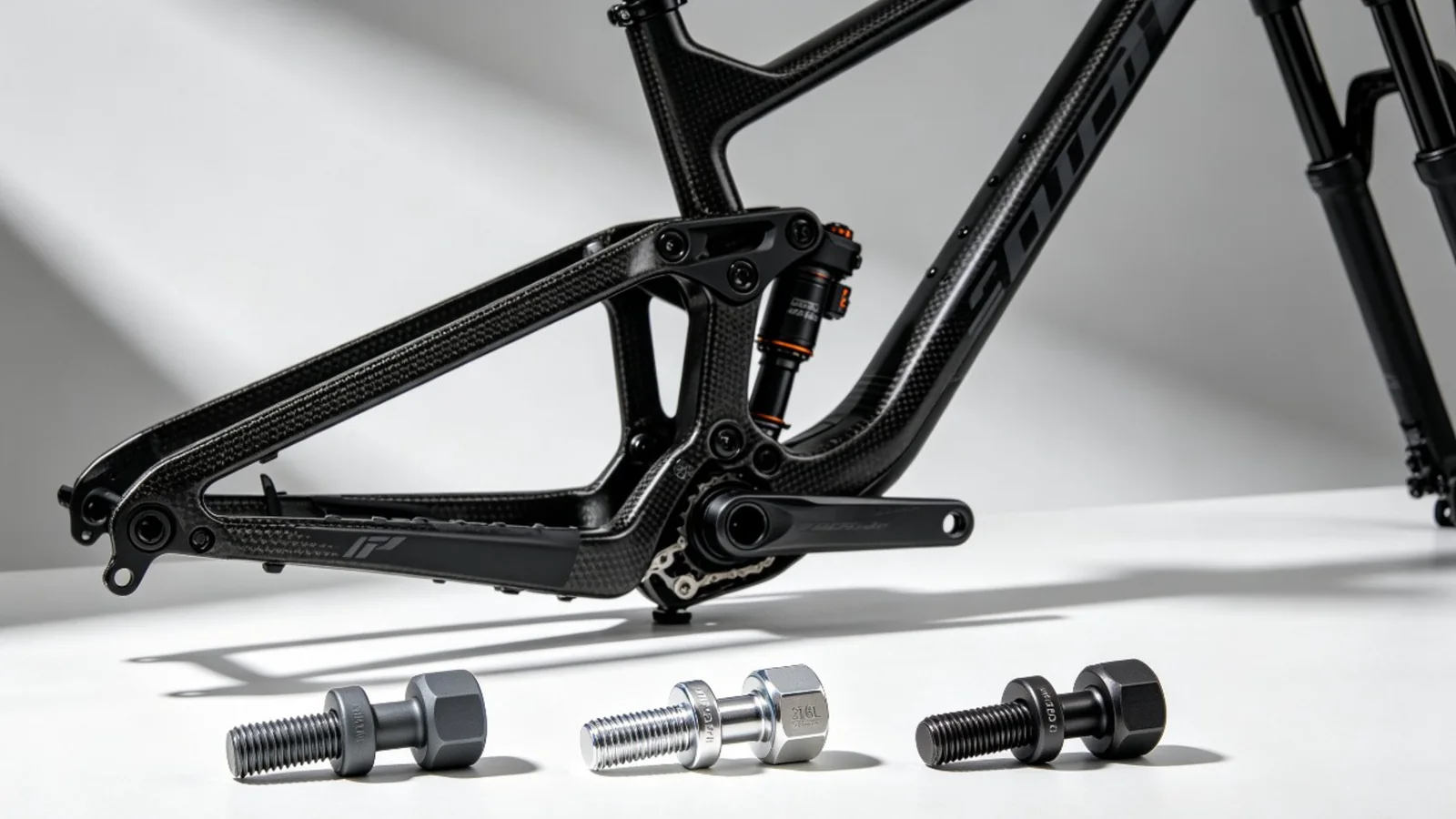
Methodology public; test hours and results confidential. This page explains the review structure and evidence gates without presenting unapproved customer data as a proven result.
Project brief
The engineering decision in context
Engineering question
How should coating, friction, joint geometry, inspection, and batch records be controlled so that a corrosion decision is traceable to the actual production part?
The anonymized project brief concerns corrosion at a mountain-bike pivot interface. The working hypothesis is that performance depends on the complete joint—not only the coating name—including base material, pretreatment, coating thickness and coverage, recess geometry, mating materials, drainage, assembly damage, and service exposure.
A zinc-flake coating can be evaluated as one direction, but the coating system, restricted substances, friction range, appearance, masking, and acceptance criteria must be defined on the approved drawing or purchase specification.
Verification matrix
Controls, records, and release gates
The acceptance requirement is fixed before testing. Each record must identify the drawing revision, sample, method, and decision owner.
| Control | Method basis | Record required | Release gate |
|---|---|---|---|
| Material and geometry | Approved drawing, material specification, thread, shoulder, and recess inspection | Drawing revision, material certificate, dimensional report, and sample identity | Part identity and inspection method are traceable |
| Coating process | Approved coating specification with thickness, coverage, appearance, and friction requirements | Processor batch certificate, measured coating data, and masking record | Batch and specimen preparation are identified |
| Accelerated corrosion | ISO 9227:2022 environment selected by the customer specification | Laboratory report, chamber conditions, duration, sample count, images, cleaning method, and evaluation criteria | No exposure-hour or pass claim without the complete report |
| Assembly behavior | ISO 16047 torque and clamp-force principles where applicable, plus the actual mating stack | Torque, clamp force, friction condition, tightening method, and repeatability data | The coating does not introduce an uncontrolled preload change |
| Lot acceptance | Customer-selected sampling plan; ISO 2859-1:2026 may support attribute sampling | Lot size, inspection level, AQL decision, nonconformance record, and disposition | The sampling plan is agreed before production inspection |
Evidence chain
What makes the decision traceable
- 01
Link drawing, material lot, coating batch, and tested sample identities.
- 02
Define corrosion location, duration, cleaning, appearance, and acceptance before testing.
- 03
Check coating-related friction and preload on the real mating stack.
- 04
Keep customer permission and public wording separate from the technical disposition.
Claim boundary
What this public record does—and does not—establish
ISO 9227 defines apparatus and procedure; it does not prescribe a universal exposure period or product pass criterion. This public file therefore publishes the control method, not salt-spray hours, pass results, or field-life claims.